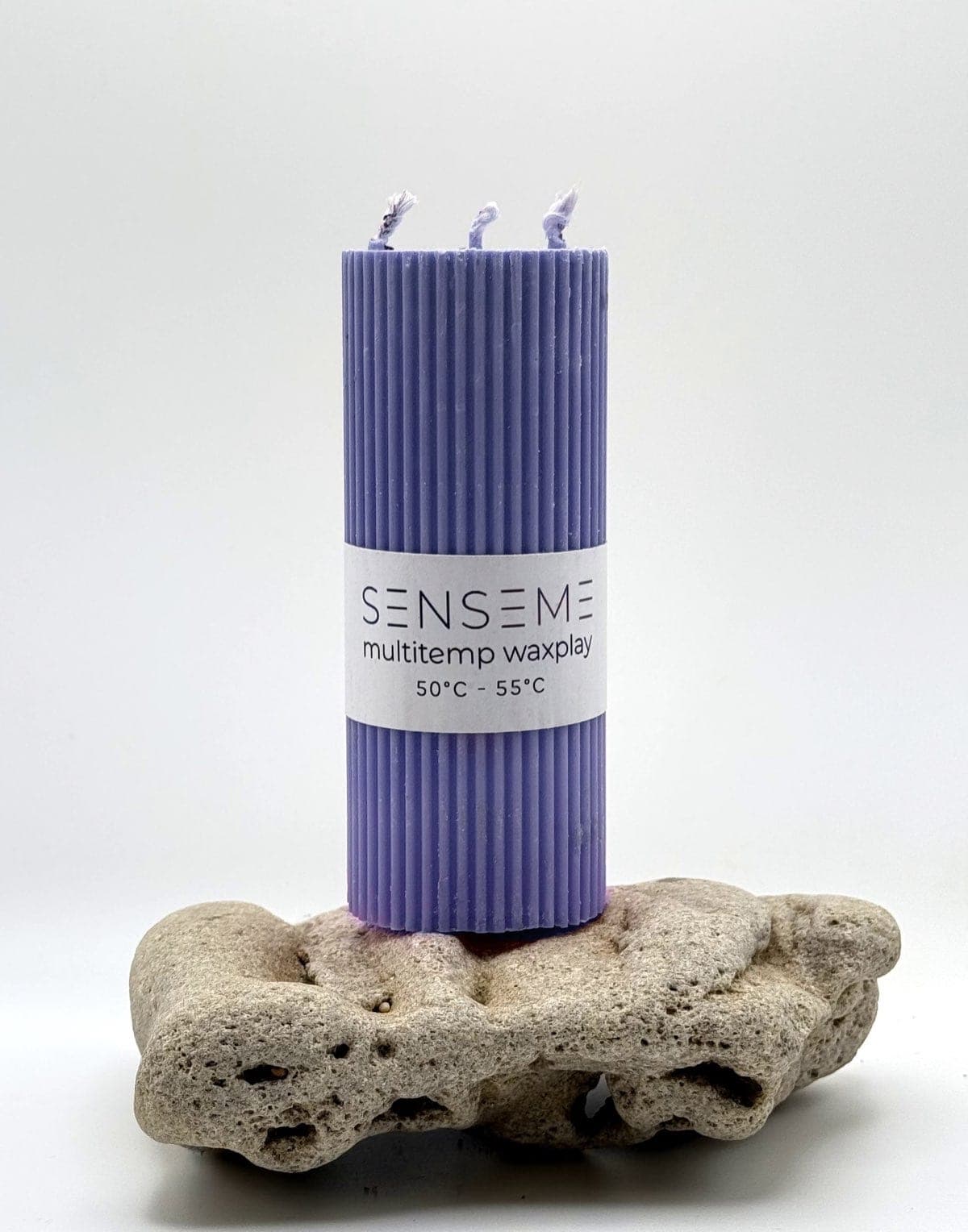

The Best Oils to Use After Wax Play
Not every oil belongs on freshly sensitized skin. This is a ranked, sexologist-tested breakdown of what actually works — and what to leave in the kitchen.

The Quick Answer
- Best overall: jojoba oil — closest to human sebum, non-comedogenic, long shelf life, almost never irritates.
- Best for sensitive skin: sweet almond oil — gentle, lightly moisturizing, nut-allergy warning applies.
- Best for fast absorption: fractionated coconut oil — lightweight, odorless, absorbs cleanly.
- Best luxury option: argan oil — rich in vitamin E, slower to absorb, pricier.
- Best budget pick: grapeseed oil — cheap, widely available, slightly shorter shelf life.
- Oils to avoid: regular coconut oil (clogs pores), essential oils neat (too concentrated), mineral oil (seals skin instead of nourishing it), anything scented.
After a wax play scene, the skin is warm, lightly sensitized, and — if you did it right — has just spent thirty minutes under a thin, cooling layer of candle wax. The skin barrier is intact but working hard. The right oil supports recovery, lifts residual wax, restores moisture, and helps the whole session land comfortably. The wrong oil makes skin itchy, clogged, or irritated, and turns a beautiful scene into a skincare problem the next day.
Most of the advice online is either too vague ("use any oil") or too commercial (a long list of branded products from affiliate blogs). This guide is neither. It is a ranked, tested breakdown of the five oils that actually work on post-wax-play skin, written by a sexologist who makes wax play candles for a living and has personally used every oil on this list. Every recommendation is based on three criteria: body safety, skin compatibility with wax-played surfaces, and practical usability in real aftercare.
If you are short on time, the TL;DR above has everything you need. If you want the reasoning, the section on what to look for, the full ranking, or the list of oils to avoid, keep reading.
Why Your Skin Needs Oil After Wax Play
Wax play exposes skin to three specific stressors: mild heat, a thin layer of cooling wax, and — often — prolonged contact with drips or pools that the body has had to thermally regulate around. None of these are damaging when you use body-safe wax play candles at appropriate temperatures. But all three ask something of the skin barrier, and the skin barrier is healthier when it is not asked to do that work dry.
Oil does four things for wax-played skin:
- Lifts residual wax. Even careful removal leaves a thin film. Oil breaks the wax-to-skin bond gently, without scrubbing.
- Restores lipid content. The skin barrier is built partly of lipids. A body-safe oil replaces the tiny amount that heat and cleansing have pulled off.
- Soothes micro-sensitization. Mild warmth leaves skin slightly raised and pink. Oil calms this faster than water alone.
- Prevents next-day dryness. Without oil, wax-played skin often feels tight 12–24 hours later. This is a small thing; it is still worth fixing.
The choice of oil matters because post-wax-play skin is slightly more permeable and slightly more reactive than baseline. An oil that is fine on untouched skin can still cause problems on skin that was warm fifteen minutes ago. Pick carefully.
What to Look For in a Post-Wax-Play Oil
Every oil on the main list below meets all four criteria. If you want to experiment with an oil not listed, check it against these before trying it on freshly warmed skin.
1. Non-Comedogenic
Comedogenic oils clog pores. On normal skin, this causes breakouts over days. On wax-played skin, where pores have been warmed and opened, it happens faster. Non-comedogenic oils are rated low on the 0–5 comedogenic scale — look for 0, 1, or 2. Jojoba, sweet almond, argan, grapeseed, and fractionated coconut all rate 0–2. Regular coconut oil rates 4, which is why it is on the avoid list despite being everywhere in skincare.
2. Fragrance-Free (or Safe Fragrance)
Fragrance is the single most common cause of skin irritation in cosmetic products. On recently sensitized skin, added fragrance is an unnecessary risk. Use unscented oils, or oils with natural scent only from the oil itself (grapeseed has almost none; jojoba has a very faint nutty smell). Avoid anything labeled "aromatherapy" unless you have specifically tested it on your skin.
Essential oils are fragrance concentrates. They should never be applied neat — always dilute them into a carrier oil at less than 2% if you use them at all. Post-wax-play is not the time for essential oils. Save them for a different context.
3. Absorption Rate
Oils absorb at different speeds. Fast-absorbing oils leave skin feeling dry-to-the-touch within a few minutes; slow-absorbing oils stay slick for much longer. Both have their uses. For immediate post-scene application, a medium absorber — jojoba or sweet almond — usually wins. For a massage-style application where slower is better, argan or grapeseed. For "I need to get dressed and go somewhere," fractionated coconut absorbs fastest.
4. Body-Safe Ingredients
"Body-safe" means the oil is safe for use on skin, including areas that may come into contact with mucosa or more sensitive tissue. All the oils on the main list are body-safe. It also means the oil has no added fragrance, no petroleum derivatives, and no ingredients that could react with latex, silicone, or other materials used in play. Pure plant oils — cold-pressed and unrefined where possible — are the safest category.
The 5 Best Oils for Wax Play Aftercare
1. Jojoba Oil — Best Overall
Comedogenic rating: 2 (low) · Absorption: medium · Shelf life: 2–5 years · Scent: faint, nutty
Jojoba is technically a liquid wax, not an oil — and this turns out to be its greatest strength. Its molecular structure is closer to human sebum than any other oil on this list, which is why it absorbs cleanly, rarely irritates, and feels natural on skin. On wax-played skin specifically, jojoba does exactly what you want: it lifts residual candle wax gently, soothes the mild heat of the scene, and leaves the skin feeling supported rather than greasy.
The long shelf life is a practical bonus. Most plant oils start to oxidize within a year of opening. Jojoba holds up for two to five years, which means you can keep a bottle in your aftercare kit without rotating it constantly. Cold-pressed, unrefined jojoba has a golden color and a faint nutty smell; refined jojoba is clear and almost odorless. Either works.
Pick jojoba if: you want one oil that handles almost every scene without fuss, you have sensitive skin, or you want the longest shelf life.
2. Sweet Almond Oil — Best for Sensitive Skin
Comedogenic rating: 2 (low) · Absorption: medium-slow · Shelf life: 6–12 months · Scent: mild, slightly sweet
Sweet almond oil is the classic sensitive-skin choice. It is rich in vitamin E and oleic acid, both of which soothe and support the skin barrier. On wax-played skin, sweet almond leaves a slightly more moisturizing finish than jojoba — better for people whose skin tends to run dry, slightly less ideal for people who dislike a lingering oil feel.
The one caveat is nut allergy. Sweet almond is a tree nut oil, and although topical application rarely causes systemic reactions in nut-allergic people, any history of nut allergy should make you pick a different oil. Do not test a nut oil on recently sensitized skin without knowing your baseline first.
Pick sweet almond if: your skin is sensitive, dry, or reactive, and you are not nut-allergic.
3. Fractionated Coconut Oil — Best for Absorption
Comedogenic rating: 1 (very low) · Absorption: fast · Shelf life: 3–5 years · Scent: none
Fractionated coconut oil is coconut oil with the long-chain fatty acids removed, leaving only the lighter medium-chain triglycerides. The result is completely different from regular coconut oil: it is liquid at room temperature, absorbs within minutes, has almost no scent, and does not clog pores the way whole coconut oil does. It is the oil of choice when you want to apply it, rub it in, and get dressed without looking like you just came out of a spa.
On wax-played skin, fractionated coconut oil lifts residual wax efficiently and absorbs cleanly. Its only drawback is that it is slightly less nourishing than jojoba or sweet almond — it does a good job of restoring the lipid layer but does not add much in the way of vitamins or antioxidants. For quick aftercare, this is not a problem. For a longer, more massage-oriented aftercare session, you may want something slower.
Pick fractionated coconut oil if: you need fast absorption, you dislike residual oiliness, or you want a completely unscented option.
4. Argan Oil — Best Luxury
Comedogenic rating: 0 (none) · Absorption: medium · Shelf life: 1–2 years · Scent: mild, slightly nutty
Argan oil is expensive for a reason: it is cold-pressed from the kernels of the argan tree, which grows only in Morocco, and the yield per tree is low. It is rich in vitamin E, linoleic acid, and polyphenols, and the combination makes it unusually nourishing. On wax-played skin, argan feels denser than jojoba or fractionated coconut and leaves behind a faintly cushioned texture that many people find luxurious.
The tradeoff is price and shelf life. Quality argan costs two to four times what jojoba does, and its shelf life after opening is shorter. If you are buying argan, buy a small bottle and use it. Do not hoard it.
Pick argan if: you want an oil that feels special for a special scene, or you have very dry skin that needs more than a standard moisturizing oil.
5. Grapeseed Oil — Best Budget
Comedogenic rating: 2 (low) · Absorption: fast · Shelf life: 3–6 months · Scent: almost none
Grapeseed oil is the most accessible oil on this list. You can find it at any grocery store for a fraction of the price of the others. It is lightweight, low-scent, and absorbs reasonably well. For wax play aftercare, it works — not as elegantly as jojoba, not as gently as sweet almond, but well enough that price can be the deciding factor.
The main caveat is shelf life. Grapeseed oxidizes faster than the other oils on this list. Store it in a cool, dark place, and replace it every few months. Oxidized oil is not just ineffective; it can actually irritate skin. If your grapeseed oil smells sharp or rancid, throw it out.
Pick grapeseed if: you are building your first aftercare kit on a tight budget, or you go through oil quickly enough that shelf life is not an issue.
Oils to Avoid (and Why)
Not everything in a kitchen cabinet belongs on post-scene skin. These are the most common mistakes.
Regular Coconut Oil
Comedogenic rating 4. Clogs pores on most people, and does so faster on warmed, recently opened skin. The solid-at-room-temperature texture also makes it awkward to apply. Fractionated coconut oil is a different product entirely — that one is fine.
Olive Oil
Edible, accessible, and tempting because it is in every kitchen. It is also comedogenic for many people, has a strong scent, and carries an unpleasantly greasy finish. Some people use it without issues; many do not. Not worth the gamble on sensitized skin.
Essential Oils Applied Neat
Essential oils are concentrated plant extracts that belong diluted into carrier oils at concentrations below 2%. Applied directly, they can burn, sensitize, or trigger allergic reactions — especially on skin that has just been through a scene. Save essential oils for a completely different context, and never apply them neat.
Mineral Oil and Baby Oil
Mineral oil is petroleum-derived. It seals the skin surface rather than nourishing it, trapping moisture in without replacing lost lipids. For wax play aftercare specifically, this is counterproductive: you want restoration, not occlusion. Baby oil is mineral oil with fragrance, which makes it worse, not better.
Anything Scented
"Massage oil blend," "sensual scented oil," "aromatherapy oil" — these products usually contain added fragrance compounds, some natural and some synthetic. On recently sensitized skin, they are an unnecessary risk. Stick to pure, unscented oils for aftercare. Scented products have their place, just not here.
Cooking Oils You Do Not Recognize as Skin-Safe
Canola, sunflower, vegetable oil blends, and "light" oils of unknown composition are all optimized for frying, not skin. The refinement process used on cooking oils often strips away the compounds that make plant oils useful for skincare and adds stabilizers that can irritate. If you are not sure, default to one of the five oils on the main list.
How to Apply Oil After Wax Play (Step-by-Step)
Application matters almost as much as the oil choice. Done well, this takes two minutes and leaves skin noticeably better than it started. Done badly, it smears wax around and irritates everything.
- Let the wax cool completely first. Never apply oil while the wax is still warm. Wait until everything has set — this takes about two minutes at room temperature.
- Remove the cooled wax gently. A credit-card-shaped plastic scraper lifts wax without scrubbing. Peel larger pieces by hand where you can. Do not dig at residue — the oil will handle it.
- Warm a small amount of oil between your hands. A teaspoon is enough for an average chest or thigh. Rub your palms together until the oil is body-temperature; cold oil on warmed skin feels startling.
- Apply in slow, broad strokes. Move in the direction of natural body lines — down the arms, down the torso, along the length of the legs. Avoid circular scrubbing; that can sensitize further.
- Let the oil sit for a minute before anything else. It needs a moment to dissolve the last of the residual wax and begin restoring the skin barrier.
- Wipe gently if you want less residue. A soft cloth removes excess oil and lingering wax film in a single pass. Do not rub hard. For lighter absorption-needed finishes, skip this step.
- Dress in soft, loose clothing. A cotton t-shirt or bathrobe is ideal. Avoid tight waistbands or anything scratchy for the next hour.
That is the whole routine. It is less about technique and more about not rushing. Two minutes of slow, attentive application beats five minutes of hurried scrubbing every time.
Can You Use the Same Oil for Massage and Aftercare?
Yes, and it is often the best setup. All five oils on the main list double as massage oils — jojoba and fractionated coconut especially, because their medium-to-fast absorption makes them easy to work with.
There are two small things to keep in mind. First, massage often benefits from slightly more oil than aftercare does. If you use the same bottle for both, expect to refill it more often. Second, post-scene aftercare oil should be clean and fresh — do not dip fingers that have been handling other things into the main bottle. Pour what you need into a small dish and discard any leftover. Cross-contamination is rare, but it is avoidable.
If you are buying oil for both purposes, get a larger bottle and decant smaller amounts into a dedicated aftercare bottle. That way the aftercare supply stays uncontaminated even when the massage supply gets heavy use.
Storing Oil for Maximum Shelf Life
Plant oils oxidize when exposed to heat, light, and air. Oxidized oil is at best ineffective and at worst skin-irritating. A few simple storage rules extend shelf life significantly.
- Store in a cool, dark place. A drawer, a cabinet, or the aftercare kit itself. Never on a sunny windowsill.
- Prefer dark glass bottles. Amber or cobalt glass blocks the wavelengths that accelerate oxidation. If your oil comes in clear glass, keep it in a drawer.
- Keep bottles sealed when not in use. Every minute the cap is off, a bit of oxygen gets in.
- Buy smaller quantities more often. A bottle you finish in three months is fresher than a bottle you stretch over a year.
- Check before using. If the oil smells sharp, rancid, or noticeably different from when you bought it, throw it out. Your skin will thank you.
Putting It All Together
Good aftercare oil is one piece of a larger system. The full system includes the right candle, the right technique during the scene, the right skin preparation, and a pre-built aftercare kit so nothing is left to improvisation when you are tired.
If you are new to wax play and still figuring out which parts of this system matter for your scenes, start with a gentle candle. Our beginner candles — the 50°C and 55°C options — are designed for first scenes and pair naturally with jojoba or sweet almond aftercare. Once you know your preferences, the rest of the system gets easier to tune.
Further Reading
Sources & References
- Pazyar, N., Yaghoobi, R., Ghassemi, M. R., Kazerouni, A., Rafeie, E., & Jamshydian, N. (2013). Jojoba in dermatology: a succinct review. Giornale Italiano di Dermatologia e Venereologia.
- Lin, T. K., Zhong, L., & Santiago, J. L. (2017). Anti-Inflammatory and Skin Barrier Repair Effects of Topical Application of Some Plant Oils. International Journal of Molecular Sciences.
- Vaughn, A. R., Clark, A. K., Sivamani, R. K., & Shi, V. Y. (2018). Natural Oils for Skin-Barrier Repair: Ancient Compounds Now Backed by Modern Science. American Journal of Clinical Dermatology.
- Fulton, J. E., Pay, S. R., & Fulton, J. E. III. (1984). Comedogenicity of current therapeutic products, cosmetics, and ingredients in the rabbit ear. Journal of the American Academy of Dermatology.
This article is for educational purposes and does not constitute medical advice. If you have allergies, broken skin, or a specific skin condition, consult a dermatologist before introducing new topical products.
Frequently Asked Questions
Can I use body lotion instead of oil after wax play?
Can I warm the oil before applying it?
Do I need a different oil for different body areas?
How much oil should I use per wax play session?
Is organic or cold-pressed oil noticeably better?
What is the single best oil for wax play aftercare?
Why is regular coconut oil not recommended after wax play?
Olga Bevz
Olga founded SenseMe Waxplay to build body-safe wax play candles grounded in actual knowledge of anatomy, nervous systems, and kink practice. She writes about sensation play, BDSM safety, and the quiet skills that make intense experiences land well.
Read full story