
BDSM AftercareThe Complete Guide to Recovery After a Scene
Aftercare is not an optional add-on. It is how you close the loop on a scene — physically, emotionally, and relationally — so that the intensity you shared actually heals instead of lingering.

Key Takeaways
- Aftercare is the practice of caring for yourself and your partner in the minutes, hours, and days after a BDSM scene. It covers physical recovery (hydration, skin, warmth) and emotional recovery (presence, reassurance, grounding).
- Everyone needs aftercare — tops, bottoms, switches, and solo players. The form changes; the principle does not.
- Sub drop and dom drop are real. Both are driven by the same neurochemical crash that follows intensity. Good aftercare reduces their severity, not always their existence.
- Aftercare should be negotiated before the scene, not improvised after it. What feels loving to one person can feel smothering — or abandoning — to another.
- The best aftercare is specific. A plan, a kit, and a conversation beat generic cuddles every time.
BDSM aftercare is the structured practice of caring for your body and your emotional state in the period immediately following a scene. It is not a cute add-on to the "real" part of play — it is part of the scene itself. A session without aftercare is an unfinished session, and what gets left unfinished tends to surface later as resentment, anxiety, or the dull sense that something intense just happened and nobody helped you land from it.
This guide is written for anyone who plays — whether you are brand new to kink, deep into a long-term dynamic, or playing alone. It covers the biology of why aftercare matters, the practical steps for both physical and emotional recovery, how to handle sub drop and dom drop when they come, and how to negotiate aftercare before a scene so you are not improvising at your most vulnerable.
I am Olga Bevz, a sexologist and candlemaker. I wrote this guide the way I wish one had existed when I first started playing: direct, evidence-grounded, and unwilling to pretend that caring for someone afterwards is anything less than a skill worth learning properly.
What Is Aftercare in BDSM?
A Simple Definition
Aftercare is the intentional care provided to all participants of a BDSM scene after the scene ends, with the goal of supporting physical recovery, emotional regulation, and relational repair. It includes everything from handing someone a glass of water to sitting quietly in the dark until their nervous system catches up with reality.
Aftercare is not one thing. It is a category of behaviors — hydration, skin care, warmth, conversation, silence, touch, distance, food, sleep — selected based on what the people involved actually need, not what a Reddit thread said they should need.
Why Aftercare Exists
BDSM scenes, by design, push people out of their ordinary baseline. A good scene engages the sympathetic nervous system — the fight-or-flight system — and floods the body with adrenaline, cortisol, and endorphins. Sometimes it produces altered mental states like sub space. Sometimes it involves literal injury to skin, muscles, or circulation.
Whatever the specific intensity, the body and brain do not return to baseline the instant the scene ends. They need a recovery period, and that recovery period goes much better with support than without it. Aftercare is the support.
Who Needs Aftercare (Spoiler: Everyone)
There is a stubborn myth that aftercare is something tops provide to bottoms. This is wrong in two directions. First, tops also experience a post-scene crash — see the section on dom drop below. Second, framing aftercare as a one-way service misses the point: aftercare is mutual recovery, not emotional labor distributed by role.
Everyone who plays needs aftercare. Tops, bottoms, switches, solo players, experienced practitioners, and first-timers. The content and intensity of aftercare changes with the scene and the people. The need for it does not.
The Science Behind Aftercare
What Happens to the Body During a Scene
A typical BDSM scene activates the sympathetic nervous system. Your heart rate rises. Adrenaline and cortisol surge. Blood flow redirects to muscles. Pupils dilate. Pain tolerance increases because the brain releases endogenous opioids — endorphins and enkephalins — that dampen pain signals.
At the same time, bonding hormones like oxytocin rise, especially when the scene involves sustained touch, eye contact, or emotional vulnerability. Dopamine is elevated throughout. For the duration of the scene, your body is running on a cocktail designed for peak performance and intense connection.
This state is not sustainable. The moment the scene ends, the cocktail starts to clear. And the clearing is what aftercare is built to handle.
The Endorphin Crash Explained
During intense play, the body releases large amounts of endorphins — natural opioid-like compounds that blunt pain and produce euphoria. When the scene ends, those endorphin levels fall, and they typically fall below baseline before returning to normal. That dip is what people mean when they talk about the "crash" after a scene.
The crash is not a character flaw or a sign you did something wrong. It is a predictable consequence of the same neurochemistry that made the scene feel extraordinary. You cannot have a high without the descent that follows. What you can do is land the descent gently.
Why Emotional Recovery Takes Longer Than Physical
Physical aftercare — water, warmth, skin care — tends to resolve within an hour. The body is efficient at returning to homeostasis once you remove the stimulus.
Emotional recovery is slower. The hormones that created closeness, vulnerability, and trust during the scene do not vanish on a tidy timeline. People often feel perfectly fine for a few hours or even a day, then experience a delayed wave of sadness, anxiety, or disorientation as their nervous system catches up. This is why aftercare is not only the hour after the scene — it can extend across days.
Physical Aftercare: The Essentials
Physical aftercare is the easier half. The needs are concrete, the interventions are simple, and the feedback is immediate — you can tell whether someone is hydrated or cold without guessing. Here is what actually matters.
Hydration and Blood Sugar
Intense scenes deplete fluid and glucose fast. Start aftercare with room-temperature water, not cold water, which can feel jarring on a nervous system that is already destabilized. If the scene was long or physically demanding, add an electrolyte drink or a snack with both simple carbohydrates and protein — a banana with nut butter is a reliable choice. Avoid alcohol and caffeine in the first hour; both interfere with recovery.
Temperature Regulation
Post-scene bodies often run cold. Adrenaline shunted blood to muscles during the scene; when it clears, the periphery cools fast. Wrap your partner — or yourself — in a soft blanket before they ask. A weighted blanket is especially effective because it provides both warmth and the grounding pressure that many bodies crave after intensity.
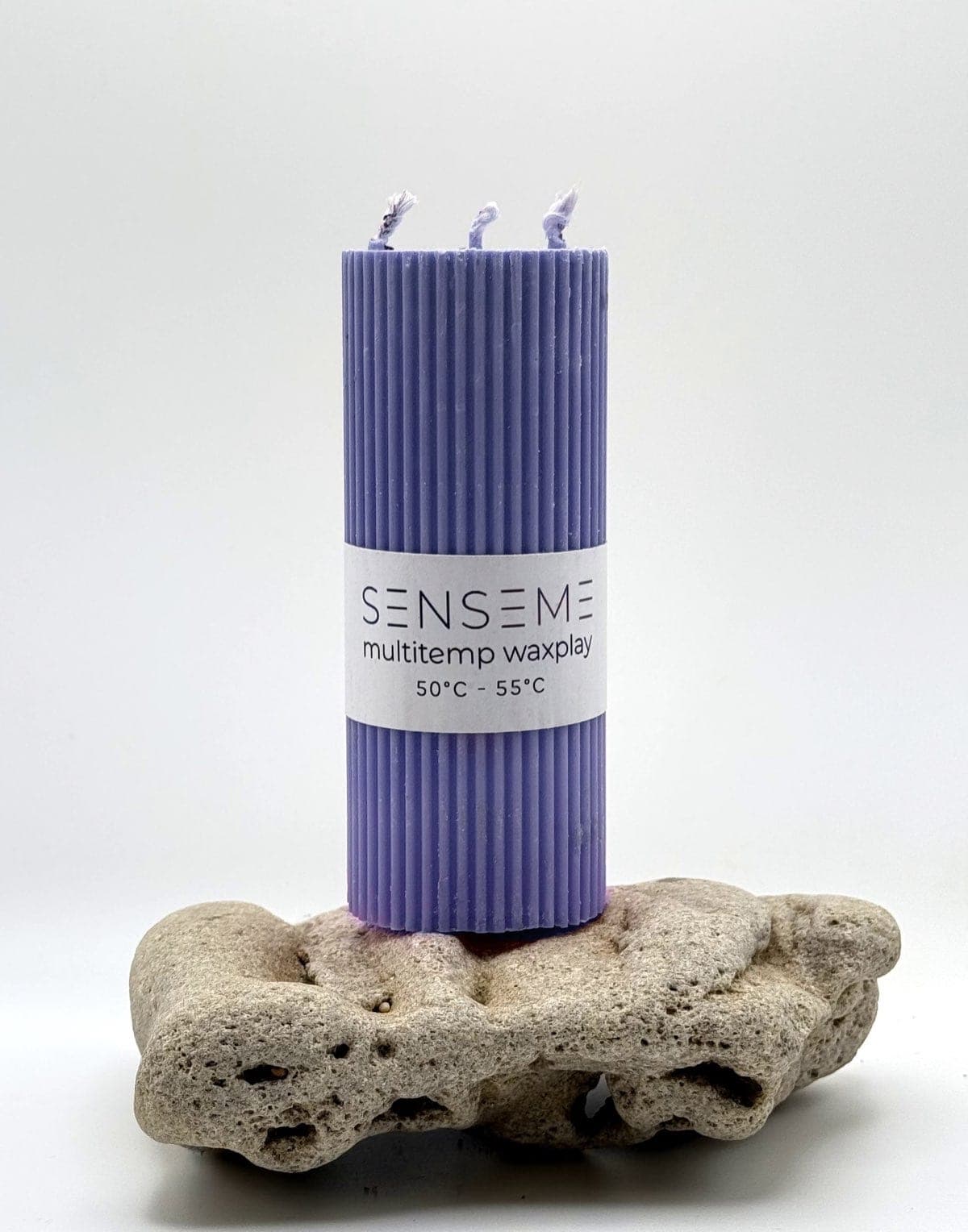
Skin Care (Wax Play, Impact, Rope)
Different scenes leave different marks. For wax play, the skin needs gentle cleansing and a non-comedogenic oil like jojoba or sweet almond — see our best oils guide for ranked recommendations. For impact play, cool (not cold) compresses for the first twenty minutes reduce swelling; arnica gel can help with deeper bruising. For rope, check extremities for circulation and numbness, and move slowly through any joint that was held in flexion.
Rest and Sleep
Sleep is the most underrated aftercare tool in kink. The post-scene body is tired at a cellular level, and several hours of uninterrupted rest will do more for recovery than almost anything else you can provide. If your partner is sleepy, do not fight it. Get them safe, warm, hydrated, and let them sleep.
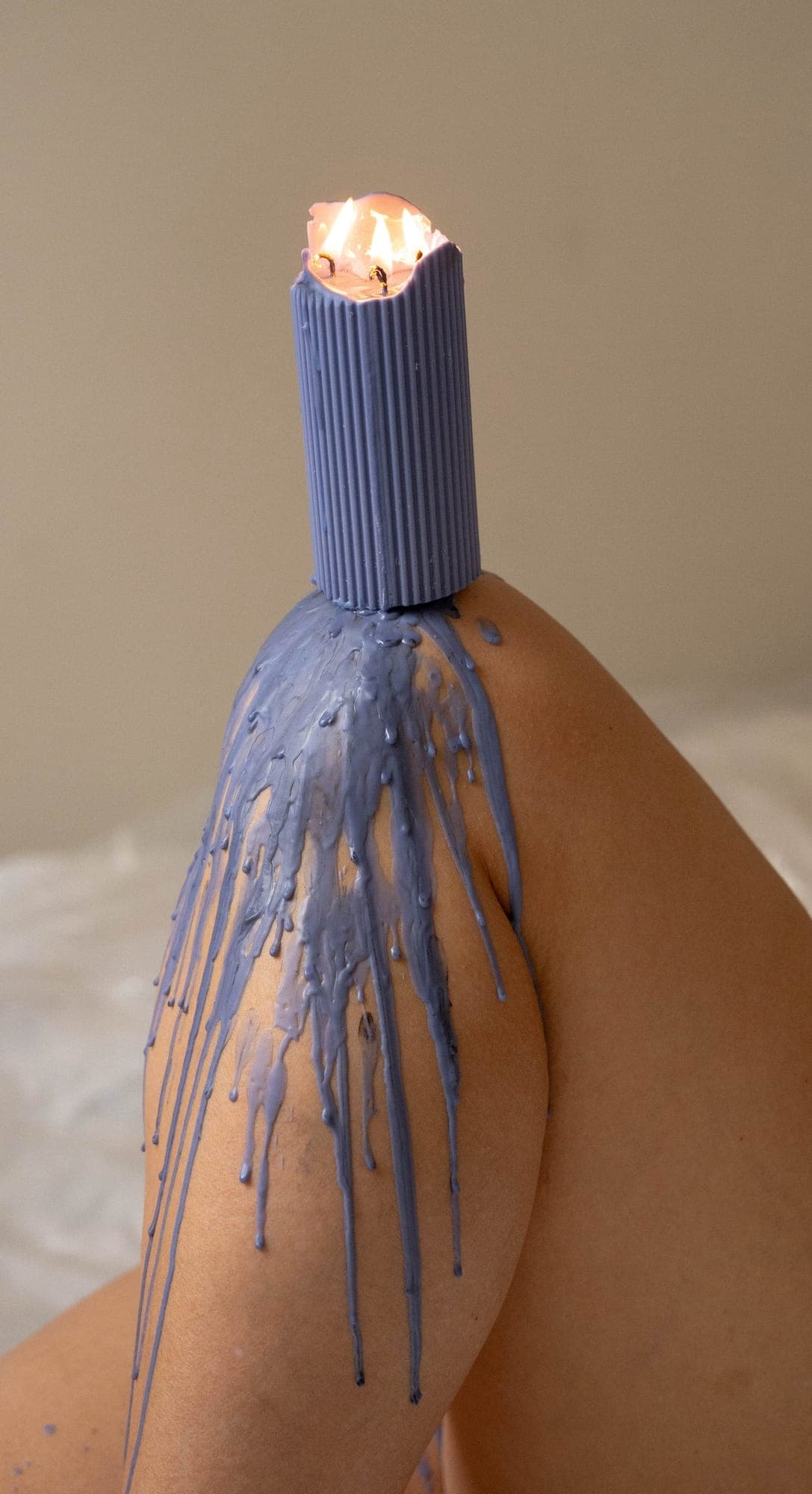
50°C Violet
Cannabis · Cactus
Gentle 50°C warmth — ideal for low-impact sensory sessions that are easy to clean.
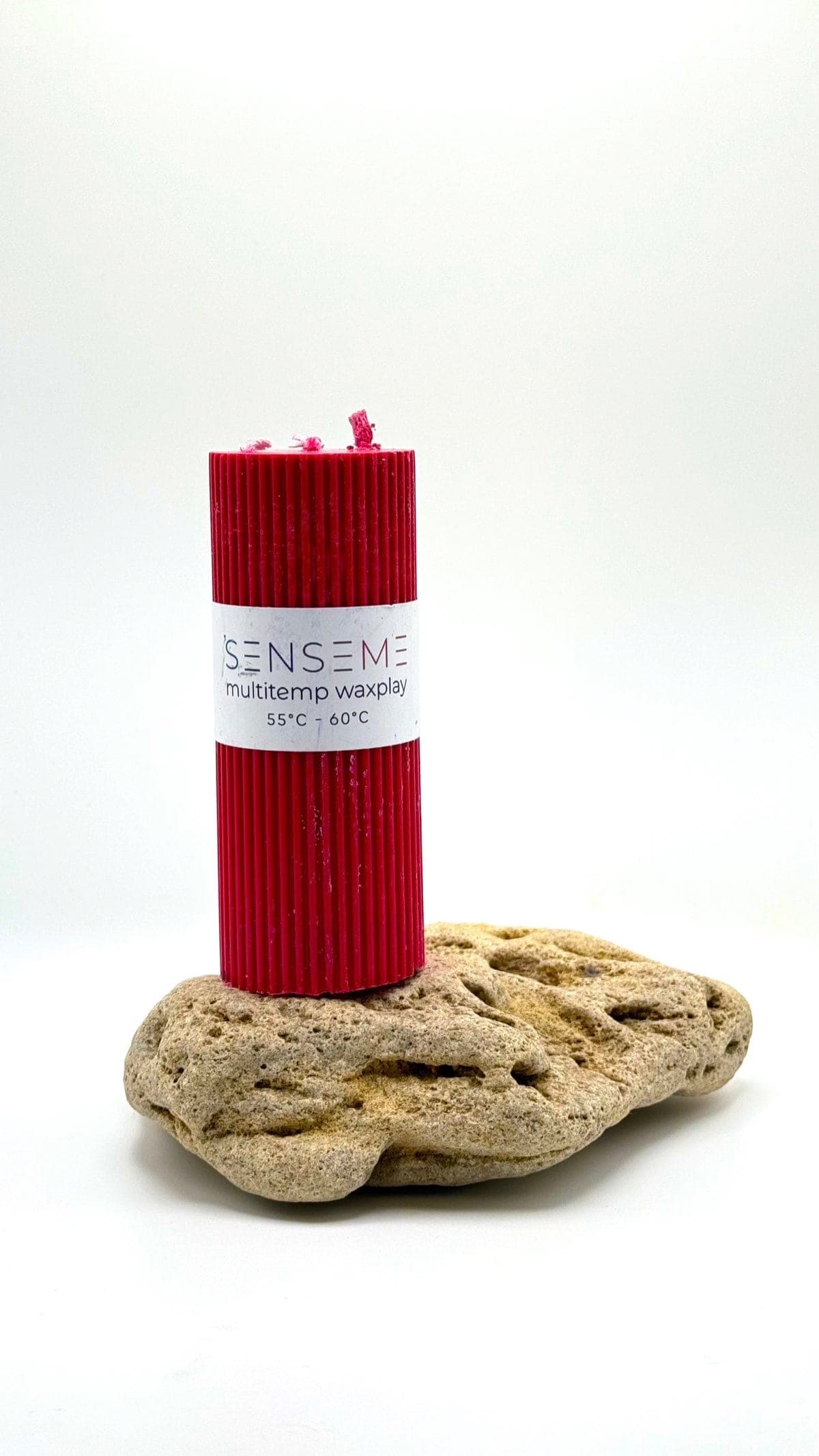
65°C Red
Palo Santo ·
Ember tier 65°C — for intense scenes where deliberate aftercare is essential.
Emotional Aftercare: What Really Heals
Emotional aftercare is where people get it wrong. They assume love will translate automatically — that being caring is enough. It is not. Emotional aftercare is a skill, and the difference between doing it well and doing it badly determines whether your partner lands softly or spirals.
Reassurance and Presence
The single most important thing you can do in the first minutes after a scene is stay. Not necessarily talk, not necessarily touch, but be physically present and attentive. People coming down from intensity often feel, briefly, as if they have been left — even when the person they were playing with is right there. Your job is to make unmistakable that you are still here.
Short, simple phrases work better than speeches. "You did well." "I have you." "I am not going anywhere." These are not scripts; they are signals. Say them because you mean them, not because a guide told you to.
Language and Tone After a Scene
Watch your tone. A voice that was sharp and commanding ten minutes ago needs to soften now. This is not about performance — it is about giving your partner's nervous system a clear signal that the scene is over and the rules have changed. If you played a strict dynamic, this transition is especially important. Make it deliberate.
Avoid, in the first hour, any critique of the scene itself, any processing of "what that meant for us," or any serious conversation. The body is not ready to metabolize complex emotional content. That conversation can happen tomorrow. Tonight is for warmth, water, and quiet.
Creating a Safe Landing
A safe landing is a deliberate environment: soft lighting, comfortable temperature, familiar smells, no phones, no interruptions. If you played at home, this is easy. If you played elsewhere, build it with what you have — a blanket you brought, a playlist you know, a snack from your kit.
The environment is doing real work. A dimly lit room with a steady voice and a warm blanket tells the nervous system, loud and clear, that the scene is over and it is safe to come down.
Sub Drop and Dom Drop: The Crash After the High
What Sub Drop Feels Like
Sub drop is the physical and emotional crash that can follow a scene, especially an intense one. It typically shows up hours to days after the scene ends, not immediately. Common symptoms include sudden sadness, fatigue, muscle soreness, tearfulness, irritability, disorientation, and a sense of being emotionally raw. It can last twenty-four hours or extend across several days, depending on the intensity of the scene and the individual's baseline.
Sub drop is not a sign that something went wrong. It is a sign that something went intensely right and the body is now paying the biochemical bill. Good aftercare reduces the severity of sub drop. It does not always prevent it entirely, and that is okay.
Dom Drop Is Real, Too
Dom drop is less discussed and more overlooked. Tops carry the responsibility of the scene — safety, consent, technique, emotional regulation — for its entire duration. That load does not vanish when the scene ends. When the adrenaline clears, many tops experience their own version of the crash: guilt, second-guessing, physical exhaustion, a strange emotional flatness.
If you are the top, plan aftercare for yourself the same way you plan it for your partner. If you are the bottom, understand that your partner may need care too — and offering it is not a role violation. It is mutuality.
When to Worry
Most post-scene emotional reactions resolve within a few days with good aftercare and basic self-care. A sub drop that lingers beyond a week, spirals into major depressive symptoms, or produces thoughts of self-harm is not ordinary recovery and deserves professional support. A mental-health clinician familiar with kink — most major cities now have them — is the right resource. This is rare, but it is worth naming.
Building Your Aftercare Kit
An aftercare kit is a prepared bundle of supplies kept within reach of where you play. The point is to remove decision-making from the moment after a scene, when decision-making is exactly the capacity you have least of. If you have to go looking for water, you will not bother. If water is already there, you will drink it.
A basic kit covers four categories: hydration and nutrition (water, electrolytes, a snack), skin and body care (oil, balm, wipes, cool compress), comfort and warmth (a blanket, soft layer of clothing), and emotional grounding (a familiar object, a playlist, a note if you play at a distance). Scene-specific kits add items for the type of play you do — oil and gentle cleanser for wax play, arnica for impact, scissors and bandage shears for rope.
For a complete checklist and scene-specific recommendations, see our dedicated aftercare kit guide.
Aftercare for Different Scenes
Aftercare is not one-size-fits-all. The scene shapes the recovery, and knowing the patterns for each type of play helps you prepare.
Wax Play Aftercare
Wax play leaves skin warm, slightly sensitized, and sometimes marked with temporary redness. The first task is gentle wax removal — rolling or peeling the cooled wax off rather than scrubbing. Follow with a rinse of lukewarm water and a light coat of jojoba or sweet almond oil to restore the skin barrier. Avoid hot showers and abrasive cleansers for several hours. Our full post-wax-play skin routine walks through this step by step.
Impact Play Aftercare
Impact scenes — spanking, flogging, caning — produce varying degrees of localized bruising and skin sensitization. Cool compresses in the first twenty minutes reduce swelling. Arnica gel or cream supports deeper bruise recovery over the next several days. Check the skin for broken areas and clean any abrasions with mild antiseptic. Physical aftercare for impact tends to extend over several days as bruises develop and fade.
Rope and Bondage Aftercare
Rope scenes carry circulation and nerve risks that are largely invisible until aftercare. Immediately after untying, check extremities for color, sensation, and mobility. Move slowly through any joint that was held in an unusual position. Nerve compression symptoms — tingling, numbness, weakness — usually resolve within minutes to hours but occasionally persist; any numbness lasting more than a few hours warrants a professional opinion.
Sensory Play Aftercare
Sensory scenes — blindfolds, temperature play, deprivation — are often gentler on the body but can produce surprisingly strong emotional reactions. The physical aftercare is minimal. The emotional aftercare is where the work is: gradual reorientation to the room, soft light rather than sudden bright light, and time to reconnect with ordinary sensation before returning to ordinary conversation.
Aftercare When You Play Solo
Solo play needs aftercare too. Playing alone removes the other person from the equation but not the neurochemistry. Sub drop happens after solo scenes. The endorphin crash happens after solo scenes. The only thing that changes is that no one else is there to notice or help, which makes preparation even more important.
Solo aftercare means preparing your environment before the scene: the water is already poured, the blanket is already on the bed, the playlist is already queued, the snack is already unwrapped. It also means being willing to be gentle with yourself in a way that is not always natural when you are used to being both the top and the bottom of your own experience.
For a dedicated walk-through, see our solo aftercare guide.
Talking About Aftercare Before the Scene
The biggest mistake people make with aftercare is treating it as something you figure out afterward. You will not figure it out afterward. Afterward, you will be tired, emotionally raw, and in no state to negotiate anything complicated.
Negotiate aftercare before the scene, as part of the same conversation where you discuss limits, safe words, and consent. Good questions to ask each other: How do you usually feel after intense experiences? What helps you land — touch or space? Food or quiet? Do you want to talk or do you want the room to be quiet? Where do you want to be physically? What should I do if you seem fine at first and then crash tomorrow?
Write the answers down if you need to. The goal is not a rigid script — it is a shared map so that in the vulnerable minutes after a scene, both of you already know which direction to walk. Our aftercare negotiation guide includes a full conversation script and checklist.
Further Reading
- Sub Drop: What It Is, Why It Happens, and How to Recover
- Dom Drop Is Real: A Guide for Tops, Dominants, and Their Partners
- BDSM Aftercare Kit: The Complete Checklist
- Sub Space: What It Is and How to Come Down Safely
- Physical vs Emotional Aftercare: Why You Need Both
- Wax Play Safety Guide
- Wax Play for Beginners
Sources & References
- National Coalition for Sexual Freedom (NCSF) — Consent Counts and Kink-Aware Professionals Resources
- Sprott, R. A., & Randall, A. (2017). Health, Well-being, and BDSM Practitioners. Current Sexual Health Reports.
- Wismeijer, A. A. J., & van Assen, M. A. L. M. (2013). Psychological Characteristics of BDSM Practitioners. Journal of Sexual Medicine.
- Sagarin, B. J., Cutler, B., Cutler, N., Lawler-Sagarin, K. A., & Matuszewich, L. (2009). Hormonal Changes and Couple Bonding in Consensual Sadomasochistic Activity. Archives of Sexual Behavior.
- Carter, C. S. (2014). Oxytocin Pathways and the Evolution of Human Behavior. Annual Review of Psychology.
This article is for educational purposes and does not constitute medical or psychological advice. If you are experiencing persistent distress after a scene, consult a qualified mental-health professional — preferably one familiar with kink and alternative sexualities.
Frequently Asked Questions
Can aftercare replace a therapist?
Can you over-do aftercare?
Do casual BDSM scenes need aftercare?
How long should BDSM aftercare last?
Is aftercare only for submissives?
What if my partner does not want aftercare?
What is the difference between aftercare and sub drop recovery?
Olga Bevz
Olga founded SenseMe Waxplay to build body-safe wax play candles grounded in actual knowledge of anatomy, nervous systems, and kink practice. She writes about sensation play, BDSM safety, and the quiet skills that make intense experiences land well.
Read full story