

Wax play for beginners— your complete first-session guide
Everything you need to know before, during, and after your first wax play experience. Written by a sexologist who teaches wax play workshops in Lisbon.
What is wax play?
Wax play is the practice of pouring warm, melted wax onto the skin as a form of sensory exploration. The wax creates a brief moment of focused heat, followed by a spreading warmth that fades as it cools and hardens. It can be gentle enough to feel like a warm bath or intense enough to make your breath catch — depending entirely on the temperature of the candle you choose. Despite what films and social media suggest, wax play is not inherently about pain. For most people — especially those starting out — it is about warmth, anticipation, and a kind of attentiveness between partners that everyday life rarely produces. The pause between pours, the sound of the wax landing, the slow cooling on skin — these are the details that make the practice distinct. Wax play belongs to the broader category of sensation play, which includes anything that engages the body's sensory responses: temperature, texture, pressure. It has been practiced for centuries across cultures, but its modern form is shaped by the BDSM community's emphasis on consent, communication, and negotiated boundaries. You do not need to identify with any community to try it. You just need curiosity, a safe candle, and a willing partner — or yourself. If you want to understand the history and broader context, our article on what is wax play goes deeper. For terminology, see our glossary.
What you need for your first session
The preparation for wax play is simple, but each item matters. Here is what to have ready before you light anything. A body-safe wax play candle is the only non-negotiable. This is not a regular candle — it is a candle engineered for skin contact, with a controlled melting temperature, skin-safe dyes, natural wax, and cotton wicks. If the label does not say "body safe" or "wax play," do not use it on skin. A dark towel or sheet to protect your surface. Wax peels off skin cleanly, but can mark light-coloured fabric. Lay something down that you do not mind staining. A dark colour also sets the visual mood better than a plastic sheet. A cool damp cloth, within arm's reach. Not for emergencies — for comfort. Pressing a cool cloth to skin after a pour creates a contrast that many people find deeply pleasant. A glass of water. For drinking. Sensation play can be dehydrating, especially when combined with nervousness or excitement. A soothing moisturiser or aloe gel for aftercare. The skin will not be damaged after low-temperature wax play, but it will appreciate hydration. A conversation. Before you light the candle, talk about what you both want. Discuss where on the body is welcome and where is not. Agree on a word or signal that means stop — immediately, no questions asked. This conversation is not a formality. It is the foundation that makes everything after it possible. If you are unsure which candle to choose, our buyer's guide walks through every option. For your first session, we recommend the 50°C Violet — the gentlest temperature in our range — or the Duo Holy Intimacy set if you want to explore the difference between 50°C and 55°C.
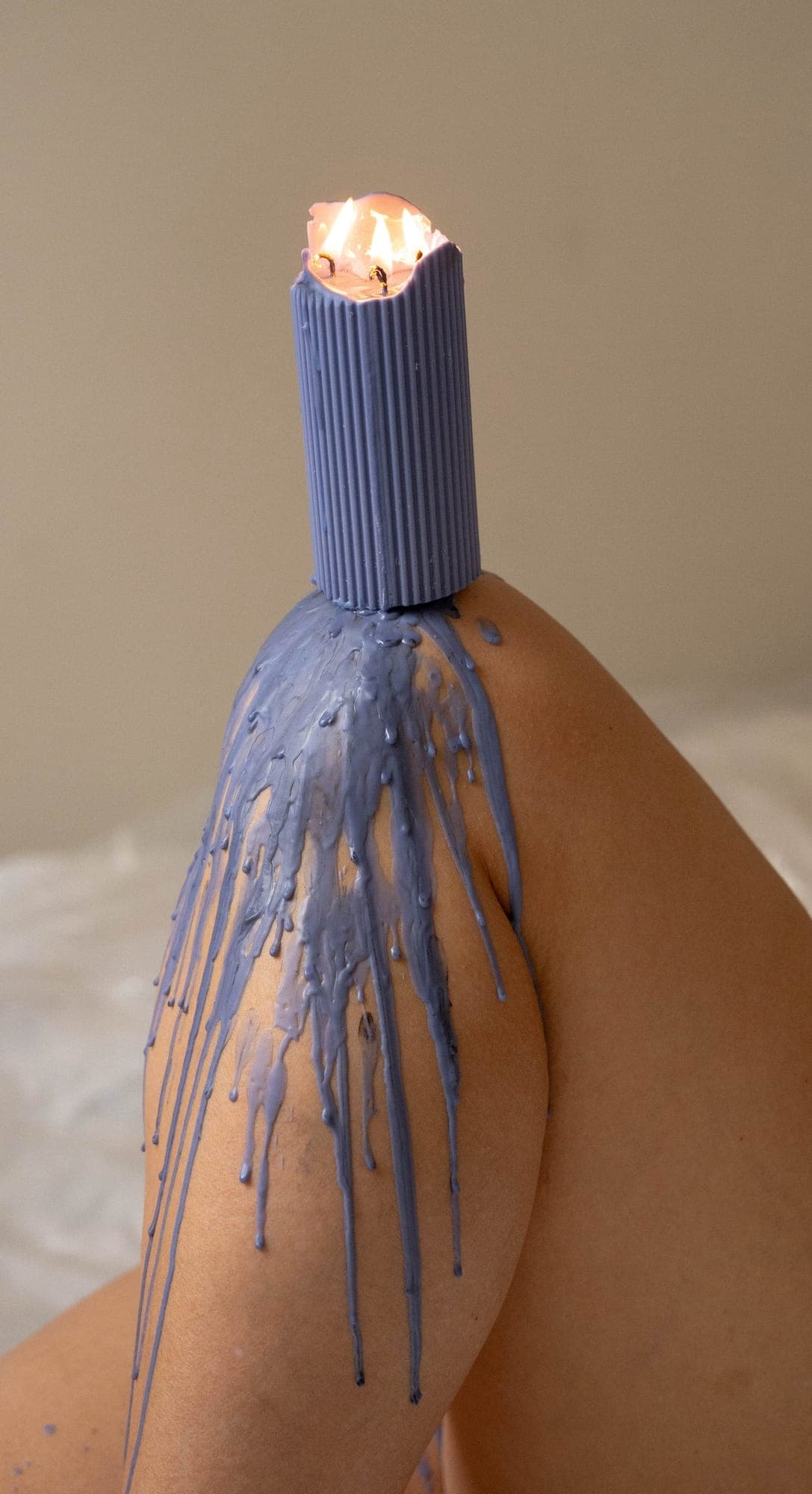
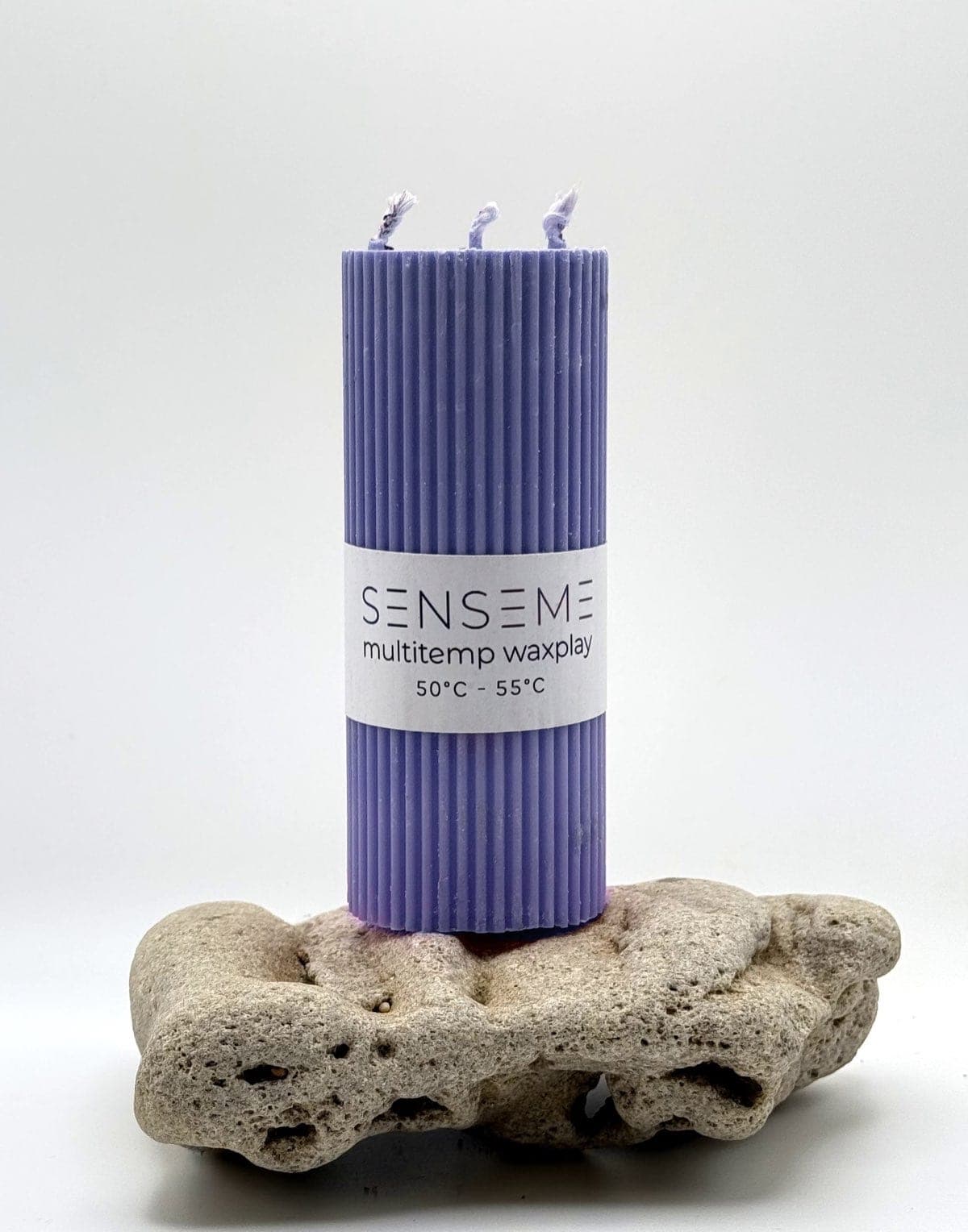
Duo Holy Intimacy
Cannabis & Cactus · Forest
If you want to explore two temperatures
Choosing your first temperature
SenseMe candles are organised into three tiers based on temperature: The Feather tier (50–55°C) is where everyone starts. At 50°C, the wax feels like warm bathwater — a soft, spreading warmth with no sting at all. At 55°C, you begin to notice the wax arrive on skin as a distinct moment, but it is still gentle and forgiving. This tier is designed for people who have never tried wax play, couples exploring together for the first time, and anyone with sensitive skin. The Ember tier (60–65°C) is intermediate. The wax introduces a brief sting — one to two seconds — before dissolving into heat. This tier is for people who have done several sessions at lower temperatures and want more defined sensation. The Blaze tier (70–75°C) is advanced. The heat is immediate and intense. These candles require experience, technique, and trust between partners. They are not starting points. For your first session, choose 50°C. Not because 55°C is unsafe — it is also beginner-friendly — but because starting at the absolute gentlest temperature lets you focus entirely on technique, communication, and your partner's responses without any concern about intensity. You can always move to 55°C on your second session. The progression itself is part of the experience. There is no value in starting higher than necessary. Every temperature teaches you something. Skipping the lower range means missing the foundation that makes higher temperatures safe and enjoyable. For a detailed breakdown of every temperature, what each feels like on skin, and which candle belongs to which tier, see our temperature guide.
Before you begin — communication and consent
The most important part of wax play happens before anyone touches a candle. Talk about what each of you wants from the experience. Not in general terms — specifically. Where on the body do you want to feel wax? Where do you absolutely not? Is there a part of the experience you are most curious about? Is there something you are anxious about? Say it out loud. Naming a fear reduces it. Naming a desire makes it real. Agree on a stop signal. The classic approach is a safeword — a word unrelated to the context (something like "red" or "pineapple") that means "stop immediately, no negotiation." But also agree on a non-verbal signal — a double tap on the surface, a raised hand — because during intense sensation, speaking can be difficult. A stop signal is not a failure mode. It is proof that communication is working. Using it should feel as natural as saying "a little to the left." Check in during the session, not just before. A simple "how's that?" between pours keeps the connection alive. But also learn to read silence — sometimes your partner is deeply absorbed in the sensation and interrupting with questions breaks the flow. This balance between checking in and trusting the silence is something you develop over sessions, not something you master on the first try. Consent in wax play is not a checkbox at the beginning. It is a continuous, ongoing process. At any moment, either person can change their mind about anything. That is the deal. For a deeper exploration of communication in this context, see our article on consent and communication in wax play.
Your first session — step by step
This section assumes you are using a 50°C body-safe wax play candle — the SenseMe Violet or something equivalent. If you are using a different temperature, adjust the distances noted below. Our temperature guide has specific distances for every candle.
Prepare the space. Lay your dark towel or sheet where the receiving partner will lie. Place the damp cloth and water within arm's reach, not across the room. Dim the lights — the shimmer on the wax and the glow of the flame are part of the experience. Move anything flammable away from the candle's reach. If you are using music, start it now. Everything that will interrupt the mood later should be handled now.
Light the candle and wait. Place the candle on a stable, heat-safe surface. Light the wick and let it burn for 8 to 10 minutes. You are waiting for a full, even wax pool to form across the entire top surface. This is not idle time — use it. Touch your partner. Talk. Build the anticipation. The pool matters because an uneven pool produces erratic drips that cool at different rates, which makes the experience unpredictable in ways that are not enjoyable for a first session.
Test on your own skin first. Blow out the flame. Drip two or three drops on the inside of your wrist from about 30 centimetres. At 50°C, you should feel gentle warmth — similar to pressing your wrist against a cup of warm tea. No sting, no sharpness. If you have sensitive skin or allergies, wait 60 seconds and check for redness. If the wax feels comfortable to you, tell your partner what to expect — "it will feel like a warm touch that spreads and fades."
Start on safe body areas. The upper back is the most popular starting area for a reason: large muscle mass, low sensitivity, and the receiving partner cannot see when the next pour is coming — which makes every drop a small surprise. Shoulders and outer thighs are also good first-session areas. Avoid the spine, inner arms, chest centre, face, hair, genitals, and any broken or irritated skin.
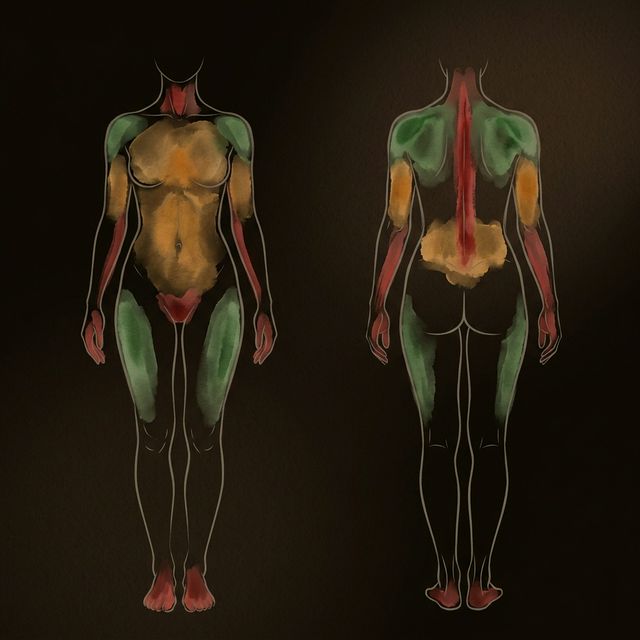 Find your distance. With a 50°C candle, start pouring from 30 to 40 centimetres above the skin. At this height, the wax cools slightly in the air and arrives as soft warmth. Move closer to 15 to 20 centimetres for a warmer sensation. The relationship is simple: more height equals cooler wax, less height equals warmer. Experiment slowly — move the candle down in small increments, and let your partner tell you what each distance feels like.
 Pour slowly and pause. Tilt the candle gently and let the wax flow in a thin, steady line. Do not dump the entire pool at once. The rhythm of wax play is: pour, pause, pour, pause. The anticipation between pours — when your partner can feel the warmth of the candle above them but does not know exactly when the next drop will land — is half the experience. Some people describe the pauses as more intense than the wax itself.
Read your partner. Watch their breathing. Watch their hands. Watch the muscles in their back. A slow exhale means they are absorbing the sensation. A held breath means they are anticipating. A sharp inhale means the wax landed with more presence than expected — that is information, not alarm. A flinch or a tense pulling away means increase your distance or pause entirely. You do not need to ask "are you okay?" after every pour — but a quiet "more?" or "how's that?" between sequences keeps the connection alive.
When to stop. Stop while it still feels good. Fifteen to twenty minutes of wax for a first session is generous. Blow out the candle, set it aside, and shift into the next phase — removal and aftercare.
Pour slowly and pause. Tilt the candle gently and let the wax flow in a thin, steady line. Do not dump the entire pool at once. The rhythm of wax play is: pour, pause, pour, pause. The anticipation between pours — when your partner can feel the warmth of the candle above them but does not know exactly when the next drop will land — is half the experience. Some people describe the pauses as more intense than the wax itself.
Read your partner. Watch their breathing. Watch their hands. Watch the muscles in their back. A slow exhale means they are absorbing the sensation. A held breath means they are anticipating. A sharp inhale means the wax landed with more presence than expected — that is information, not alarm. A flinch or a tense pulling away means increase your distance or pause entirely. You do not need to ask "are you okay?" after every pour — but a quiet "more?" or "how's that?" between sequences keeps the connection alive.
When to stop. Stop while it still feels good. Fifteen to twenty minutes of wax for a first session is generous. Blow out the candle, set it aside, and shift into the next phase — removal and aftercare.
Aftercare — what happens after the wax
Aftercare is not an add-on to wax play. It is the closing of the experience. Skipping it is like ending a conversation mid-sentence. Remove the wax. Let the wax cool for one to two minutes until it feels firm. Then peel. At 50°C, the wax comes off in satisfying sheets — gently lift an edge and pull. For stubborn patches, slide a credit card edge underneath. If you applied a thin layer of coconut oil before the session, removal is almost effortless and the skin feels hydrated after. Care for the skin. Wipe the area with a warm damp cloth. At 50°C, there should be no redness at all — the temperature is too low to irritate. Apply a light moisturiser or aloe gel. This is comfort, not medicine. Care for each other. This is the part most guides understate. After sensation play, the body comes down from a heightened state. Hormones shift. Some people feel euphoric. Some feel tender. Some feel a sudden, unexpected vulnerability. All of these are normal. What helps: stay close. Physical contact — holding, a hand on the back, a blanket. Water and something to eat. And a conversation, but not an interrogation. Do not lead with "was it good?" — that puts pressure on the answer. Instead, try open-ended questions: "What stood out for you?" or "What did the wax feel like when it first landed?" or simply "How are you feeling?" The debrief is where you learn what worked, what was too much, what you want to try next time. It is not evaluation — it is shared processing. And it makes the next session better than the first, because you are building on real information, not guesses. For a complete aftercare protocol including body-area-specific guidance and redness timelines for higher temperatures, see our safety and aftercare page.
What's next — building your temperature journey
After two or three sessions at 50°C, you will know your body's responses, your partner's signals, and your pouring technique well enough to try 55°C. The difference is subtle — you will notice the wax arrive with slightly more presence — but it marks the beginning of a progression that many people find deeply engaging. The SenseMe temperature system is designed for exactly this. Each step up teaches you something new. At 55°C, you learn to read the difference between "gentle warmth" and "noticeable heat." At 60°C, you encounter the sting for the first time and learn how distance controls it. At 65°C, you discover what three wicks and a deep pool can do for sustained pours. At 70°C, you learn that trust is not an abstract concept — it is a physical sensation. There is no timeline for this progression. Some couples move from 50°C to 55°C in a week. Some stay at 50°C for months because they love it there. Neither is wrong. The only rule is: do not jump temperatures. Moving from 50°C to 65°C in one session is not brave — it is skipping the education that makes 65°C safe and enjoyable. If you want to explore two temperatures in one session, the Duo Holy Intimacy set (50°C + 55°C) is made for this. Alternating between two candles — pouring the gentler one, then switching to the warmer — teaches you how contrast works in sensation play. For a wider range, the Trio Tender (50°C + 55°C + 70°C) takes you from first session to advanced in one box, though we recommend reaching the 70°C only after months of experience. For the complete breakdown of every temperature, what it feels like, and how to progress, see our temperature guide. For multi-temperature session techniques, see our article on multi-temperature wax play.
Trio Tender
Cannabis & Cactus · Forest
For the journey from gentle to intense
Frequently Asked Questions
Can you do wax play alone?
Do I need experience with BDSM to try wax play?
Does wax play hurt?
How long should a first wax play session last?
What if my partner doesn't like it?
Ready to start?
The 50°C Violet is our most popular first candle — gentle warmth, body safe, handmade in Lisbon.
Explore Collection
Olga Bevz
Olga makes every SenseMe candle by hand and teaches wax play workshops in Lisbon. She developed the six-temperature system over two years of testing blends, scents, and melting points.
Read full storyGet the free wax play starter guide
8 pages — temperature chart, distance guide, aftercare checklist. Plus new scents and sets every month.
No spam. Unsubscribe anytime.
Deep dives
Deeper reading that builds on this guide.
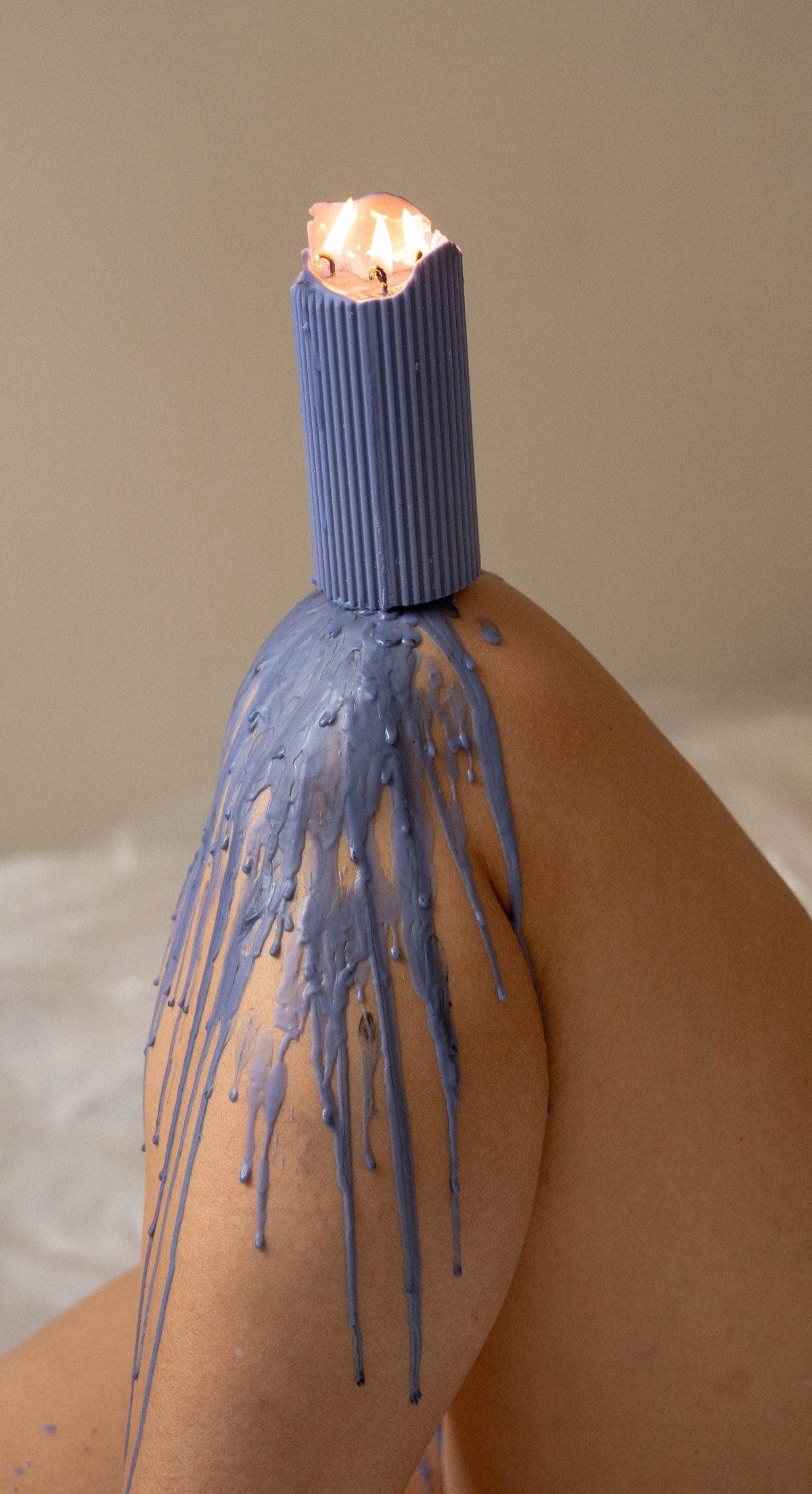
Is Wax Play Safe? 7 Myths Debunked by a Sexologist
Is wax play safe? Yes, with the right candle and technique. This guide breaks down the biggest myths about burns, skin safety, hygiene, and body-safe wax play.

First Time Wax Play Checklist: Everything You Need (2026)
Use this first-time wax play checklist to choose the right candle, prep the space, cover safety basics, and make your first session feel smooth and beginner-friendly.

Solo Wax Play: How to Try It on Your Own for the First Time
A step-by-step guide to solo wax play — how to set up safely, which body areas to start with, what temperature to choose, and why trying it alone is a completely valid way to begin.
Wax Play for Couples: How to Bring It Up and Where to Start
Learn how to introduce wax play to your partner, choose a beginner-safe candle, and plan a first session that feels intimate, safe, and exciting.
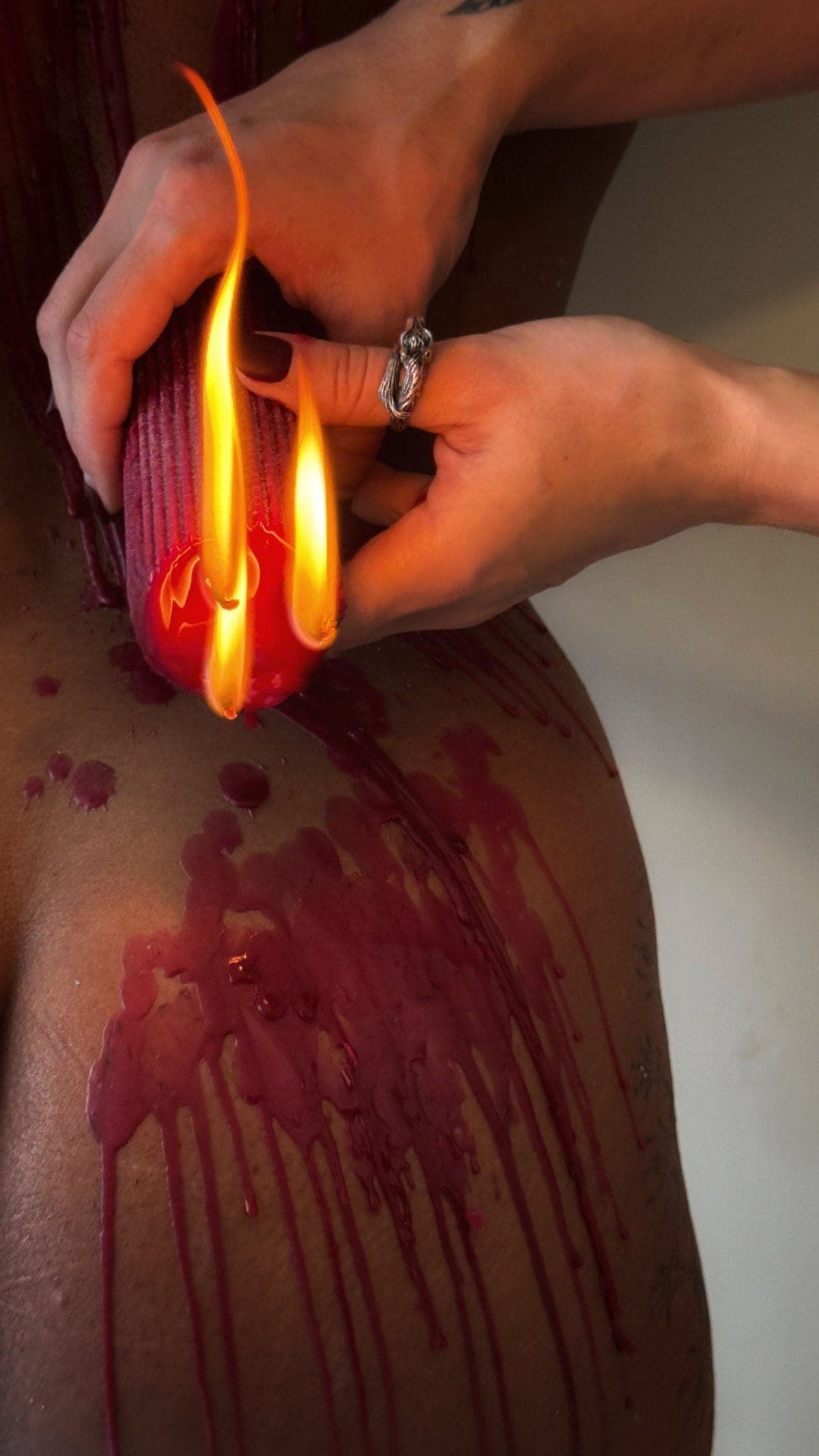
15 Wax Play Ideas: Scenes, Rituals, and Session Designs for Every Level
From gentle beginner rituals to advanced multi-temperature scenes — 15 wax play ideas to inspire your next session, organized by experience level.
What Does Wax Play Feel Like? Your First Session, Minute by Minute
Wondering what a first wax play session actually feels like? Here is what to expect from the first drop to aftercare, including normal reactions and beginner-safe pacing.