
Wax play safety— body areas, distance, aftercare, and when to stop
A sexologist's complete safety protocol for wax play. Where to pour, how far to hold the candle, what to do after, and the signals that mean stop.
"I wrote this page before I wrote the product descriptions. Safety is the foundation — everything else sits on top of it. If you only read one page on this site, make it this one."
Is wax play safe?
Yes. Wax play is safe when you use the right candle and the right technique. It is practised by hundreds of thousands of people worldwide, taught in workshops, and written about in peer-reviewed sexological literature. It is not inherently dangerous — but it does carry risks that are entirely manageable when you understand them. There are two categories of risk. The first is chemical risk: the materials in the candle. Regular household candles contain paraffin additives, synthetic dyes, metal-core wicks, and fragrances not tested for skin contact. These can irritate, burn, or cause allergic reactions on skin. Body-safe wax play candles — like those in the SenseMe range — use controlled wax blends (natural soy-paraffin), cosmetic-grade dyes, cotton wicks, and phthalate-free fragrance oils, all dermatologically tested. Chemical risk is eliminated by choosing the right product. The second is thermal risk: the heat of the wax. Even body-safe wax can cause discomfort if poured from too close, held over one spot, or applied to sensitive body areas. Thermal risk is managed through three tools: temperature choice (start low), distance control (start high), and communication (check in constantly). These three tools are what the rest of this page teaches you. Understanding the temperature system is the first step — see our temperature guide for a full breakdown of each tier.
Body-safe candles vs regular candles
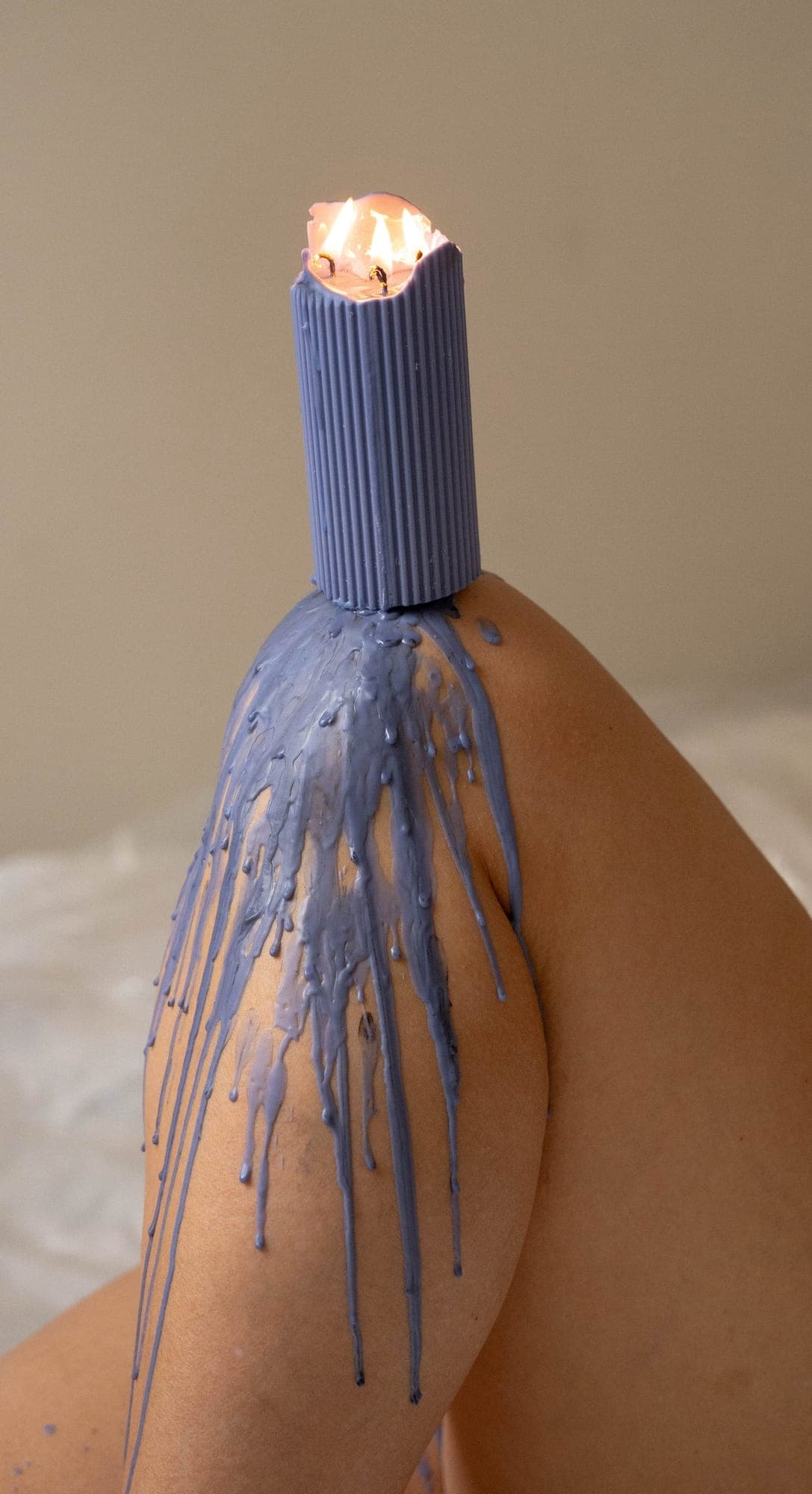
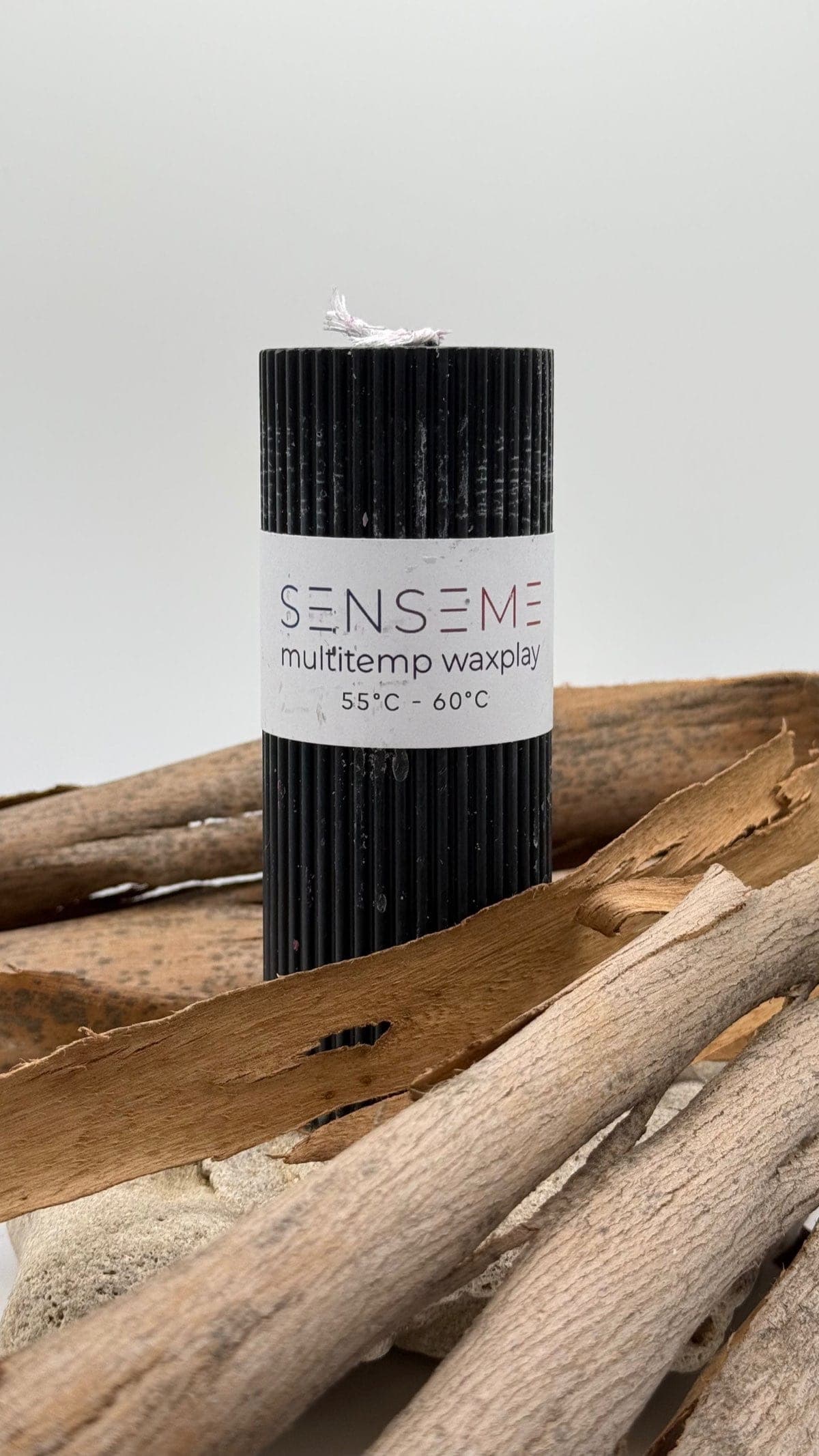
The distinction matters more than most people realise. A regular candle and a body-safe wax play candle look similar. They are not the same product. A regular household candle burns at 80–90°C. At this temperature, wax landing on skin from 20 centimetres can cause a first-degree burn — immediate pain, redness that lasts hours, and in some cases blistering. The dyes are industrial grade, designed for colour stability and shelf appeal, not for contact with skin. The wicks often contain zinc or tin cores for rigidity, which can release micro-particles when burned. The fragrances are synthetic blends optimised for scent throw, not dermatological safety. A body-safe wax play candle — such as those in the SenseMe range — is engineered differently. The wax blend (natural soy and cosmetic-grade paraffin) has a controlled melting point, stated on the product. The dyes are cosmetic-grade, the same classification used in lipstick and skin contact products. The wicks are pure cotton. The fragrance oils are phthalate-free and skin-safe. The candle is dermatologically tested for application to skin. Every variable that could cause harm has been addressed in the formulation. The price difference between a €3 household candle and a €20 wax play candle is not markup. It is the cost of safety testing, controlled ingredients, and a temperature you can trust. When the product is going on someone's skin, this is not a place to economise. For a full comparison including generic wax play candles from Amazon, see our buyer's guide. For a deep dive into wax types and their properties, see our article on soy vs paraffin wax.
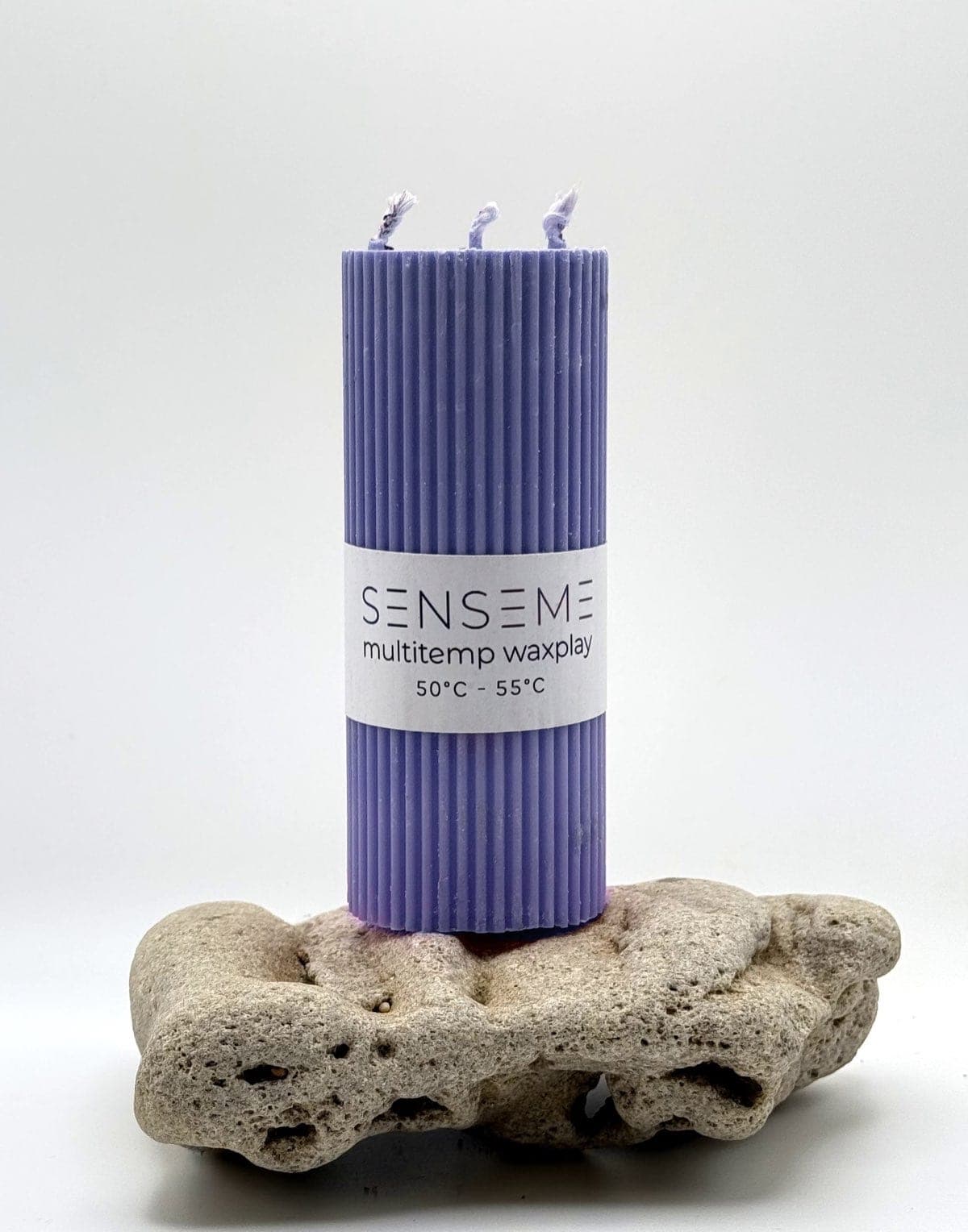
50°C Violet
Cannabis · Cactus
100% body-safe and dermatologically tested at 50°C.
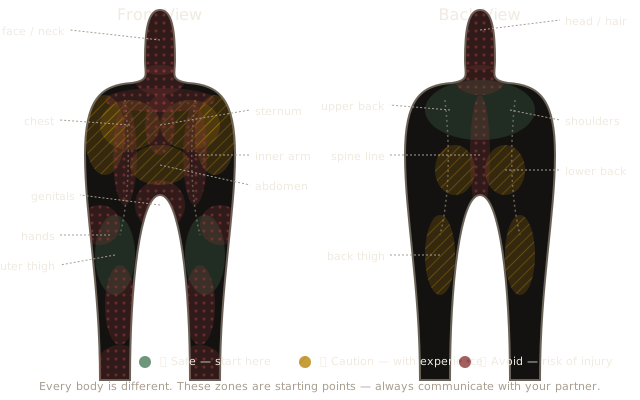
Body area guide — where to pour, where to avoid
Not all skin responds to heat the same way. The experience of identical wax at identical distance varies dramatically depending on where it lands. Understanding body areas is not optional safety knowledge — it is the difference between a pour that delights and one that causes pain.
Safe zones — start here. The upper back between the shoulder blades is the most popular starting area in wax play. The skin is thick, the muscle mass is substantial, and the receiving partner cannot see when the next pour is coming — which makes every drop a surprise. Shoulders and the outer thighs are equally forgiving. These areas tolerate heat well because there is significant tissue between skin and bone, and the nerve density is lower than on extremities.
Caution zones — with experience and communication. The chest requires care — the centre over the sternum is thin-skinned, but the broader pectoral area has more tissue. The abdomen is sensitive but manageable at lower temperatures. The lower back responds well but avoid the spine line directly — vertebrae are close to the surface. The backs of the thighs and upper arms are moderate. These zones are appropriate after several sessions when you can confidently control distance and read your partner's responses.
Avoid zones — do not pour here. The face, neck, and scalp are never appropriate for wax play — risk of eye contact, airway proximity, and hair entanglement. The genitals have extremely thin, sensitive skin. The inner arms, hands, and feet have high nerve density and thin skin over tendons. Any area with broken skin, fresh tattoos, sunburn, or active skin conditions must be excluded. Any area where wax could pool in a crevice and concentrate heat (navel, collarbone hollow) requires extra caution or avoidance.
One principle applies everywhere: skin over muscle tolerates heat better than skin over bone. When in doubt, choose a fleshier area and start from maximum distance.
Distance and temperature — your primary safety tool
Wax cools as it falls through air. This is the single most important safety principle in wax play. The same candle — same temperature, same wax, same everything — produces a completely different experience depending on how far above the skin you hold it. Distance is not a secondary detail. It is your main control. At 30 centimetres or more, wax from any SenseMe candle arrives as warmth. At 15 centimetres, the same wax arrives with a defined edge or sting. Below 10–15 centimetres (depending on the temperature), wax can arrive at near-full temperature — which at 70–75°C is too intense for most skin without gradual build-up. Notice that starting distance increases at 70–75°C. This is counterintuitive but correct: hotter wax needs more air time to cool to a tolerable landing temperature. The instinct to hold closer for precision is wrong at high temperatures — hold further and let physics do the work. These distances are starting points for skin over muscle (upper back, thighs). For caution zones (chest, abdomen), add 5–10 centimetres to the "start here" column. For any area not listed in the safe or caution zones — do not pour. Every body is different. Skin thickness, fat distribution, circulation, hormonal state, and even room temperature affect how heat is perceived. Use these numbers as a baseline and adjust based on your partner's real-time feedback. For a complete breakdown of what each temperature feels like and who it's designed for, see our temperature guide.
| Temperature | Start here | Closer (more intense) | Too close (avoid) |
|---|---|---|---|
| 50°C | 30–40 cm | 15–20 cm | < 10 cm |
| 55°C | 25–35 cm | 15–20 cm | < 10 cm |
| 60°C | 25–30 cm | 15–20 cm | < 15 cm |
| 65°C | 25–30 cm | 15–20 cm | < 15 cm |
| 70°C | 30–35 cm | 20–25 cm | < 20 cm |
| 75°C | 35–40 cm | 25–30 cm | < 25 cm |
Communication and consent
The safety tools discussed so far — the right candle, body area awareness, distance control — are physical. They manage the wax. Communication manages everything else: expectations, boundaries, fear, trust, and the ongoing permission that makes the entire experience possible. Before you begin. Discuss three things explicitly. First, body areas: where is welcome, where is not, where is maybe-with-permission. Second, intensity: how much is wanted today — a gentle session, an exploratory one, or something more intense. Third, stop signals: agree on a safeword (a word unrelated to the context, like "red") and a non-verbal signal (a double tap, a raised hand) for moments when speaking is difficult. During the session. Check in verbally between pours — a quiet "more?" or "how's the distance?" is enough. But also learn when not to interrupt. Sometimes your partner is absorbed in the sensation, and a question breaks the flow. The skill is reading the difference between absorbed silence and overwhelmed silence. Absorbed silence has relaxed muscles and steady breathing. Overwhelmed silence has tension, held breath, or physical withdrawal. If you are unsure which you are seeing — ask. After the session. Aftercare is a form of communication. The debrief is not evaluation — it is shared processing. What felt good, what was too much, what you want to try differently. This conversation is what makes the next session better. Consent in wax play is not a single agreement at the start. It is continuous. At any moment, either person can change their mind about anything — a body area, an intensity, or the entire session. Honouring that instantly and without judgment is the non-negotiable foundation. For a deeper exploration of communication frameworks for sensation play, see our article on consent and communication in wax play.
Aftercare — physical and emotional
Aftercare begins the moment the last pour is done. It is not optional at any temperature. At the Feather tier it is brief and gentle. At the Blaze tier it is essential and extended. But it always happens. Physical aftercare. Remove the wax once it has fully cooled and hardened — typically one to three minutes after the last pour. Peel gently; use a credit card edge for thin residue. Wipe the skin with a warm damp cloth. Apply a light moisturiser or aloe gel. Check for redness. Here is what to expect at each temperature tier:
| Temperature tier | Expected skin response | Duration | |
|---|---|---|---|
| Feather (50–55°C) | Minimal or no redness | Fades immediately | |
| Ember (60–65°C) | Light pink flush | Fades in 20–40 min | |
| Blaze (70–75°C) | Pink to light red | Fades in 30–60 min | |
| Still red after 1h | Apply aloe gel + cool compress | Reduce intensity next session |
Aftercare — emotional
Emotional aftercare. After sensation play, the body shifts from a heightened state back to baseline. Hormones change. Some people feel euphoric, some feel tender, some feel a sudden vulnerability that catches them off guard. All of these are normal. What helps: stay close physically. A hand on the back, a blanket, being held. Water and something small to eat — the body needs fuel after processing intense stimulation. And conversation — but open, not interrogative. Instead of "did you like it?" try: "What stood out for you?" or "Where did you feel it most?" or simply "How are you right now?" The emotional debrief is where you learn what worked and what to adjust. It is not an evaluation. It is care made verbal. For a full aftercare deep-dive including advanced temperature protocols, see our aftercare guide.
How to remove wax from skin
Wax removal is simpler than most people expect. The wax is designed to come off — it is part of the product experience. Wait one to three minutes after the last pour for the wax to fully harden. Then peel. At low temperatures (50–55°C), the wax comes off in large, satisfying sheets. At higher temperatures (65–75°C), the wax sets faster and peels in smaller, more defined pieces. Both are normal. For thin residue that does not peel cleanly, slide the edge of a credit card or a blunt wooden tool underneath. Work gently — the skin may still be slightly sensitised from the heat. The pre-treatment trick: applying a thin layer of coconut oil or jojoba oil to the skin before the session creates a barrier that makes wax removal almost effortless. The oil does not significantly change how the wax feels during play but dramatically reduces removal effort after. Many experienced practitioners consider this step non-negotiable. For fabric: wax on sheets or towels should be washed in warm water immediately after the session. Dark fabric hides any residual colour. Light or white fabric may retain faint dye traces from coloured wax — a second wash with oxygen-based stain remover usually clears it. This is why we recommend using a dark, dedicated towel or sheet for wax play. For a comprehensive wax removal guide including hair removal considerations and techniques for different surfaces, see our full article on how to remove wax from skin.
When to stop
Stop immediately and without question when any of these occur: A safeword or stop signal is used. This is absolute. No "just one more pour," no "are you sure?" Stop. Remove the candle from the area. Shift to aftercare. Discuss what happened later, when both of you are back to baseline. Unexpected pain rather than sting. Sting at intermediate and advanced temperatures is expected — it is brief, sharp, and dissolves. Pain is different: it is sustained, does not fade within a few seconds, or produces an involuntary withdrawal. If your partner's reaction shifts from absorbing to protecting, that is pain, not sting. Increase distance substantially or stop entirely. Visible skin damage. If any area blisters or appears white or raw rather than simply pink or red, stop immediately and follow the protocol in the safety callout above. With body-safe candles at recommended distances, this should not happen — but it can occur if wax is poured from very close range on thin skin, or if a non-body-safe candle is used. Emotional overwhelm. Sensation play can trigger unexpected emotional responses — tears, panic, dissociation, or a sudden desire to stop without being able to articulate why. These are valid stop signals even if the skin is fine. If your partner goes quiet in a way that feels different from absorbed silence, check in immediately. If they want to stop, stop. Stopping is not failure. It is proof that communication is working. Every successful wax play session includes the knowledge that stopping is always available, instantly, for any reason. That knowledge is what makes it possible to relax into the experience in the first place.
Frequently Asked Questions
Can I do wax play if I have sensitive skin?
Can wax play cause burns?
How do I know if a candle is body safe?
Is wax play safe during pregnancy?
What should I do if the wax feels too hot?
People also ask
What temperature should I start with for wax play?
See our temperature guideWhat do I need for my first wax play session?
Read our beginner's guideWhat are the best body-safe candles for wax play?
See our buyer's guideCan you use regular candles for wax play?
Read our article on soy vs paraffin waxStart safe
The 50°C Violet is the gentlest candle in our range — body safe, dermatologically tested, designed for first sessions.
Explore Collection
Olga Bevz
Olga developed SenseMe's safety protocols through two years of testing and hundreds of workshop sessions. She is a certified sexologist and teaches wax play safety in Lisbon.
Read full storyDownload the safety checklist
One-page printable: body area map, distance chart, redness timeline, aftercare protocol. Keep it next to your candle.
No spam. Unsubscribe anytime.
Deep dives
Deeper reading that builds on this guide.

How to Remove Wax from Skin, Sheets, and Fabric (Without Damage)
Step-by-step methods for removing wax play residue from skin, bedsheets, clothing, and furniture — plus prevention tips to make cleanup effortless.
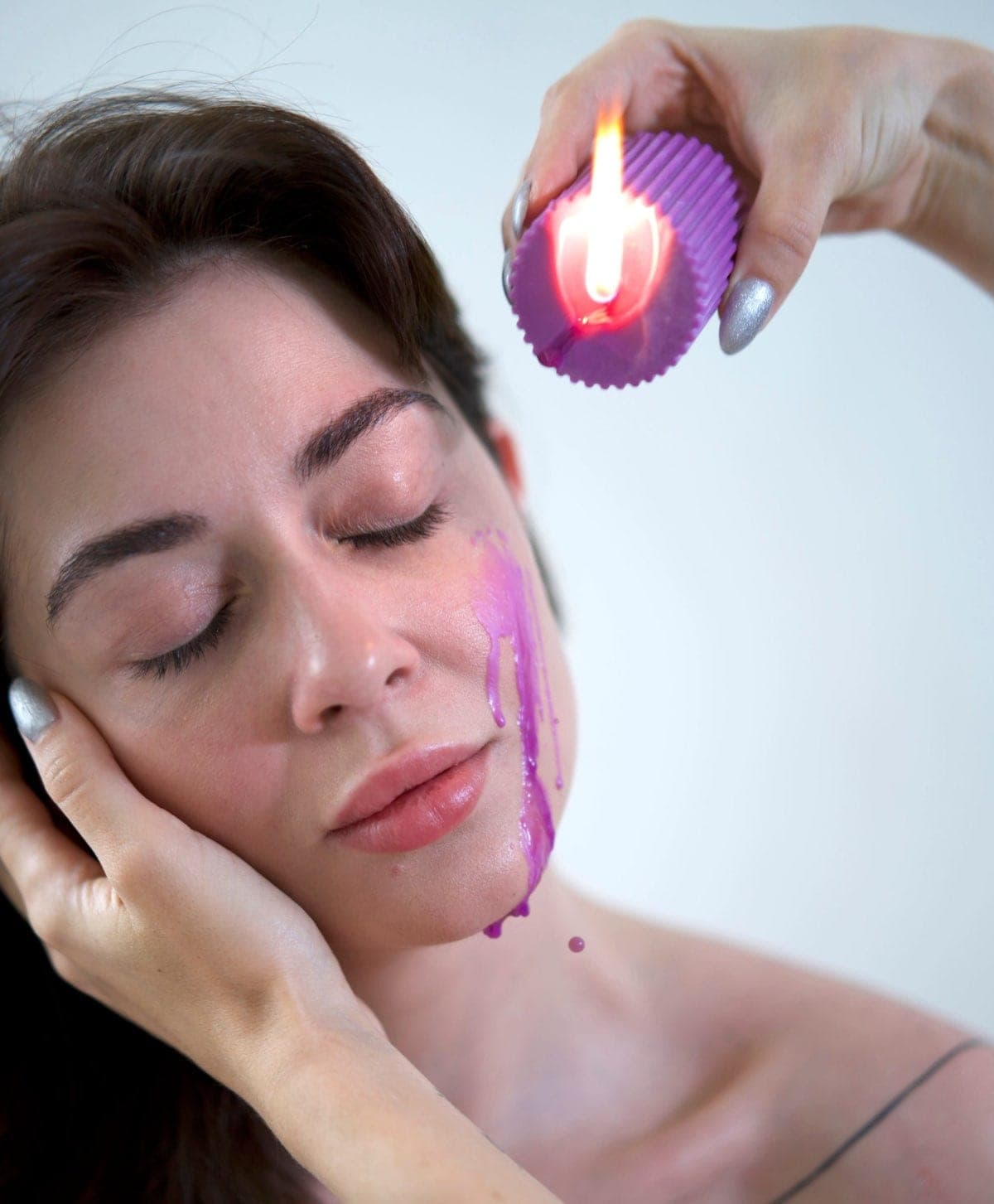
Wax Play in BDSM: Power Dynamics, Negotiation, and Scene Design
How wax play fits within BDSM structure — from power exchange dynamics and negotiation protocols to temperature-based scene design and aftercare in D/s contexts.
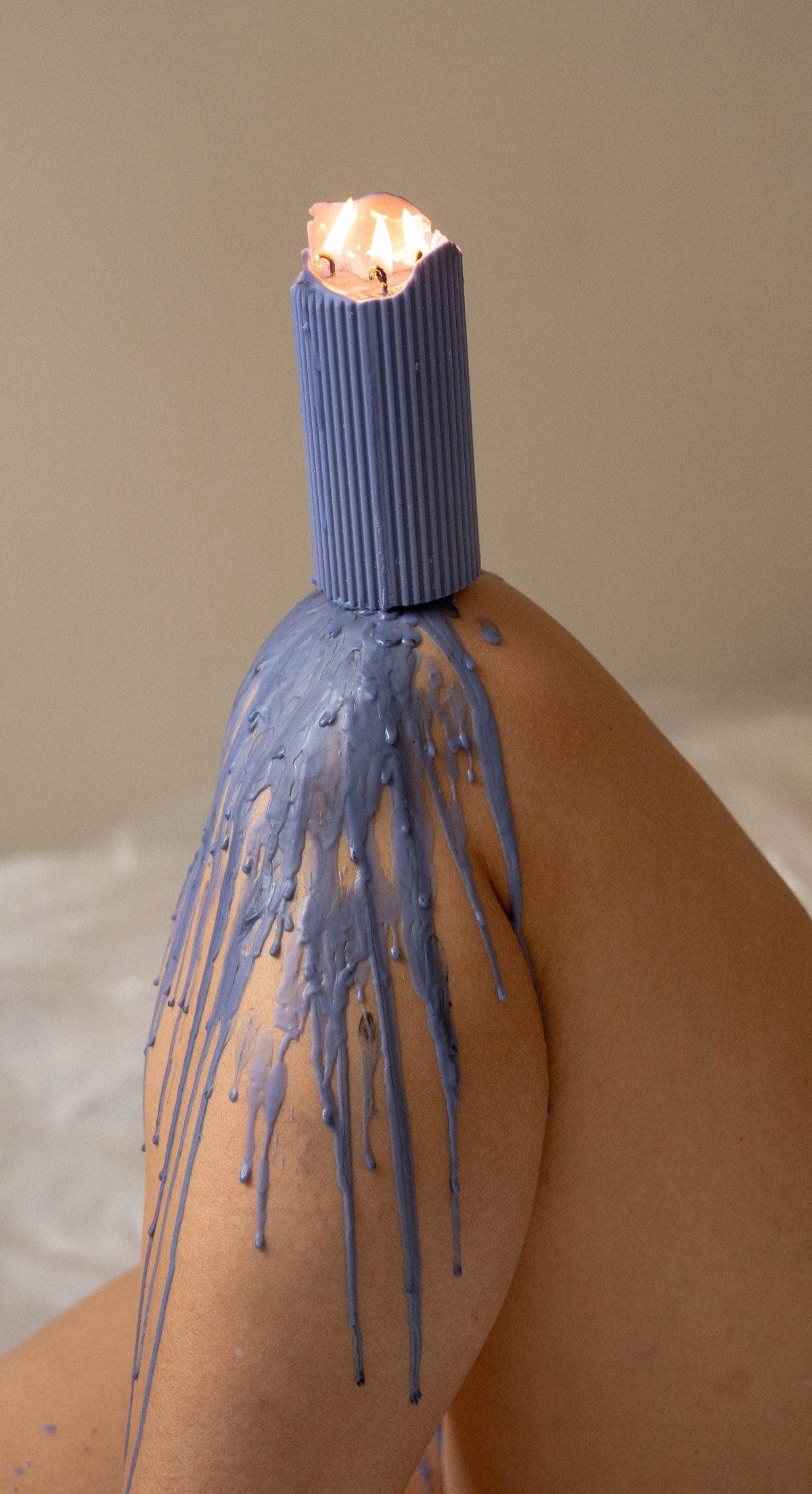
Wax Play Body Map: Where to Pour, Where to Avoid, and Why It Matters
A sexologist's guide to body zones for wax play — which areas are safest for beginners, which require experience, and which you should always avoid, with explanations for each.