
Body-safe wax play candles
Play with fire, from soft warmth to sharp heat.
SenseMe Waxplay candles come in six temperatures, from 50°C to 75°C, each with its own colour and scent. Olga Bevz, a sexologist who has practised wax play since 2016, pours them by hand in Lisbon to a recipe developed with a cosmetic chemist. From €30, with shipping from €10.

Six candles, three tiers
One candle, one temperature, one colour, one scent, so you never mix them up. Start with the lowest temperature and move up slowly.
Feather50–55°C
A first experience.
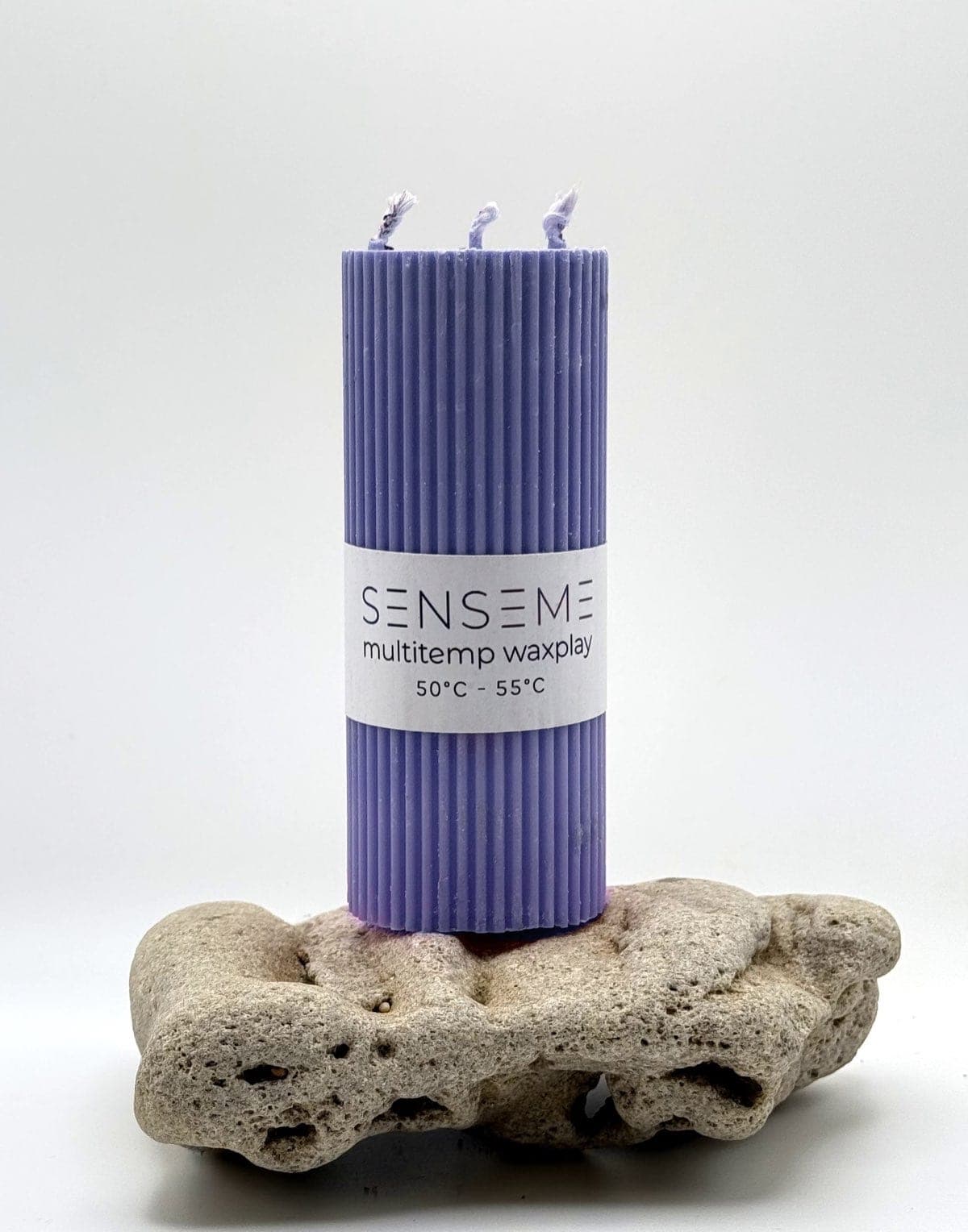

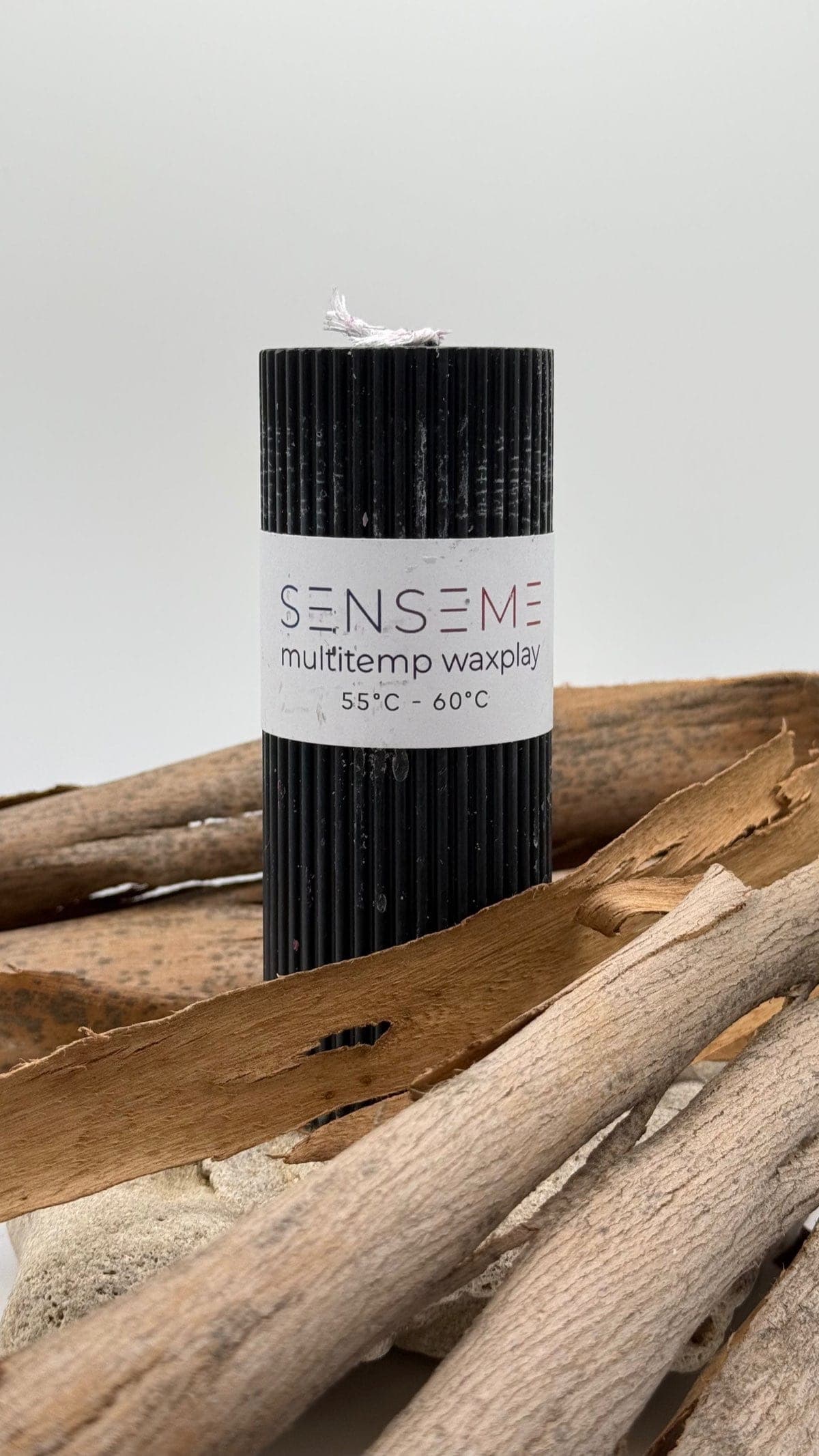
Ember60–65°C
When you know how your mind and body respond.
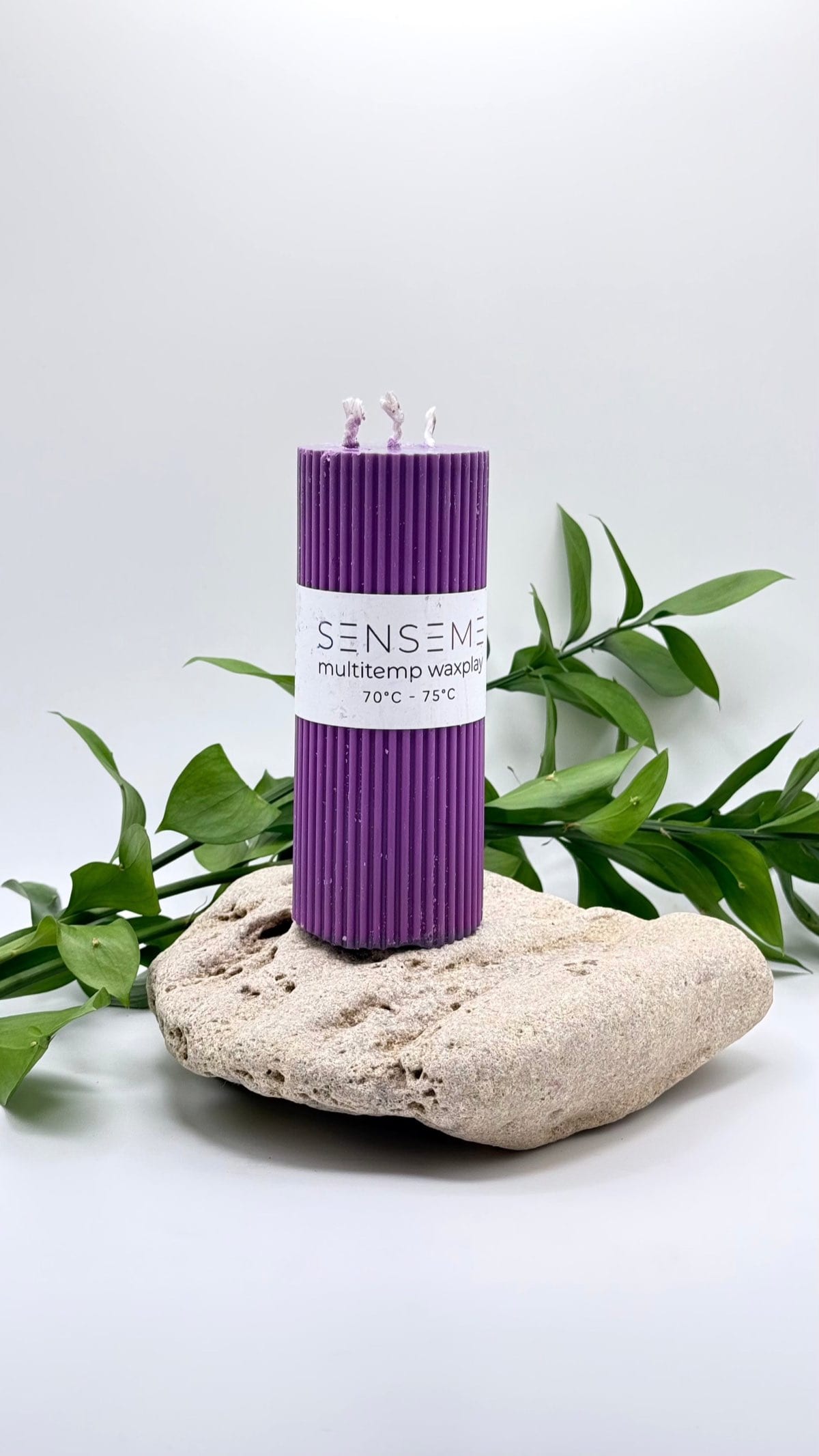
Blaze70–75°C
Experienced players only.
All six at a glance
| Candle | Temperature | Feels like | Scent | Price |
|---|---|---|---|---|
| 50°C Violet | 50°C, Feather | Soft, silky warmth | Cannabis & Cactus | €30–70 |
| 55°C Ocean Green | 55°C, Feather | Soothing and slightly deeper | Forest | €30–70 |
| 60°C Black | 60°C, Ember | Noticeable heat, still within control | Vetiver | €30–70 |
| 65°C Red | 65°C, Ember | Warmth that lingers | Palo Santo | €30–70 |
| 70°C Purple | 70°C, Blaze | Intense heat | Vanilla & Tobacco | €30–70 |
| 75°C Nude | 75°C, Blaze | The hottest we make | Musco Blanco | €30–70 |
What are wax play candles?
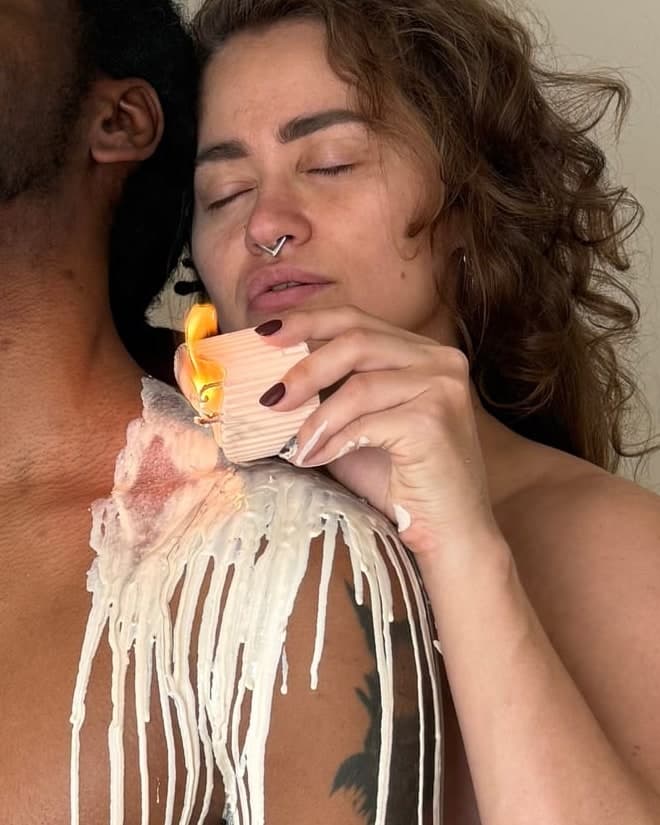
Wax play candles are made to be dripped on skin. They state the temperature the wax melts at and use materials chosen for the body, so you know what you are pouring.
An ordinary candle tells you neither. Candle waxes melt across a wide range, paraffin at about 46–68°C and beeswax at 62–65°C, and a decorative candle rarely says which one it is. Our guide to choosing wax play candles has a checklist that works for any brand.
New to it? Start with what wax play is and how to try it.
How to use a wax play candle
- 1
Prepare
Agree on a stop word and which parts of the body are welcome. Cover the bed with a sheet you don't mind marking and keep water within reach. A little massage oil makes the wax easier to remove.
- 2
Test on yourself
Start with your lowest temperature. Light the candle and let the first drop fall on the inside of your forearm. It should feel warm, not sharp.
- 3
Start high, come closer
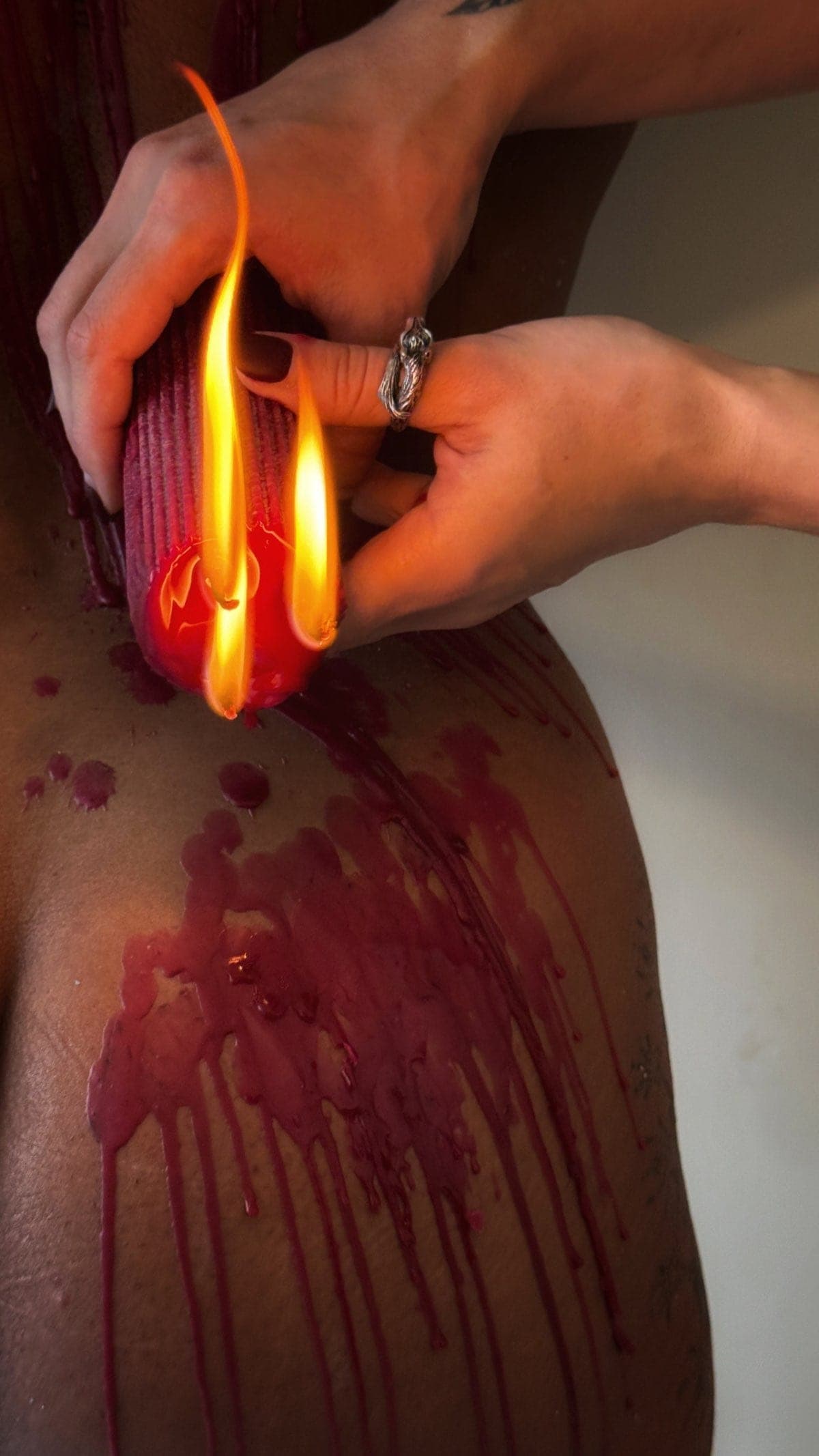
Begin about half a metre above the skin and come closer little by little. Test each new area and each new candle, and let a layer set before you add more.
- 4
Peel and care
When the wax is cool and hard, peel it off. Slight redness that fades quickly is normal. Moisturise, and talk about what felt good.
Hot wax can still burn, whatever the candle. Keep it away from the face, mucous membranes and broken, irritated or sunburnt skin.

Made by Olga Bevz
“I could not find candles like that in Europe. So I made my own.”
Olga is a sexologist who has practised wax play since 2016. Together with a cosmetic chemist, Olga developed a recipe for each temperature, using materials found in Europe. Every candle is poured by hand in Lisbon.
Questions about SenseMe candles
What are wax play candles?
Candles made to be dripped on skin. They state the temperature the wax melts at and use materials chosen for the body, unlike decorative candles. SenseMe makes six, from 50°C for a first session to 75°C for experienced players.
Who makes SenseMe candles?
Olga Bevz, a sexologist who has practised wax play since 2016. Olga developed a recipe for each temperature with a cosmetic chemist and pours every candle by hand in Lisbon, Portugal.
What temperature should I choose for my first wax play candle?
Start with the lowest: 50°C gives soft, silky warmth and 55°C is slightly deeper, and both suit a first experience. 60°C and 65°C are for when you already know how your mind and body respond, and 70°C and 75°C are for experienced players only. Always move up slowly.
Can wax play burn your skin?
Yes. Wax play involves fire and hot wax and always carries a risk of burns, even with a candle made for skin. To lower it, start with the lowest temperature, test a drop on the inside of your forearm, begin high above the skin and come closer slowly, let each layer set before adding more, and keep wax away from the face, mucous membranes and broken, irritated or sunburnt skin. If the skin stays hot, cool it under cool or lukewarm running water for 10 to 20 minutes. If a blister appears, don't burst it; keep it clean, cover it loosely and ask a pharmacist or doctor.
Can I use a regular candle for wax play?
No. An ordinary candle doesn't state the temperature its wax melts at, and candle waxes melt across a wide range: paraffin at about 46–68°C and beeswax at 62–65°C. Its dyes and fragrance also weren't chosen for skin. A wax play candle is made to be dripped on the body and tells you its temperature.
Are your candles safe for sensitive skin?
Every candle is scented and contains plant waxes, and even cosmetic fragrances and natural waxes can cause a reaction on very sensitive or allergy-prone skin. Always make a test drop on a small area first and wait before you continue. If you have known allergies or a skin condition, ask a doctor first, or write to hello@waxplayme.com for the full ingredient list.
What are your candles made of?
A blend of paraffin from a medical supplier and plant waxes (soy, coconut, palm and rice), in proportions that change from candle to candle to set its temperature. The colours are cosmetic grade, the shimmer is natural mica, the scents are cosmetic fragrances and the wicks are 100% cotton. Olga Bevz developed the recipe with a cosmetic chemist, and every candle is made by hand in Lisbon.
Do you ship internationally and how much does it cost?
From Lisbon, for a flat rate per order whatever its size: €10 to Portugal, €15 to the European Union (except Cyprus) and Monaco, €30 to the rest of Europe, including the United Kingdom, Switzerland and Norway, and €63 (about $70) to the United States by DHL. You see the rate in your cart before you pay. Orders leave within 3–5 business days, then usually take 1–3 business days within Portugal, 4–6 across the EU and 5–10 to the rest of Europe. Outside the EU, customs may charge import VAT, duties or handling fees on arrival; the recipient pays these and they are not included in our prices or shipping.
Learn about wax play
Wax play for beginners
What wax play is, what it feels like and how to run a first session.
Wax play temperature guide
How each degree from 50°C to 75°C changes the experience.
Wax play safety guide
Body areas, pouring distance, and what to do when something goes wrong.
Best candles for wax play
How to choose by temperature, with a checklist that works for any brand.