
Soy vs Paraffin for Wax Play: Which Wax Is Actually Body-Safe?
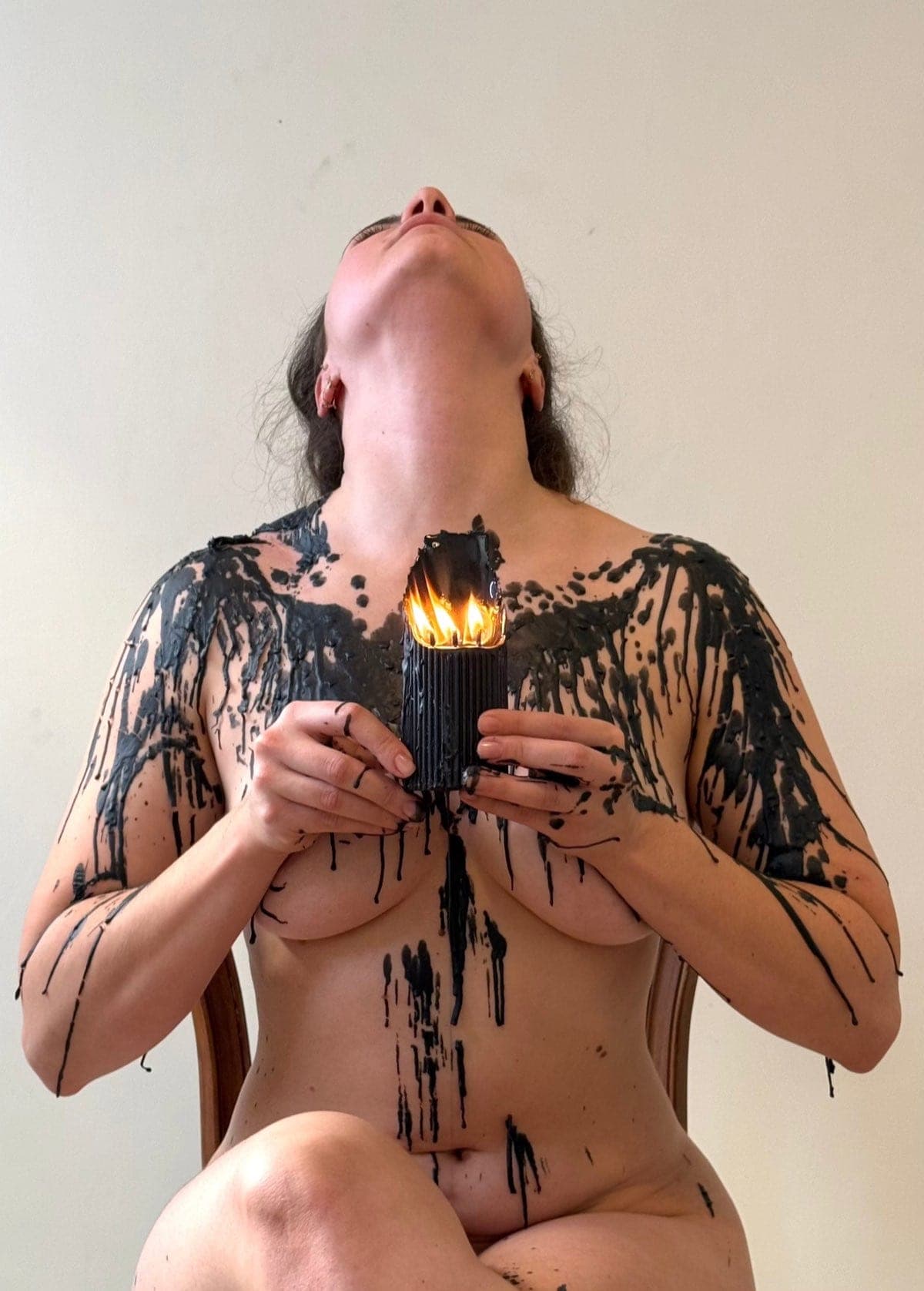
Soy vs paraffin for wax play is one of those questions that sounds like it should have a one-word answer. It does not. The internet is full of confident claims — "soy is safe, paraffin is toxic," "paraffin burns hotter," "soy is always better for skin" — and most of them are oversimplifications that confuse material properties with product design.
The truth is that neither soy wax nor paraffin wax is automatically safe or unsafe for wax play. What determines safety is the full formulation: the melt point of the specific blend, the purity of ingredients, the dye and fragrance choices, and how the candle is designed to behave when poured on skin. A poorly made soy candle can be worse than a well-made paraffin one, and vice versa.
This article explains what each wax type actually does, why professional wax play candles typically use a blend rather than a single ingredient, and how to evaluate whether any candle — homemade or commercial — is genuinely body-safe. If you want to understand how temperature differences feel in practice, our temperature guide is the natural companion piece. If you are still deciding which candle to buy, our buying guide covers the full range.
Soy Wax: What It Does Well (and Where It Falls Short)
Soy wax is derived from soybean oil. It is marketed heavily as "natural" and "clean-burning," and for room-use candles, those descriptions are broadly accurate. Soy has a lower melting point than most paraffin grades, burns more slowly, and generally produces less soot.
For wax play specifically, soy's lower melt point is its most useful property. Pure soy wax typically melts between 46–57°C depending on the grade, which places it firmly in the beginner-friendly temperature range. The resulting wax pool tends to be softer and more fluid, which makes it easier to pour in controlled streams.
However, soy has real limitations for wax play candle design:
- Structural weakness. Pure soy candles are softer and more prone to surface frosting, tunnelling, and uneven burns. This makes manufacturing harder and affects reliability.
- Narrow temperature range. If you want to offer candles above 60°C with soy alone, you need highly refined grades that cost significantly more and still do not match paraffin's ability to hold higher temperatures consistently.
- Fragrance retention. Soy wax generally holds less fragrance load than paraffin, which matters for wax play candles where scent is part of the sensory experience.
- "Natural" is not a safety standard. Soy wax can still contain additives, dyes, and fragrance compounds that are not designed for skin contact. The word "soy" on a label does not mean "body-safe."
Bottom line: soy is an excellent base ingredient for low-temperature wax play. It is not a complete solution on its own for a full temperature range.
Paraffin Wax: Why It Gets a Bad Reputation (and When It Deserves One)
Paraffin wax is a petroleum-derived product. That origin is where most of the fear comes from. The assumption is that "petroleum = toxic = burns = bad for skin," and while petroleum-derived ingredients can be problematic in some contexts, paraffin wax in candle-making is one of the most thoroughly studied and regulated materials in the industry.
Cosmetic-grade paraffin has been used safely in spa treatments, physiotherapy, and skincare for decades. Paraffin hand baths, paraffin facials, and paraffin body wraps all involve direct skin contact with melted paraffin — at controlled temperatures — without adverse effects. The material itself is not the problem. The problem is when paraffin is used at the wrong temperature, with undisclosed additives, or in a candle that was never designed for skin.
For wax play candle design, paraffin offers specific advantages:
- Temperature versatility. Paraffin grades span a wide melt range (47–70°C+), making it possible to engineer candles at specific temperatures across the beginner-to-advanced spectrum.
- Structural integrity. Paraffin produces harder, more stable candles that burn more predictably and resist tunnelling better than pure soy.
- Colour and scent performance. Paraffin holds dyes and fragrances more consistently, which matters for candles that are also sensory and aesthetic products.
- Pour behaviour. Melted paraffin has a viscosity that supports both drip-style and stream-style pours, giving the user more control over technique.
Where paraffin deserves criticism is in cheap, mass-produced household candles. These often use low-grade paraffin with undisclosed additives, metal-core wicks, and temperatures that are completely uncontrolled. Those candles are not body-safe. But that is a product-quality problem, not a material problem.
Why SenseMe Uses a Soy-Paraffin Blend (and What That Means for Safety)
SenseMe candles use a calibrated soy-paraffin blend across the entire temperature range. This is not a compromise — it is a deliberate engineering choice. Each wax type brings strengths that the other lacks, and blending them produces a candle that performs better than either ingredient alone.
Here is what the blend achieves:
- Predictable melting point. By adjusting the soy-to-paraffin ratio, each candle in the range hits a specific temperature target — from 50°C to 75°C — with consistency batch to batch. Pure soy or pure paraffin alone would make this precision much harder.
- Clean peel-off. The blend produces a wax film that cools into a flexible, non-brittle layer on skin. It peels cleanly without crumbling or sticking. This is why cleanup is so straightforward with body-safe candles.
- Scent and colour stability. Fragrance and cosmetic-grade dyes integrate evenly into the blend, so the candle delivers a consistent sensory experience from the first burn to the last.
- Ethical and practical balance. Soy brings renewable sourcing. Paraffin brings structural and thermal range. The combination respects both values without sacrificing performance.
The exact ratio changes by tier. Feather-tier candles (50–55°C) lean more soy-heavy for gentleness. Blaze-tier candles (70–75°C) lean more paraffin-heavy for the higher temperature. Every formula is tested on skin before production. That testing process — not the ingredient label — is what makes a candle genuinely body-safe.
If you want to see how these blend differences translate into real sensation, the temperature guide breaks down what each tier feels like.
Can You Make Wax Play Candles at Home? (An Honest Answer)
Technically, yes. Practically, it is harder than most DIY guides suggest, and the risks are higher than they acknowledge.
Making a candle that smells nice is relatively easy. Making a candle that melts at a predictable, repeatable temperature and is genuinely safe to pour on skin is a different problem entirely. Here is why:
- Temperature control requires precision. A five-degree difference between 55°C and 60°C changes the sensation significantly. Achieving that consistency with consumer-grade wax and no testing equipment is extremely difficult.
- Ingredient safety is not obvious. Many craft-store dyes and fragrance oils are formulated for room-burn only. They may contain compounds that are fine when vaporised into the air but not designed for direct skin contact at temperature.
- Wick choice matters more than people think. The wrong wick can create hot spots, uneven pools, or temperatures that exceed the wax's intended range. Professional candle engineering accounts for wick-container interaction. DIY rarely does.
- No quality testing. Professional body-safe candles are tested on skin. DIY candles are tested on… trust. That gap is where most injuries happen.
If you want to experiment with candle-making as a craft, that is a worthwhile hobby. But if the goal is body-safe wax play with controlled temperatures, buying from a maker who has already solved the engineering problems is almost always the safer and more practical choice.
That is not gatekeeping. It is the same logic that applies to any body-contact product: the person who makes it should know more about its safety margins than the person who uses it. If you are curious about what goes into the SenseMe formula and why those choices were made, our about page covers the maker's background and the ingredient philosophy behind the range.
Body-safe by design, not by label
Every SenseMe candle is skin-tested and temperature-rated. Browse by tier and find the right starting point for your experience level.
Explore CollectionWax Type FAQ
Can you make wax play candles at home?
Is soy wax safe on skin?
Is paraffin wax toxic for wax play?
Keep exploring
- Guide
Temperature Guide
Intro and blends section — how temperature tiers relate to wax ratios.
- Article
Buying Guide
Intro — companion article for buyers who want product-level recommendations.
- Article
Cleanup Guide
Blends section — why the blend peels cleanly from skin.
- Guide
About Page
DIY section — maker background and ingredient philosophy.
- Guide
Full Candle Range
Final CTA — primary commercial destination.