
Dom Drop Is RealA Guide for Tops, Dominants, and Their Partners
If you topped an intense scene last night and woke up feeling hollow, irritable, or inexplicably guilty — you are not broken, you are not doing this wrong, and you are not alone. Dom drop is real, it has a biology, and it has a way through.

Key Takeaways
- Dom drop is the physical and emotional crash tops can experience after a BDSM scene. Same underlying neurochemistry as sub drop, plus the specific weight of having held responsibility for the scene.
- It commonly looks like guilt, second-guessing, emotional flatness, deep fatigue, irritability, or a replay loop. Physical symptoms are usually quieter than sub drop, which is why it gets missed.
- Typical duration: 24–72 hours, with guilt loops sometimes extending longer. Often delayed by lingering adrenaline that keeps tops functional for the first few hours.
- The "responsibility load" — the cognitive labor of monitoring and guiding the scene — is the unique component. When that load releases, it drops through the body like a weight settling.
- The structural fix is mutual aftercare — where both partners plan for each other's recovery, not just the sub's. Not heroics on the night of; habit over time.
- Dom drop is not a sign you should not top. It is a sign you cared enough to do the work.
Dom drop is the physical and emotional crash that tops, dominants, and sadists can experience after a BDSM scene, driven by the same neurochemistry that produces sub drop in bottoms combined with the specific weight of having carried responsibility for the scene. It is real, it is common, and it is one of the least-discussed realities of kink.
If you are a top who just came out of an intense scene and you are wondering why you feel this strange mix of exhausted, guilty, and emotionally thin — that is dom drop. It is not a sign that you did anything wrong. It is a sign that a scene went intensely right, and your nervous system is now paying the bill.
This guide is written by Olga Bevz, a sexologist. It covers what dom drop is, how it differs from sub drop, why tops so rarely name it, how to recognize it in yourself or a partner, what actually helps, and — importantly — what subs can do when their dom is the one crashing. If you are in a drop right now, skip to the how to recover section. The rest will still be here tomorrow.
What Is Dom Drop? (Short Definition)
Dom drop is a post-scene crash experienced primarily by people who held the top, dominant, or active role during a BDSM scene. It presents as a cluster of physical and emotional symptoms — fatigue, guilt, emotional withdrawal, second-guessing, irritability — caused by the same neurochemistry that produces sub drop in bottoms, combined with a specific psychological-biological component: the sudden release of the responsibility load that tops carry throughout a scene.
The term is newer than sub drop and less commonly acknowledged in kink discourse. You may also hear it called "top drop," "dominant drop," "caretaker drop," or simply "the crash after." All refer to the same phenomenon.
Dom drop is not a sign of weakness. It is not evidence that you should not be topping. It is not a symptom that something went wrong in the scene. It is the predictable aftermath of having held the weight of an intense experience for someone else, and the sooner you understand it as ordinary biology rather than personal failure, the sooner you can handle it well.
Why Dom Drop Is Rarely Talked About
There are several reasons dom drop is less visible than sub drop, none of them having to do with it being less real.
The caretaker framing. Tops are culturally and subculturally positioned as the caretaker of the scene. "The top takes care of the bottom" is so deeply embedded in how BDSM is discussed that the idea of a top needing their own care can feel contradictory. It isn't — but it sounds like it, and the sound of it is enough to keep many tops silent.
Outward attention during the scene. A top's attention during a scene is directed outward — monitoring the sub's body, pace, breathing, safewords, signs of distress. That outward focus does not shut off the moment the scene ends. Tops often check on their sub, provide aftercare, talk the sub to sleep, and only then notice that they themselves feel wrecked. By that point, the drop is mature and the top is already in it. This is why I sometimes describe dom drop as what happens when the watcher finally looks at themselves.
Quieter symptoms. Sub drop often has visible physical symptoms — tears, muscle soreness, unmistakable fatigue. Dom drop tends to be quieter: a subtle flatness, a guilt loop, an irritability that does not match the situation. Quiet symptoms are easier to dismiss, and quiet symptoms in a role that is supposed to be "in charge" are easier to hide.
The invulnerability myth. There is a version of kink masculinity — and it can be held by tops of any gender — that equates topping with invulnerability. A top who names their own post-scene distress risks feeling like they have violated an unspoken rule. They haven't. The rule is wrong, and ignoring it is part of how this community grows up.
Language gap. Until a phenomenon has a name, it stays invisible. "Sub drop" has been a common term for decades. "Dom drop" is still spreading. Many tops who have experienced it for years did not realize it was a named thing until someone told them. If that is you right now — welcome to the conversation.
How Dom Drop Differs From Sub Drop
The two drops share a foundation and diverge in their shape. Here is a side-by-side comparison. Both are real, both deserve care, and both resolve with the right kind of attention.
| Dimension | Sub Drop | Dom Drop |
|---|---|---|
| Primary drivers | Endorphin and oxytocin crash, physical stress recovery | Endorphin and adrenaline crash, plus responsibility load release, plus post-performance rebound |
| Typical symptoms | Sadness, tears, muscle soreness, emotional rawness, brain fog | Guilt, second-guessing, emotional flatness, fatigue, irritability |
| Physical vs emotional weight | Often heavily physical — the body was stressed | Often heavily emotional and cognitive — the mind held responsibility |
| Timing | 6–72 hours after scene, peaks day 1–2 | 6–48 hours, often delayed by lingering adrenaline; guilt loops can extend longer |
| Visibility | Often visible — tears, exhaustion, withdrawal | Often quiet — flatness, irritability, emotional distance |
| What helps most | Rest, hydration, emotional closeness, reassurance, being cared for | Self-directed regulation, role-reversed care, release of guilt loops, permission to rest |
| Who leads recovery | The top usually leads care | The top has to care for themselves — or be cared for by the sub, which is the role reversal that makes it hard |
The last row is the one that matters most. Dom drop is not harder than sub drop, but it is harder to handle, because the infrastructure for handling it has to be built deliberately. Nobody shows up to provide it by default.
Symptoms of Dom Drop
Dom drop symptoms, like sub drop symptoms, fall into three categories: physical, emotional, and cognitive. Most tops experience a mix, often with emotional and cognitive symptoms dominating.
Physical Symptoms
- Deep, specific exhaustion — the kind that feels like you ran a marathon, even if the scene did not look physically demanding from outside
- Soreness in hands, arms, back, or shoulders from applied technique
- Tension headache, often starting at the base of the skull
- Dehydration symptoms — dry mouth, mild dizziness — because tops forget to drink during scenes
- Paradoxical sleep difficulty first (too wired to sleep despite exhaustion), followed by deep, bottomless sleep once the adrenaline finally clears
- Appetite disruption — often not hungry immediately after the scene, then unusually hungry 12 hours later
Emotional Symptoms
- Guilt without a specific cause — a vague "did I go too far?" that does not attach to anything that actually happened
- Second-guessing specific moments — mentally replaying the scene to find what you did wrong
- Inexplicable sadness or emotional flatness — not grief, not disappointment, just a low hum
- Irritability at small things that would not normally bother you
- Difficulty expressing warmth toward your partner even when you feel warm toward them internally — the expression muscle is just tired
- A strange sense of distance from the dynamic itself, as if the roles you share suddenly feel performative
- Sometimes a brief euphoric relief first, followed by a heavier crash when the euphoria burns off
Cognitive Symptoms
- Replay loops — running through the scene multiple times, often focusing on moments where you made judgment calls
- Intrusive "what if" thinking — what if I had gone slower, what if I had read that differently, what if the sub had not safeworded when they did
- Brain fog and difficulty making ordinary decisions — what to eat, what to wear, what to do next
- Difficulty being "on" in other contexts — work, conversations, social situations
- Time distortion — either the next day drags, or it blurs past
If several of these land within 48 hours of topping an intense scene and then gradually fade over the next day or two, you are in dom drop. If they intensify instead of fading, skip ahead to when dom drop is concerning.
Why Dom Drop Happens (The Responsibility Load)
Dom drop has two components: the general neurochemistry of any intense BDSM experience, shared with sub drop, and a specific psychological-biological component unique to the top role.
Shared Neurochemistry
A top's body, like a bottom's, produces elevated endorphins, adrenaline, cortisol, dopamine, and oxytocin during a scene. When the scene ends, those levels fall. Endorphins typically dip below baseline before returning to normal. Adrenaline clears quickly but leaves the body that was running on it depleted. Cortisol can stay elevated for hours, delaying the full crash until later. This biological floor is the same for tops and bottoms — it is the shared foundation of both drops.
The Responsibility Load
On top of that biology, tops carry what I call the responsibility load — the cognitive and emotional weight of monitoring, controlling, and guiding the scene from within. That load includes:
- Watching the sub's body, face, and breathing for distress cues, moment by moment
- Managing pace and intensity — when to push, when to hold, when to ease off
- Holding technique — the rope is tied right, the wax is the right temperature, the impact is landing correctly
- Maintaining the power dynamic while continuously reading consent
- Staying alert to safewords and to the subtler signals that precede them
- Making real-time decisions about what to do next, often while the sub is non-verbal or in sub space
This is genuine cognitive labor. It is analogous, in some ways, to the focused attention a surgeon holds during surgery or a conductor holds during a performance. The scene may look effortless from outside. From inside the top role, it is not effortless — it is sustained, deliberate, load-bearing attention.
When the scene ends, the responsibility load releases. It does not evaporate. It drops through the body like a weight settling. That settling is why many tops describe dom drop as feeling hollow or depleted rather than simply sad. They are not sad. They are processing the sudden absence of a weight they were holding.
The Post-Performance Rebound
There is one more component worth naming. Performers — actors, musicians, surgeons, trial lawyers — regularly experience post-performance crashes driven by similar mechanisms: sustained focus, adrenaline, a moment of being completely "on" that must eventually turn off. Dom drop is partly this. Recognizing the parallel can make the experience less strange and less shameful. You are not unique in feeling wrecked after holding high focus for an extended period. You are, biologically speaking, in the same club as every professional whose job requires them to be a calm, decisive presence for someone else at a critical moment.
Scene Types That Produce More Dom Drop
Some scenes are more likely to produce dom drop than others. The predictors are fairly consistent across practitioners.
- Long scenes. Length correlates directly with responsibility load. A thirty-minute scene and a three-hour scene are not the same kind of recovery.
- Technically complex scenes. Scenes where the top is executing specific skills — rope, impact, wax play, needle — require focused attention that scenes built around pure presence do not.
- Emotionally intense scenes. Deep roleplay, vulnerability work, or power exchange that touches identity is heavier than sensory-forward play. Emotional intensity produces emotional drops.
- Playing with someone new. First-time play with a new partner requires more monitoring, because the top does not yet have a baseline of how this person reacts.
- Scenes with unexpected moments. If anything surprised the top mid-scene — the sub safeworded, the sub dropped deeper into sub space than expected, a technical choice that the top is now questioning — those moments become seeds for post-scene replay.
- Scenes where something did go slightly wrong. A minor rope nerve issue, a bruise in the wrong place, a misjudged intensity. Real incidents, however small, can trigger significant drops driven by legitimate guilt rather than the ordinary kind.
- Scenes where the sub is very passive. When the sub is in a deeply receptive role, the top is effectively single-playing. There is no partner to share the cognitive load.
- Scenes topped alone in an unbalanced dynamic. If you are the only top in a group scene or consistently the caregiver in a dynamic, the load compounds over time into something closer to caretaker fatigue than ordinary dom drop.
Aftercare for Tops: What Actually Helps
Recovery for dom drop follows the same structural logic as sub drop recovery — hydration, warmth, food, rest — with specific adjustments for the role-specific components. Here is what actually works, in the order it works.
In the First 1–4 Hours
- Continue providing aftercare to your sub, but do it slowly. Moving through the motions of aftercare is itself grounding for many tops. Do not rush out of the caregiver role — transition out of it gradually.
- Hydrate alongside your sub, not after. Tops routinely forget to drink during scenes and routinely forget to drink after them. Do it at the same time as your sub.
- Eat something with protein and complex carbs within an hour. Do not wait until you are hungry. The dom drop appetite often arrives late and then arrives hard.
- Let yourself take physical comfort too. Wrap in a blanket. Let your sub touch you. Accept warmth instead of only providing it. This is harder than it sounds and it matters more than almost anything else.
- Speak less than you normally would. Do not debrief the scene. Do not ask "how was that?" of yourself or the sub. Just exist near each other.
- Avoid alcohol. It will feel like a celebration. It will make the drop harder and longer.
In the Next 24 Hours
- Sleep. Dom drop sleep is bottomless and restorative. Protect it. Cancel morning commitments if you can.
- Do something that uses a different part of you. A walk. A cooking task. Something with your hands that does not require executive function. The brain that ran the scene needs to rest; the body still wants gentle activity.
- If guilt loops appear, write them down. Getting a "what if I had" out of your head and onto paper reduces its power significantly. Most of the loops do not survive being written out in a sentence.
- Eat on a normal schedule. Do not skip meals. Low blood sugar during dom drop is the express lane to a much harder day.
- Allow yourself to feel off without trying to fix it. The drop will pass. Resisting it extends it.
If You Play Regularly
Infrastructure beats heroics. If topping is part of your life, build the following into your practice:
- A personal aftercare kit just for you as a top. Separate from the shared kit. An oversized hoodie, weighted blanket, electrolyte drink, a book that has nothing to do with kink, a comfort snack. See our aftercare kit guide for how to build one.
- Scheduled decompression time after heavy scenes. A day with nothing scheduled is not laziness; it is recovery infrastructure. Treat it with the same seriousness as warm-up before the scene.
- One person you can say "I am in dom drop" to without having to explain what that means. Finding that person — another top, a therapist, a partner who has read this guide — is worth more than any article, including this one.
How Subs Can Support Their Dom After a Scene
If you are a sub reading this because you have noticed your top acting withdrawn or off after scenes and you want to help — you can. Here is what actually works, in rough order of importance.
- Do not take distance personally. A top in dom drop is often emotionally withdrawn in ways that have nothing to do with how they feel about you. Their nervous system is processing, and the distance is temporary. Taking it personally will make you need care from a person who does not have care to give, and that spirals.
- Offer simple physical care without making it a negotiation. Bring them water. Bring them a snack. Tuck a blanket around them. They may not ask — they are used to being the caregiver — so simply provide it. Small gestures, done silently, land more than questions.
- Do not debrief the scene in the first few hours. Do not say "was that okay?" or "did I do well?" or "did you like that?" Those questions sound innocent. They re-activate the responsibility loop and send the top right back into monitoring mode. Save them for the next day, or longer.
- Be present without being demanding. Sit near them. Read a book. Let silence be okay. Your presence is helpful. Your need for their attention is not.
- Verbalize appreciation without requiring a response. "That was beautiful. Thank you for taking care of me." Say it, let it land, and do not expect a long reply. A top in dom drop may not be able to articulate a response, even when the words land.
- Give them explicit permission to rest. "I am fine. Go sleep if you can." This simple permission can be surprisingly hard for tops to give themselves, because their default mode is to keep watching you.
- Check in the next day. A text, a voice note, a short conversation. "How are you feeling today?" Following up after the scene tells them that aftercare is mutual, not just a service they provide you.
The biggest gift you can give a top in dom drop is the experience of being cared for when they are used to being the caregiver. That role reversal, handled with patience, is often the single most effective dom drop intervention there is.
Building Mutual Aftercare Into Your Dynamic
The real solution to dom drop is not heroics on the night of the scene. It is a structural change: building mutual aftercare into your dynamic as a normal, planned part of how you play.
Mutual aftercare means both partners discuss what they might need afterward — not just the sub. The top names their own preferences. The sub knows what to watch for in the top. The aftercare plan covers both roles, not one.
This looks different for different dynamics. Some couples alternate who gets the primary aftercare role based on the scene. Others build aftercare into a shared ritual where both partners receive equal care simultaneously — shared bath, shared meal, shared bed without demands. Others establish explicit check-in protocols at 24 and 48 hours that apply to both roles regardless of who topped.
The specifics matter less than the principle. Aftercare is for everyone who plays. Planning for it in advance is the difference between care that happens and care that was supposed to. See our aftercare negotiation guide for specific conversation scripts you can use to build mutual aftercare into your own practice.
When Dom Drop Is Concerning
Most dom drop is ordinary and resolves with rest, care, and time. Some is more serious and warrants outside support. Watch for:
- A drop that intensifies after day three instead of fading
- Persistent guilt or self-critical thoughts that do not match what actually happened in the scene
- Difficulty functioning in daily life — work, relationships, sleep — for more than a few days after a scene
- A pattern where scenes are consistently followed by heavier and heavier drops
- Avoiding play because dom drop has become too hard to face
- Thoughts of self-harm or significant depressive symptoms. This is an immediate signal to reach out. In the US, call or text 988. In the UK, call 116 123 (Samaritans). Do not wait.
- A growing sense that you are losing trust in your own judgment as a top
The last one deserves its own note. A top who starts distrusting their own judgment — second-guessing their technique, questioning whether they should be topping at all — is experiencing something that ordinary aftercare alone cannot fix. A kink-informed therapist is the right resource. The NCSF Kink-Aware Professionals directory is a good starting point.
Seeking support for dom drop is not a failure. It is the same maturity that makes someone a good top in the first place: noticing what is happening, taking it seriously, and doing something about it.
Further Reading
- BDSM Aftercare: The Complete Guide to Recovery After a Scene
- Sub Drop: What It Is, Why It Happens, and How to Recover
- Sub Space: What It Is and How to Come Down Safely
- BDSM Aftercare Kit: The Complete Checklist
- How to Negotiate Aftercare Before a BDSM Scene
- Physical vs Emotional Aftercare: Why You Need Both
Sources & References
- Sagarin, B. J., Cutler, B., Cutler, N., Lawler-Sagarin, K. A., & Matuszewich, L. (2009). Hormonal Changes and Couple Bonding in Consensual Sadomasochistic Activity. Archives of Sexual Behavior — notable for measuring hormonal changes in both tops and bottoms, not just bottoms.
- Ambler, J. K., Lee, E. M., Klement, K. R., et al. (2017). Consensual BDSM Facilitates Role-Specific Altered States of Consciousness. Psychology of Consciousness — explicitly documents that tops experience role-specific altered states, validating "top space" and its aftermath.
- Wismeijer, A. A. J., & van Assen, M. A. L. M. (2013). Psychological Characteristics of BDSM Practitioners. Journal of Sexual Medicine — includes data on dominants' psychological profiles.
- Sprott, R. A., & Randall, A. (2017). Health, Well-being, and BDSM Practitioners. Current Sexual Health Reports.
- Figley, C. R. (2002). Compassion Fatigue: Psychotherapists' Chronic Lack of Self Care. Journal of Clinical Psychology — relevant for the caretaker-fatigue framing of long-term dom drop patterns.
- National Coalition for Sexual Freedom — Kink-Aware Professionals Directory. ncsfreedom.org
This article is for educational purposes and does not constitute medical or psychological advice. If you are experiencing persistent distress, thoughts of self-harm, or symptoms that interfere with daily life, please contact a qualified mental-health professional. If you are in crisis, call 988 (US), 116 123 (UK Samaritans), or your local emergency services.
Frequently Asked Questions
Can I get dom drop if I only play occasionally or professionally?
How can I take care of myself as a top after a scene?
How is dom drop different from sub drop?
How long does dom drop last?
What if my sub is in sub drop and I am in dom drop at the same time?
What is dom drop?
Why is dom drop so rarely talked about?
Olga Bevz
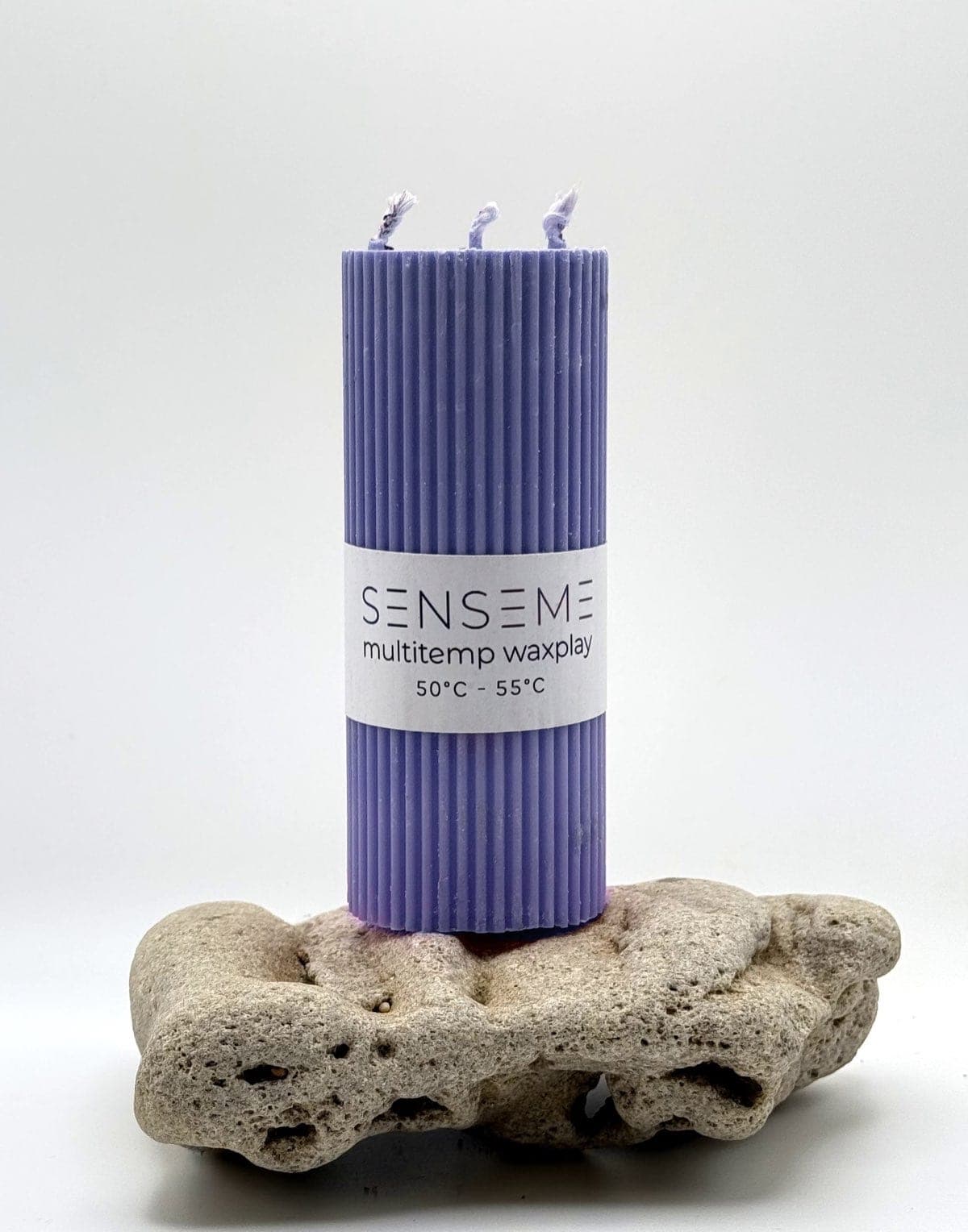
Olga founded SenseMe Waxplay to build body-safe wax play candles grounded in actual knowledge of anatomy, nervous systems, and kink practice. She writes about sensation play, BDSM safety, and the quiet skills that make intense experiences land well.
Read full story