
Wax Play Body Map: Where to Pour, Where to Avoid, and Why It Matters
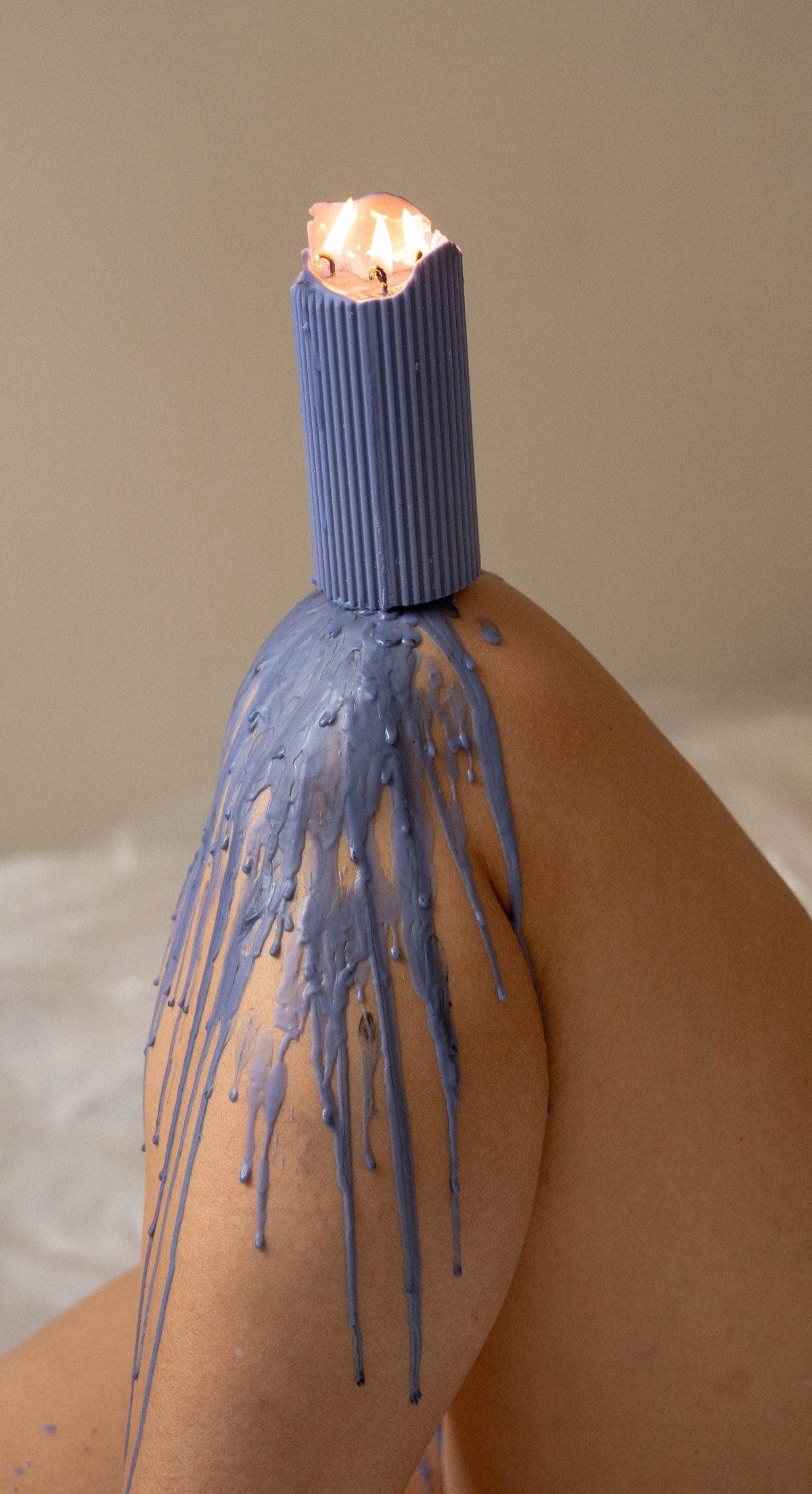
Where to pour wax is just as important as what temperature to use. A 50°C candle on the upper back feels like warm silk. The same candle on the inner wrist feels sharper, more insistent, and less forgiving. Temperature does not change, but the body's reading of it does — because skin thickness, nerve density, blood flow, and proximity to bone all vary dramatically from one area to another.
That is why experienced practitioners think in terms of a body map rather than just a temperature chart. The two systems work together. Temperature tells you how intense the heat source is. The body map tells you how intensely a specific area will interpret that heat. A session that accounts for both is safer, more precise, and more satisfying than one that treats the whole body as a single surface.
This article divides the body into three zones: green (safest, recommended for beginners), amber (requires experience, communication, and a clear reason), and red (always avoid or approach only with advanced knowledge and explicit consent). Each zone includes the physiological reason behind the classification, not just the rule itself, because understanding why an area is sensitive makes you a better practitioner than simply memorising a list.
If this is your first time, start with green zones only and a low temperature. Our beginner's guide covers the full first-session framework. If you already know the basics and want to understand how temperature interacts with body areas, the temperature guide is the natural companion to this map.
Green Zones — Safest for All Experience Levels
Green zones share three properties: relatively thick skin, moderate nerve density, and ample muscle or fat padding underneath. These areas absorb heat gradually, give clear feedback, and recover quickly. They are the foundation of every well-designed wax play session, regardless of experience level.
Upper back (shoulder blades to mid-back)
The upper back is the single best starting point for wax play. The skin is thick enough to buffer heat, the muscle layer underneath absorbs thermal shock well, and the area is large enough to pour patterns, lines, and broader coverage without crowding. For the person pouring, it is easy to control distance and angle. For the person receiving, it gives clear sensation without vulnerability. If you only ever pour on one area, this would be the right one.
The upper back is also where most people discover what wax play actually feels like — as opposed to what they imagined it would feel like. The gap between expectation and reality is almost always positive here. What people fear will be sharp and painful usually lands as warm, structured, and surprisingly calming.
Outer thighs
The outer thigh has thick skin, a generous fat layer, and relatively low nerve density compared to the inner thigh. It handles heat comfortably across the full beginner range and sits well into intermediate territory. Outer thighs are also practical: when the receiving partner lies face down, the outer thigh is easily accessible without awkward positioning.
Beginners often underestimate how different the outer thigh feels from the upper back. The back tends to feel broader and more diffuse. The thigh tends to feel more localised and defined, partly because the muscle is denser and the skin sits closer to it. That contrast makes the outer thigh a good second zone after the back.
Shoulders and upper arms
Shoulders have enough padding and thick enough skin to handle low and moderate temperatures well. Upper arms — specifically the outer surface of the bicep and tricep area — share similar properties. These zones work well for pours that extend naturally from the upper back, creating continuous lines across the shoulder and down the arm. That flow is both visually satisfying and sensorially interesting because the skin texture changes subtly along the route.
Buttocks (outer/upper)
The outer and upper buttock area has ample subcutaneous fat, thick skin, and comparatively low sensitivity. It is a green zone by physiology, though it carries an emotional weight that the upper back does not. For couples, this area can feel more intimate than the back even at the same temperature, simply because of psychological association. That is not a safety concern — it is a communication point. Discuss it before pouring.
Lower back (above the waist)
The lower back is a reliable green zone but requires slightly more attention than the upper back because the skin can be thinner around the waist, and the area curves more. Keep pours slower and watch runoff direction — wax tends to track along the spine and can pool in the small of the back if you pour too much at once. A towel placed at the waist catches any runoff cleanly.
Amber Zones — Requires Experience, Communication, and Lower Temperature
Amber zones are not dangerous by definition, but they require more care than green zones because of thinner skin, higher nerve density, or proximity to sensitive structures. These areas can feel significantly more intense at the same temperature that felt moderate on the back. Always reduce temperature or increase pouring distance when moving into amber territory.
Chest and sternum
The chest sits in amber because the skin over the sternum and ribs is thinner than the back, and the rib cage provides less shock absorption than muscle. The sensation is more acute and more immediate. Many people enjoy chest pours precisely for that sharpness, but it catches beginners off guard if they expect the back's gentle warmth. Start with a single drop from maximum height before committing to more coverage.
For people with breasts, the chest area requires an explicit conversation. The skin over breast tissue varies widely in sensitivity between individuals, and the area carries psychological significance that the back does not. Consent should be specific, not assumed from general wax play consent.
Abdomen and stomach
The abdomen has thinner skin than the back and less consistent padding. The lower belly in particular can feel surprisingly sharp because the skin is taut and the underlying tissue is less forgiving. Abdominal muscles can also tense involuntarily when heat arrives, which changes the sensation. This area works well with low temperatures and careful pacing, but it demands more attentiveness from the pourer than green zones do.
Inner thighs
Inner thighs sit in amber because the skin is significantly thinner than the outer thigh, nerve density is higher, and blood vessels are closer to the surface. The sensation is more immediate, more intimate, and less buffered. What feels comfortable on the outer thigh can feel quite intense on the inner thigh at the same temperature. If you move here, drop temperature by at least one tier or increase distance substantially. Our low-temp guide explains why the Feather tier works best for high-sensitivity areas.
Forearms (inner surface)
The inner forearm is actually one of the better amber zones for learning, because it is easily accessible and you can test on yourself before involving a partner. The skin is thinner than the outer arm, so heat reads more clearly. Many candle-makers, including Olga, use the inner forearm as a personal test zone for new batches. It is amber because of the thin skin, but it is also one of the most controlled amber areas because you can watch, feel, and respond instantly.
Calves and shins
Calves behave similarly to outer thighs but with less padding, especially near the shin where bone is close to the surface. The back of the calf is the safer part (more muscle, thicker skin). The shin itself should be treated with extra caution or avoided — bone proximity makes heat feel sharper and recovery slower. Keep pours away from the shin bone and focus on the fleshy part of the calf if working in this area.
Red Zones — Always Avoid or Advanced-Only With Explicit Protocol
Red zones are areas where wax play carries genuine risk of injury, lasting discomfort, or violation of trust. Most of these are red for physiological reasons that no amount of skill can fully override. Some are red for both physiological and consent reasons.
Face and neck
The face has the thinnest skin on the body, the highest nerve density, and zero margin for error near the eyes. Wax near the eyes can cause corneal damage. Wax on the lips, eyelids, or nostrils can obstruct breathing or cause painful adhesion. The neck contains major blood vessels and the trachea. No beginner or intermediate practitioner should pour on the face or neck. Advanced players who choose to work near the neck require careful distance control, extremely low temperatures, and a firm understanding that this area does not forgive mistakes.
Genitals
Genital skin is extremely thin, highly vascular, and densely innervated. The mucous membranes of the genitals are not designed for any thermal contact. Even low-temperature wax can feel intensely sharp in this area. Genital wax play exists in advanced BDSM contexts, but it requires explicit negotiation, specific temperature control (50°C maximum), and a recognition that the risk profile is fundamentally different from green or amber zones. This is not a progression milestone — it is a separate practice with its own safety framework.
Hands and feet (palms and soles)
Palms and soles have thick skin, but the nerve density is among the highest on the body. Wax feels disproportionately intense here. Additionally, wax between fingers or toes can trap heat against thin webbing skin, creating localised burns. The tops of the feet and backs of the hands have very thin skin over tendons and veins. If you want to explore these areas at all, use only the gentlest candle, pour from maximum distance, and apply single drops only — never lines or streams.
Joints (inner elbows, backs of knees, armpits)
Joint creases have thin, delicate skin, high nerve density, and limited blood flow during flexion. Wax in these areas adheres to hair and skin folds, making removal uncomfortable. The back of the knee is particularly sensitive because the popliteal fossa contains nerves and blood vessels close to the surface. Inner elbows share similar properties. Armpits combine thin skin, hair, and sweat glands in a confined space — all factors that make wax play uncomfortable and difficult to manage.
Spine (directly on vertebrae)
While the back is broadly green, pouring directly on the spine — where bone is closest to the surface — needs more caution than the muscle-padded areas beside it. The bony ridge of the spinous processes has minimal cushioning. At higher temperatures, this can feel uncomfortably sharp. Intermediate and advanced players can work around and across the spine effectively, but aiming directly at the vertebral line, especially with 65°C+, requires awareness that bone proximity amplifies heat perception.
Anywhere with broken skin, sunburn, or irritation
This should go without saying, but any area with compromised skin integrity — cuts, rashes, fresh tattoos, sunburn, eczema flares, or recent hair removal — is red until it has fully healed. Heat on compromised skin can cause pain disproportionate to the temperature and can slow healing. If in doubt, skip the area for this session. There will be another one.
How to Use This Map in Practice
A body map is most useful when it becomes a conversation tool rather than a memorised list. Before a session, discuss which zones are on the table and which are off. Use the green/amber/red framework as shared language: "Let's keep it green tonight" or "I'd like to try one amber zone — inner thighs — if you're up for it." That shorthand lowers awkwardness and raises clarity.
Three practical principles make the body map work seamlessly:
- Start green, always. Even experienced players benefit from warming up in green zones before moving to amber. Green pours calibrate both people to the temperature, the candle's behaviour, and the mood of the session. Skipping green and going straight to amber is like sprinting without stretching — technically possible, but not wise.
- Match temperature to zone. If you move from green to amber, drop the temperature or raise the distance. A candle that feels comfortable on the upper back may feel sharp on the chest. The temperature guide explains why five degrees makes such a meaningful difference.
- Treat the map as a starting point, not a boundary. Everyone's body is different. Some people have extremely sensitive backs. Some have surprisingly tolerant inner thighs. The map gives you an evidence-based default. Your partner's feedback gives you the real-time adjustment. Both matter. Neither replaces the other.
If you are planning your first session, our first-time checklist integrates zone selection into the broader preparation flow. If you are trying wax play with a partner for the first time, the couples guide covers how to navigate the body-map conversation without making it feel clinical.
Start with gentle heat and safe zones
Our Feather-tier candles (50–55°C) are designed for green and amber zones alike. Begin where the body is most forgiving, and let curiosity decide the rest.
Explore CollectionBody Map FAQ
What areas should you never pour wax on?
Why is the back the best area for wax play?
Can you put wax on your chest during wax play?
Is wax play on the inner thigh safe?
Is wax play safe on the stomach?
Keep exploring
- Guide
Beginner'S Guide
Intro — first-session framework for readers who need foundations.
- Guide
Temperature Guide
Intro and practical section — how temperature interacts with zone sensitivity.
- Guide
Safety Guide
Hero — comprehensive safety companion.
- Article
Low-Temp Guide
Amber zones — why Feather tier suits high-sensitivity areas.
- Article
First-Time Checklist
Practical section — integrating zone selection into session prep.