
15 Wax Play Ideas: Scenes, Rituals, and Session Designs for Every Level
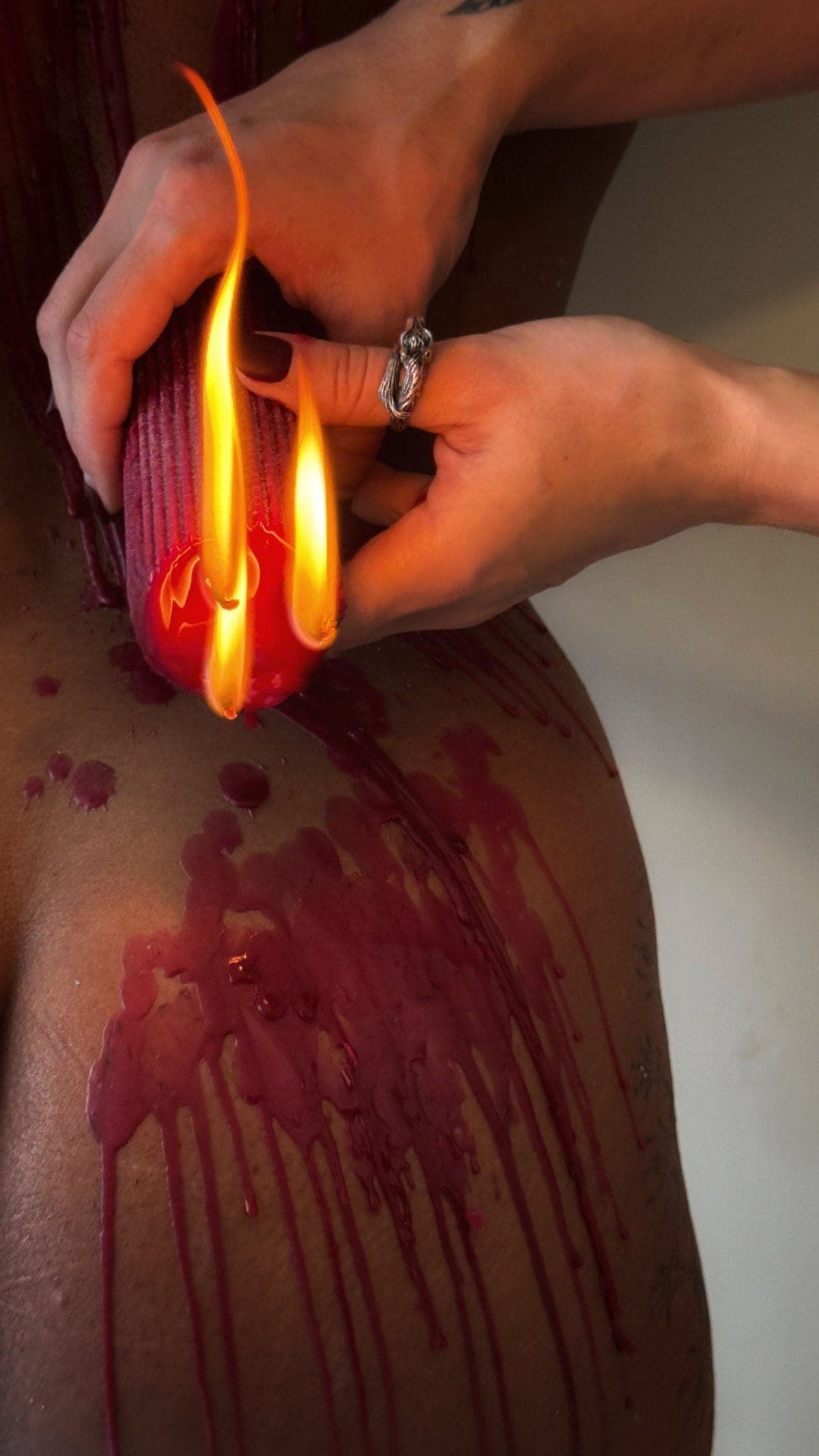
Wax play ideas are not just about pouring wax. They are about what the session feels like as a whole — the anticipation, the environment, the pacing, and the emotional texture between the people involved. Most guides stop at technique: how to hold the candle, how high to pour, what temperature to use. That information matters, but it is only the scaffolding. The actual experience lives in how you use that scaffolding to build something that feels intentional, playful, or deeply connected.
That is what this article is for. Instead of repeating safety rules and temperature charts, this is a collection of session ideas — scenes, rituals, and designs that give shape and direction to your next session. Some are gentle enough for a first-time couple. Some require confidence, technique, and a clear understanding of boundaries. All of them assume you already know the basics or are willing to learn them first.
If you need the foundation before diving in, our beginner's guide covers setup, technique, and safety. The temperature guide explains what each tier feels like on skin. This article builds on that knowledge and turns it into something you can actually plan, execute, and remember.
The ideas are grouped by experience level: five for beginners, five for intermediate players, and five for advanced. That structure is deliberate. The goal is not to rush through the list to find something "impressive." It is to find the idea that matches where you actually are, and to do it well enough that you want to come back for the next one.
Beginner Wax Play Ideas (50–55°C)
1. The First Drop Ritual
This is the simplest session possible, and it is often the most memorable one. Light a 50°C candle, let the pool form, and pour exactly one drop on the upper back. Then pause. Let the receiving partner describe what they felt. That single moment — the anticipation before the drop, the warmth when it lands, the surprise that it was gentler than expected — is the foundation everything else builds on. End the session there if it felt like enough. One drop can be a complete experience, not a failure to do more.
2. The Blindfold Session
Add a blindfold to a low-temperature session and the experience changes completely. When the receiving partner cannot see the candle, anticipation becomes the primary sensation. Every pause feels longer. Every sound the pourer makes becomes a signal. Keep pours slow and spaced apart. The goal is not more wax — it is more attention. Blindfolds work especially well at 50–55°C because the temperature is gentle enough that the receiving partner can focus on waiting rather than bracing.
3. The Back Canvas
Turn the upper back into a canvas. Pour deliberate lines, dots, or patterns instead of random drips. This works well with two people because the pourer has a visual goal and the receiver experiences structure instead of randomness. You do not need artistic talent. Simple geometry — a spiral, parallel lines, a zigzag — gives the session a shape that feels intentional. When the wax cools and you peel it off, the pattern becomes a shared artifact of the session.
4. The Countdown Scene
Agree on a number — five, ten, fifteen pours. Count each one out loud. This gives the session a built-in ending, which is incredibly useful for nervous beginners because it removes the question "when does this stop?" Each count becomes its own micro-experience. By the time you reach the last number, the session has had arc and resolution without anyone needing to improvise an ending. Countdown sessions also teach pacing naturally, because both people learn to space pours meaningfully.
5. The Two-Scent Journey
Use a 50°C Violet and a 55°C Ocean in the same session. Start with the gentler one, then introduce the second. The contrast is subtle — five degrees — but the scent difference changes the atmosphere completely. Cannabis and cactus give way to marine green notes. This is a useful introduction to the idea that wax play is a multi-sensory experience, not just a temperature experience. Our beginner collection is designed for exactly this kind of exploration.
Intermediate Wax Play Ideas (60–65°C)
6. The Distance Game
Start pouring from maximum height — as far above the skin as feels safe. The wax arrives as warm specks, barely perceptible. Then, over the course of the session, slowly decrease the distance. Each move closer increases intensity without changing the candle. This teaches both people how distance transforms sensation. By the end, the same candle that felt like rain at arm's length feels like a deliberate line from a few inches away. The temperature guide explains why this works.
7. The Slow Line
Instead of drips, pour one continuous, slow line from the shoulder blade to the lower back. This requires a 60°C or 65°C candle with a proper wax pool and a steady hand. The sensation shifts from point-impact to a trailing warmth that moves across skin. It is one of the most visually striking and physically distinct wax play techniques, and it requires enough control that it belongs in the intermediate range. Practice on a forearm first to calibrate your pour speed.
8. The Three-Zone Session
Divide the body into three pre-agreed zones. Pour in the first zone, pause, check in. Move to the second zone, pause, check in. Then the third. This structure adds spatial variety without requiring improvisation. It also makes the session feel like it has chapters rather than being one continuous stream. Zone-based sessions work especially well with 60°C candles because the temperature is high enough to create distinct sensations in different body areas.
9. The Contrast Ladder
Use a 60°C and 65°C candle in alternating sequence. The five-degree difference creates a contrast ladder — a structured way to move between controlled warmth and a sharper edge. Pour one from the cooler candle. Then one from the warmer. Then back. The nervous system sharpens its attention each time the temperature shifts. This is where wax play starts to feel sophisticated rather than just warm. Our medium temperature deep dive explains the Ember tier in detail.
10. The Timed Scene
Set a timer for 15 or 20 minutes. That is the entire session. No negotiation about when to stop, no ambiguity about duration. Within that window, the pourer has creative freedom. The container is the clock. Timed scenes work especially well for couples who are already comfortable with technique but tend to overthink the ending. The timer gives permission to immerse fully and then stop cleanly.
Advanced Wax Play Ideas (70–75°C)
11. The Full Temperature Ladder
Start at 50°C and work through every temperature in the range, ending at 70°C or 75°C. This is a long session — 30 to 45 minutes at minimum — and it requires planning, multiple candles, and strong communication. The reward is a complete arc that starts with warmth and ends with intensity. Each step up recalibrates what "hot" means. By the time you reach the top of the ladder, the body has been prepared gradually, and the sensation carries an authority that cold-starting at high temperature simply cannot match.
12. The Precision Pattern
At 70°C+, every centimetre of distance matters. Use that precision requirement as the session design itself. Choose a deliberate pattern — a line down the spine, a constellation across the shoulder blades, a symmetrical design across both sides of the back. The high temperature means the wax arrives with sharp definition. Each pour is a decision. This is where wax play starts to feel like a craft discipline, not just exploration.
13. The Power Exchange Scene
Advanced wax play can sit comfortably within a structured power exchange. The pourer controls temperature, timing, and location. The receiver controls the stop signal and nothing else. This dynamic works only when both people trust each other completely and have practised at lower temperatures first. The safety guide covers communication frameworks that support this kind of session. The key is that intensity comes from surrender, not from recklessness.
14. The Dual-Pourer Scene
For groups of three or more, two pourers working simultaneously across different body areas create a sensation that one person alone cannot replicate. This requires clear communication, pre-agreed zones for each pourer, and a shared understanding of temperature and pacing. It is logistically complex but sensorially extraordinary. If you are considering this level, start with a two-person rehearsal at lower temperatures before adding a third participant.
15. The Ritual Reset
Some experienced players use wax play as a transitional ritual — not as the main event, but as a way to shift from daily life into a different headspace. A short, deliberate session with a 70°C candle, three pours, and then stillness. No music, no talking, no performance. Just heat, skin, and attention. This is wax play stripped down to its most meditative form. It works best for people who already know what they enjoy and want to use the practice as a tool for presence rather than novelty.
For any of these advanced ideas, review the prerequisites in our high temperature guide first. The Blaze tier is powerful and precise, but it demands respect.
How to Choose the Right Scene for Tonight
The best wax play idea is rarely the most ambitious one. It is the one that matches the mood, the energy, and the experience level in the room right now. If one person had a long day, a countdown session with a gentle candle might land better than a full temperature ladder. If both people feel confident and energized, the contrast ladder or a timed scene might be the right fit.
One useful question to ask before choosing: "What do we want to feel afterward?" If the answer is calm and connected, lean toward beginners ideas even if you are not beginners. If the answer is challenged and exhilarated, intermediate or advanced ideas are probably the right zone. Matching the session to the desired emotional outcome matters more than matching it to your skill level.
If you are trying wax play for the first time, start with idea #1 or #4 and see where curiosity takes you. Our couples guide pairs well with these session designs if you are navigating the conversation side of things too.
Find your candle for tonight
Browse by temperature, choose a set for contrast, or start at the beginning. The right session starts with the right candle.
Explore CollectionWax Play Ideas FAQ
What are good wax play ideas for beginners?
How long should a wax play session last?
Can you do wax play alone?
Keep exploring
- Guide
Beginner'S Guide
Intro — foundational reference for readers who need technique before ideas.
- Guide
Temperature Guide
Intro and intermediate section — companion resource for understanding tiers.
- Guide
Safety Guide
Advanced section — communication framework for power exchange scenes.
- Article
Couples Guide
Choosing section — navigating the conversation side of new sessions.
- Article
Medium Temperature Deep Dive
Intermediate section — detailed Ember tier companion content.