
Temperature and the Nervous SystemWhy Warmth Changes How You Feel
There is a reason you reach for a warm drink when you are anxious, wrap in a blanket when you are sad, and press your body against another person when you are afraid. Warmth is not comfort. Warmth is a neurological instruction: you are safe.

Key Takeaways
- Temperature is processed by a dedicated sensory system — thermoreceptors (TRPV and TRPM ion channels) that send signals to the insular cortex, where they are integrated with emotional and bodily-state information. Temperature does not just tell the brain "how hot" — it tells the brain "how safe."
- Warmth activates the parasympathetic nervous system (rest-and-digest), reducing heart rate, lowering cortisol, relaxing smooth muscle, and producing the subjective sense of safety. This response is hardwired — it evolved from the association between warmth and caregiver proximity.
- Cold activates the sympathetic nervous system (fight-or-flight), sharpening attention, raising heart rate, and producing alertness. Cold is useful for specific purposes but does not produce the bonding and safety signals that warmth does.
- Contrast — alternating warmth and cold — creates heightened sensory awareness by rapidly switching between parasympathetic and sympathetic states. This is the principle behind contrast therapy and behind many sensation practices.
- Temperature can be used intentionally as a tool for nervous-system regulation, intimacy, recovery, and self-soothing. Warm oil, heated wax, warm baths, and even a warm mug in your hands are not passive comforts — they are active interventions.
Temperature is one of the body's primary channels for reading the environment and adjusting its internal state. It is not a secondary sense — it is a dedicated information system with its own receptors, its own neural pathways, and its own direct connections to the brain regions that regulate emotion, stress, and social behavior.
When warmth reaches the skin, the signal does not stop at "it is warm here." The signal travels through thermoreceptors, up the spinothalamic tract, and into the insular cortex — the same brain region that processes affective touch, interoception, and emotional context. The body interprets warmth not just as a temperature reading but as a cue about safety, proximity, and whether the current environment supports rest or demands vigilance.
This matters because it means temperature is not decorative. It is not "nice to have." It is a neurological instruction that the body follows whether you intend it or not. A warm room makes you more relaxed than a cool one. A warm hand on your chest changes your heart rate. A warm bath before bed does not just "feel good" — it physiologically shifts your nervous system from sympathetic (alert) to parasympathetic (rest). Understanding this mechanism gives you a tool: the ability to use temperature deliberately, rather than accidentally, to change how you and your body feel.
I am Olga Bevz, a sexologist. I design temperature-controlled candles for body contact, which means I think about thermoreception professionally. This guide covers how temperature reaches the brain, why warmth specifically produces safety, what cold does differently, how contrast amplifies sensation, and how to use all of this intentionally — in intimacy, in recovery, and in daily nervous-system maintenance.
How Temperature Reaches the Brain
Thermoreceptors and Their Channels
Skin temperature is detected by a family of ion channels called TRP channels (transient receptor potential). Two subfamilies matter most:
- TRPV channels (particularly TRPV1, TRPV3, TRPV4) detect warm-to-hot temperatures. TRPV1 is the channel that also responds to capsaicin — the compound in chili peppers — which is why spicy food feels "hot" even though the temperature of the food has not changed. For body-safe sensation practice, the relevant range is the gentle activation of TRPV3 and TRPV4, which fire at skin-warming temperatures between 30–50°C.
- TRPM channels (particularly TRPM8) detect cool-to-cold temperatures. TRPM8 also responds to menthol, which is why mint feels "cool." These channels fire below about 26°C and become increasingly active as temperature drops.
When these channels fire, they send signals through the spinothalamic tract — the spinal pathway for pain and temperature — to the thalamus and then to the insular cortex. The insular cortex is critical: it is the same region that processes C-tactile affective touch, interoceptive signals (heartbeat, hunger, breathing), and emotional context. Temperature information arrives in the brain already integrated with emotional and bodily-state processing. The brain does not process warmth as a neutral data point and then decide how to feel about it. It processes warmth and feeling simultaneously.
The Spinothalamic Pathway
Temperature and pain share a spinal pathway — the spinothalamic tract — which is distinct from the pathway that carries discriminative touch (the dorsal column-medial lemniscus). This convergence has practical implications: temperature can modulate pain perception (warmth reduces pain, cold numbs it), and intense temperature is processed by the same circuits that process sharp sensation. This is the neuroscience behind contrast therapy, warm compresses for muscle pain, and the specific intensity spectrum of wax play at controlled temperatures.
Warmth as a Safety Signal
The Parasympathetic Shift
Warmth applied to the skin — particularly to the torso, hands, and feet — activates the parasympathetic branch of the autonomic nervous system. The parasympathetic system is the body's "rest, digest, and connect" mode: it lowers heart rate, relaxes smooth muscle in the gut and blood vessels, promotes digestion, supports immune function, and creates the subjective experience of safety and ease.
This shift is measurable. Studies on warm-water immersion, warm compresses, and heated environments consistently show: reduced heart rate, reduced blood pressure, reduced cortisol, increased heart-rate variability (a marker of parasympathetic tone), and self-reported reductions in anxiety and tension. The effect is dose-dependent — more sustained warmth produces a stronger shift — and it begins within seconds of warm contact with skin.
Cortisol Reduction
Cortisol — the primary stress hormone — is suppressed by parasympathetic activation. When warmth shifts the autonomic balance toward parasympathetic, cortisol levels drop. The effect is particularly strong when warmth is combined with sustained gentle touch — which is why warm-oil massage produces greater cortisol reduction than either warmth or massage alone, and why lying skin-to-skin against a warm partner is one of the most effective cortisol interventions available without medication.
Why Warmth Feels Like Being Held
This is not a poetic analogy. It is developmental biology. For the first months of life, the primary source of warmth for a human infant is another human body. The nervous system forms its initial templates for safety, bonding, and co-regulation in the context of sustained body-temperature warmth from a caregiver. Those templates persist into adulthood. When an adult body encounters sustained warmth — a blanket, a bath, a warm hand, heated wax — the nervous system reads a signal it first learned as "I am being held by someone who is keeping me alive."
This is why warmth is the most universally effective comfort intervention. It is why hospitals use warming blankets for patients in shock. It is why newborns placed skin-to-skin on a caregiver's chest regulate faster than newborns placed in an incubator at the same ambient temperature. The warmth itself is not the whole story — the body-source matters — but the thermal signal alone carries a substantial portion of the safety message.
Cold as an Alertness Signal
The Sympathetic Spike
Cold produces the opposite autonomic shift: sympathetic activation. Heart rate rises, blood pressure increases, adrenaline and noradrenaline release, attention sharpens, and the body enters a state of heightened alertness. This is the "cold plunge" effect that has become a wellness trend — and the biology behind it is real. Brief cold exposure increases norepinephrine by 200–300%, produces a measurable increase in alertness and mood, and activates brown fat thermogenesis.
Cold is useful for specific purposes: waking up, sharpening focus, producing a brief mood lift through catecholamine release, and reducing inflammation in specific tissues. It is not useful for bonding, relaxation, or the kind of nervous-system downregulation that intimacy requires. Cold produces alertness. Warmth produces safety. Both are valuable. They serve different functions.
Why Cold Alone Does Not Build Connection
The sympathetic activation produced by cold is fundamentally a vigilance state. The body is attending to a potential threat (temperature dropping), and its resources shift toward readiness rather than rest. This is the opposite of the state that supports bonding, trust, and emotional openness — which is why cold-water immersion, while energizing, does not produce the oxytocin release or the relational warmth that sustained body-temperature or above-body-temperature contact does.
In intimate practice, cold has a role — but it is a contrast role, not a foundation. Cold makes warmth feel warmer. Cold creates attention. Warmth creates connection. The sequence matters.
Contrast: Alternating Warmth and Cold
Contrast — the deliberate alternation between warm and cool stimuli — produces a heightened sensory state that neither warmth nor cold creates alone. The mechanism is straightforward: rapid switching between parasympathetic (warm) and sympathetic (cold) activation keeps the nervous system in a state of heightened attentiveness without tipping fully into either rest or vigilance.
In therapeutic contexts, contrast hydrotherapy (alternating warm and cold water) is used for circulation, recovery, and pain management. In intimate contexts, the same principle applies: alternating a warm oil stroke with a cool fingertip, or warm wax followed by a cool breath, creates a sensory conversation between the two systems that feels significantly more vivid than either temperature alone.
The practical application is simple:
- Warm → cold → warm creates a sequence where the second warm application feels warmer and safer than the first, because the cold interlude sensitized the thermoreceptors and created a sympathetic spike that the return to warmth resolves.
- Cold → warm is the most common therapeutic sequence: alert first, then soothe. This is why post-exercise protocols often begin with ice and end with heat.
- Warm → cold (ending on cold) produces alertness and energy. Useful for waking up, not for winding down.
For sensation practice, the most effective sequences start and end with warmth — beginning in safety, introducing contrast for heightened awareness, and returning to safety for the landing. This mirrors the arc of a well-designed scene and the structure of effective aftercare: intensity bookended by warmth.
Using Temperature Intentionally
Once you understand that temperature is a neurological instruction rather than a passive comfort, you can use it as a deliberate tool. Here are the primary applications, ordered from simplest to most structured.
Daily Nervous-System Maintenance
- Warm hands around a mug. The simplest thermal intervention. Warming the hands activates thermoreceptors densely concentrated in the palms and sends an immediate parasympathetic signal. This is why hot tea is calming independently of what is in the tea.
- Warm bath or shower before bed. Sustained full-body warmth followed by the slight cooling as you step out triggers a core-temperature drop that facilitates sleep onset. This is not folk wisdom — it is sleep-research protocol.
- Heating pad on the abdomen or chest. Fifteen minutes of sustained warmth to the torso produces measurable cortisol reduction and parasympathetic activation. Keep one at your desk, on your couch, or in your aftercare kit.
Self-Regulation and Recovery
- Warm oil self-massage. Combine thermal and tactile stimulation for compounded effect. Warm jojoba or sweet almond oil between your hands, then apply to arms, legs, or chest with slow, deliberate strokes. Five minutes produces measurable results. For oil recommendations, see our oils guide.
- Post-intensity recovery. After any high-activation experience — exercise, stress, an intense scene, a difficult conversation — warmth is the fastest route back to parasympathetic baseline. Blanket, warm drink, warm contact. This is the biological basis of aftercare: warmth as a nervous-system instruction to stand down.
- Weighted blanket + warmth. Combining deep pressure (weighted blanket) with thermal input (a heating pad underneath, or a pre-warmed blanket) produces a compounded parasympathetic response. The two sensory channels — pressure and temperature — converge in the insular cortex and amplify each other.
Intimate Practice
- Warm-oil partnered massage. The most accessible entry point. Warm oil, slow strokes, sustained skin contact. The thermal channel amplifies the C-tactile affective touch pathway and produces more oxytocin than room-temperature massage.
- Temperature contrast ritual. Alternate warm oil strokes with a cool metal object (a spoon from the fridge, a chilled stone) or cool breath across warmed skin. The contrast sensitizes thermoreceptors and creates heightened awareness between partners. See our intimacy exercises guide for structured protocols.
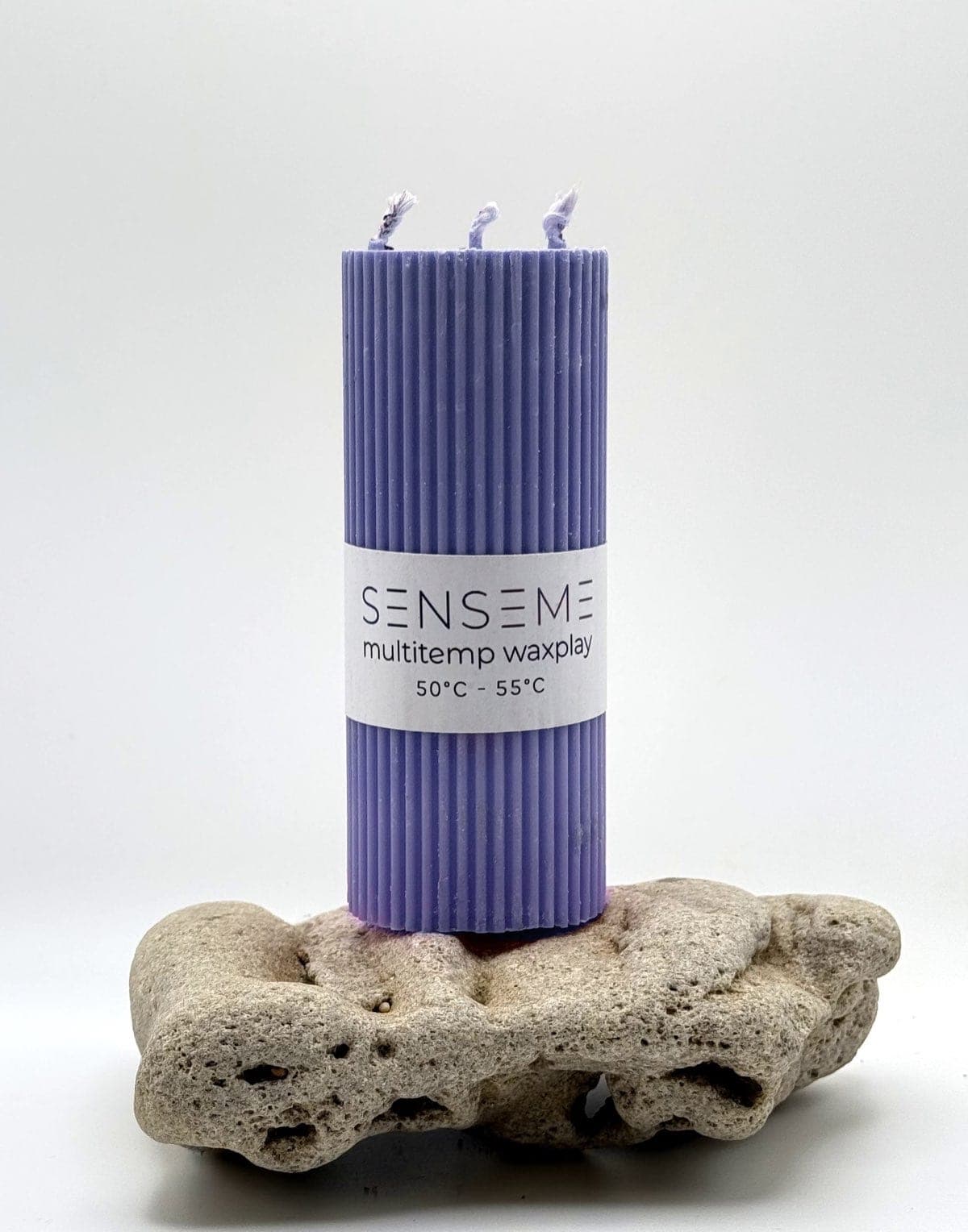
- Body-safe wax play. Heated wax from a temperature-controlled candle is focused thermal stimulation — a precise application of warmth to a specific skin area, in a structured, intentional context. It engages thermoreceptors, mechanoreceptors (the physical landing of the wax), and the attentional system simultaneously. This compound sensory event produces effects that simple warmth does not match, because it delivers all three channels — touch, temperature, intention — in a single stimulus. Our beginner candles (50–55°C) are designed for people exploring temperature as a sensation tool for the first time.
Temperature in Recovery and Aftercare
The connection between temperature and recovery is not incidental — it is structural. Every aftercare protocol, from post-marathon recovery to post-scene BDSM aftercare, includes warmth as a core element. The reason is the biology described above: warmth activates the parasympathetic system, which is the system responsible for repair, recovery, and return to baseline.
After any intense experience, the body is running on residual sympathetic activation — the adrenaline and cortisol that sustained the intensity are still clearing. Warmth does not wait for those chemicals to clear. It begins shifting the autonomic balance immediately, giving the parasympathetic system a head start on recovery. This is why a blanket in the first minutes after a scene matters more than a blanket an hour later: the sooner the thermal safety signal arrives, the sooner recovery begins.
If you are building a recovery or aftercare practice, temperature is your most reliable tool. For the full picture of how aftercare works — beyond temperature — see:
Temperature and Fragrance: Two Channels, One Experience
Temperature (somatosensory system) and fragrance (olfactory system) are processed by different neural pathways but converge in the brain's emotional and memory centers — the amygdala and insular cortex. This means they compound each other: warm wax that also carries a scent produces a richer sensory event than either channel alone, because the brain is integrating thermal safety signals with olfactory memory and association signals simultaneously.
For a detailed exploration of how fragrance specifically affects the nervous system and intimate mood, including the science of scent memory and specific fragrance-mood pairings, see our companion article: How Scented Candles Change the Mood: Fragrance, Nervous System, and Intimacy.
Further Reading
- How Touch Changes the Body: A Sexologist's Guide to Sensory Intimacy
- Touch Hunger: What Happens When the Body Does Not Get Enough Physical Contact
- Oxytocin and Touch: The Biology of Bonding, Trust, and Connection
- Pain and Pleasure: Why Your Brain Processes Them on the Same Circuit
- Wax Play Temperature Guide: How Each Degree Changes the Experience
- BDSM Aftercare: The Complete Guide to Recovery After a Scene
- How Scented Candles Change the Mood: Fragrance, Nervous System, and Intimacy
Sources & References
- Patapoutian, A., Peier, A. M., Story, G. M., & Viswanath, V. (2003). ThermoTRP Channels and Beyond: Mechanisms of Temperature Sensation. Nature Reviews Neuroscience, 4, 529–539. — Foundational review of TRP thermoreceptor channels.
- Craig, A. D. (2002). How Do You Feel? Interoception: The Sense of the Physiological Condition of the Body. Nature Reviews Neuroscience, 3, 655–666. — Maps the insular cortex as the integration center for temperature, interoception, and emotional processing.
- Sung, E. J., & Tochihara, Y. (2000). Effects of Bathing and Hot Footbath on Sleep in Winter. Journal of Physiological Anthropology, 19(1), 21–27.
- Shevchuk, N. A. (2008). Adapted Cold Shower as a Potential Treatment for Depression. Medical Hypotheses, 70(5), 995–1001. — Documents sympathetic activation and norepinephrine response to cold exposure.
- Field, T. (2014). Touch (2nd ed.). MIT Press. — Includes sections on thermal touch, warm-oil massage outcomes, and cortisol reduction.
- Porges, S. W. (2011). The Polyvagal Theory. Norton. — Framework for understanding parasympathetic safety signals and their triggers, including warmth.
This article is for educational purposes and does not constitute medical advice. Thermal interventions (warm baths, heating pads, contrast therapy) are generally safe for healthy adults. If you have cardiovascular conditions, neuropathy, or impaired temperature sensation, consult a physician before using temperature-based practices.
Frequently Asked Questions
Can you use temperature to reduce anxiety?
Does a warm bath actually help you sleep?
How does cold affect the nervous system differently from warmth?
What are thermoreceptors?
What is contrast therapy?
Why do body-safe candles use specific temperature ranges?
Why does warmth make you feel safe?
Olga Bevz
Olga studies how the body processes sensation in intimate contexts. She founded SenseMe to build tools — specifically temperature-controlled body-safe candles — for people who want to use that science intentionally. She writes about touch, temperature, nervous-system regulation, and the quiet skills that make intense experiences land well.
Read full story