
Touch HungerWhat Happens When the Body Does Not Get Enough Physical Contact
You are not imagining it. The restlessness, the low mood, the sense that something is missing but you cannot name it — your body may be telling you that it has not been touched enough. Touch hunger is real, measurable, and fixable.

Key Takeaways
- Touch hunger (also called touch starvation or skin hunger) is a nervous-system state, not a personality trait or a mood. It occurs when the body receives less sustained physical contact than the nervous system requires to maintain normal hormonal regulation.
- The biology is specific: insufficient touch leads to chronically low oxytocin, elevated cortisol, disrupted sleep architecture, reduced immune function, and impaired emotional regulation. These are measurable effects, not subjective complaints.
- Touch hunger is not the same as loneliness, though they overlap. You can be socially connected and still touch-deprived. You can be alone and still meet your body's touch needs through self-directed practices.
- Self-care advice is incomplete. Bubble baths and weighted blankets help — but they are individual solutions to what is often a relational problem. The most effective interventions combine self-directed sensation practices with structured interpersonal touch.
- The body does not habituate out of touch hunger. It adapts to deprivation by down-regulating the systems that process touch — which makes the problem harder to notice and harder to reverse the longer it continues.
Touch hunger — also called touch starvation or skin hunger — is the state the body enters when it does not receive enough sustained physical contact to maintain normal nervous-system regulation. It is not a metaphor for loneliness, not a weakness, and not something that only affects people who live alone. It is a physiological condition with measurable hormonal markers, documented health consequences, and specific interventions that work.
The term gained visibility during the COVID-19 lockdowns, when millions of people experienced prolonged touch deprivation for the first time and searched for words to describe what they were feeling. But touch hunger predates the pandemic by decades. It affects long-distance partners, new parents running on depletion, people in long-term relationships where touch has become habitual and infrequent, people recovering from trauma who avoid contact, and people who live in cultures where casual touch between adults is uncommon.
This guide covers what touch hunger actually is (biologically, not poetically), how to recognize it, why it is not the same as loneliness, what actually helps — both alone and with a partner — and when it becomes something that needs professional support. I am Olga Bevz, a sexologist who studies how the body processes sensation in intimate contexts. Touch hunger sits squarely in my field, and it is one of the most under-addressed issues I see in practice.
What Is Touch Hunger?
Touch hunger is a deficit state. Like caloric hunger signals that the body needs food, touch hunger signals that the nervous system needs physical contact — specifically, the kind of sustained, gentle, skin-temperature touch that activates C-tactile afferent fibers and triggers the hormonal cascade (oxytocin, endorphin, cortisol reduction) that keeps the nervous system regulated.
The body does not have a single "touch meter" that drops to zero and sends an alarm. Instead, touch hunger manifests as a constellation of symptoms that emerge gradually as the deprivation accumulates. In the first days or weeks, the symptoms are subtle — a mild restlessness, a vague dissatisfaction. Over months, they become harder to ignore: sleep disrupts, mood drops, the body feels simultaneously tense and flat.
The term "hunger" is deliberately chosen by researchers because it describes the same kind of drive state that food hunger creates. The body is not requesting touch. It is requiring it — and the systems that depend on regular physical contact begin to degrade when the input stops.
The Biology of Touch Deprivation
Touch deprivation produces specific, measurable changes in at least four biological systems. Understanding which systems are affected makes the symptoms easier to recognize and the interventions more targeted.
Oxytocin and Vasopressin Under-Function
Oxytocin — the bonding hormone — is released in response to sustained physical contact, particularly slow, warm, skin-to-skin touch. When that contact stops or becomes infrequent, oxytocin levels fall and stay low. Chronic low oxytocin is associated with increased social anxiety, reduced trust, difficulty with emotional closeness, and a subjective sense of disconnection from others — even when social interaction continues.
Vasopressin, a related peptide involved in pair bonding and social memory, follows a similar pattern. The result is a nervous system that has difficulty maintaining the sense of safety and belonging that sustained touch normally provides.
Cortisol Elevation
Touch — particularly sustained, pressure-based touch — suppresses the HPA axis and reduces circulating cortisol. Without that suppression, cortisol levels remain chronically elevated. The effects of sustained high cortisol are well-documented: impaired immune function, disrupted sleep architecture, increased inflammation, difficulty concentrating, irritability, and a baseline state of low-grade physiological stress that never fully resolves.
This is not about "feeling stressed." It is about the body running its stress-response system at a level that was designed for short-term emergencies, not for daily life. Touch is one of the body's primary down-regulators for this system, and without it, the system does not down-regulate.
Sleep Architecture Disruption
Sleep quality is one of the earliest casualties of touch deprivation, and one of the least recognized. Oxytocin supports the transition from wakefulness to sleep. Cortisol suppression supports deep (slow-wave) sleep. When oxytocin is low and cortisol is high — both consequences of insufficient touch — sleep onset takes longer, deep sleep phases shorten, and the restorative quality of sleep degrades. People in touch hunger often report sleeping enough hours but waking unrefreshed.
Immune Function and Inflammation
Touch research by Tiffany Field and others at the Touch Research Institute (University of Miami) has documented that regular touch — massage, skin-to-skin holding, structured touch interventions — increases natural killer cell activity and reduces inflammatory markers. The inverse also holds: touch deprivation is associated with increased inflammatory cytokines and reduced immune competence. The body's immune system, like its stress system, expects regular touch input as part of its maintenance environment.
Symptoms of Touch Hunger
Touch hunger symptoms fall into three categories and tend to escalate gradually. Most people notice the emotional symptoms first, the physical symptoms second, and the behavioral symptoms only in retrospect.
Emotional Symptoms
- A vague sense that something is missing — often without being able to name what
- Increased irritability or emotional reactivity — small things feel disproportionately frustrating
- Sadness or low mood without clear cause
- Difficulty feeling close to people even when socially active
- Craving physical contact intensely and then feeling awkward or overwhelmed when it happens
- A sense of being "in your head" — disconnected from your body
Physical Symptoms
- Chronic muscle tension, especially in the shoulders, neck, and jaw
- Difficulty falling or staying asleep despite adequate sleep hygiene
- Fatigue that does not resolve with rest
- Increased susceptibility to minor illness (colds, infections)
- Feeling cold more easily — the body running low on the warmth-regulation that proximity provides
- Skin that feels dull, dry, or hypersensitive — a less-documented but commonly reported symptom
Behavioral Symptoms
- Hugging objects — pillows, pets, blankets — more than usual
- Lingering in warm water (baths, showers) longer than necessary
- Seeking out weighted or pressure-based sensations — tight clothing, heavy blankets, firm self-massage
- Avoiding touch when it is offered — paradoxically, because the nervous system has become sensitized and the input feels overwhelming
- Increased screen time or scrolling — a displacement behavior that substitutes for the dopamine that physical contact would provide
The last symptom on each list deserves attention. Touch hunger can make touch itself feel uncomfortable — not because the person does not want it, but because the nervous system has adapted to deprivation by down-regulating its touch-processing capacity. Rebuilding that capacity requires gradual, gentle, structured reintroduction of touch, not a sudden correction.
Touch Hunger Is Not Loneliness (Though They Overlap)
This distinction matters because it changes the intervention. Loneliness is a social-cognitive state — the perception that your social connections are insufficient. Touch hunger is a physiological state — the body's response to insufficient physical contact. They often co-occur, but they can exist independently.
Touch hunger without loneliness: a person in a long-term relationship with daily conversation and emotional closeness, but where physical touch has become infrequent or habitual. They are not lonely. They are touch-deprived. The solution is not more social connection — it is more deliberate physical contact.
Loneliness without touch hunger: a person who lives alone but maintains a regular practice of self-massage, bodywork appointments, or physical activity that involves touch (partner dance, martial arts, team sports). They may feel socially isolated, but their nervous system's touch needs are met. The solution is more social connection, not more touch.
Both together: the most common case. A person who is both socially isolated and touch-deprived. Both systems need attention, but conflating them means the interventions are too vague to work. "See more people" does not fix touch hunger if those interactions do not involve physical contact. "Get a massage" does not fix loneliness if the rest of the week is spent alone.
Naming the distinction gives you a clearer target. If you are touch-hungry, the prescription is touch — structured, deliberate, regular. If you are lonely, the prescription is connection. If you are both, address both, but recognize them as separate problems with separate solutions.
What Actually Helps
Touch hunger responds to touch. That sounds obvious, but most advice on the subject stops at self-care tips (weighted blankets, warm baths, hugging pillows) without addressing the relational dimension — and self-care alone, while helpful, is incomplete. Here is the full picture.
Self-Directed Practices (Solo)
These interventions work by giving the nervous system the sensory input it is missing, even without another person.
- Self-massage with warm oil. Slow, deliberate, full-attention self-massage — particularly with warmed jojoba or sweet almond oil — activates C-tactile afferents and triggers oxytocin release. Focus on arms, legs, neck, and chest. Five minutes daily is a meaningful dose.
- Weighted blankets. The sustained pressure of a weighted blanket (typically 7–12% of body weight) activates deep pressure receptors and produces a parasympathetic shift similar to being held. Use during sleep or during a 20-minute rest period.
- Warm water immersion. Baths work because warm water provides sustained, full-body thermal stimulation — the same thermoreceptor activation that body heat from another person provides. Add this to your week as a practice, not an indulgence.
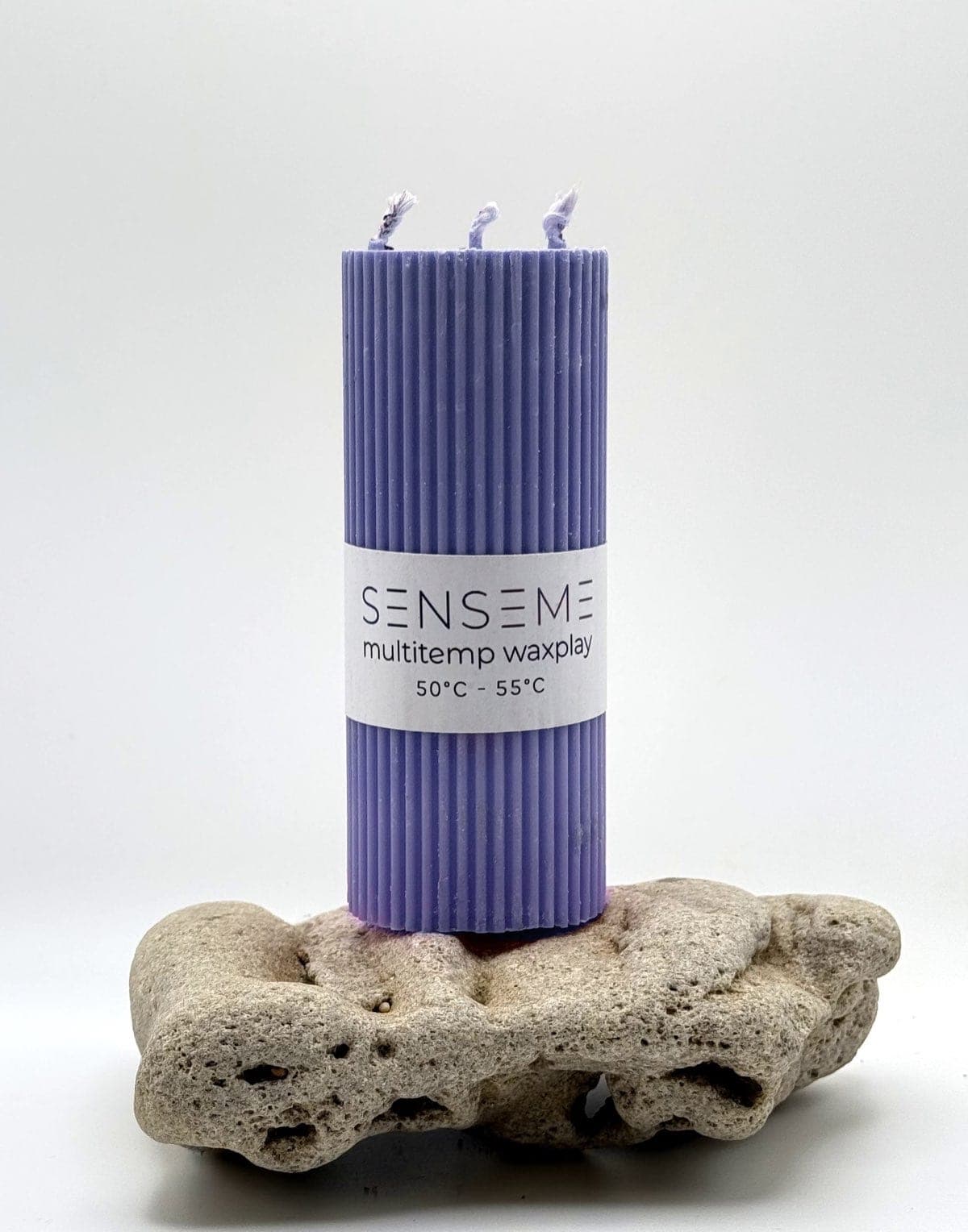
- Temperature tools. Warm compresses, heating pads, and body-safe candles designed for skin contact provide focused thermal stimulation that the nervous system reads as proximity. The temperature and the nervous system connection is direct: warmth tells the body "you are not alone."
- Mindful touch exercises. Structured attention to sensation — placing your own hand on your chest and noticing the warmth, the pressure, the heartbeat underneath — builds interoceptive awareness and re-sensitizes touch-processing pathways that deprivation has quieted.
Partnered Practices (With Someone)
Self-directed practices maintain the floor. Partnered practices raise the ceiling. The nervous system's response to touch from another person is measurably stronger than its response to self-touch — more oxytocin, more cortisol reduction, more nervous-system synchronization.
- Structured touch rituals. Agree with a partner on a specific, repeatable touch practice: a three-minute hand-hold before bed, a five-minute back stroke in the morning, a weekly oil-massage exchange. Regularity matters more than duration. The nervous system responds to reliable input, not occasional intensity.
- Non-sexual co-regulation time. Lying together in silence, skin-to-skin or close-to-skin, with no agenda other than proximity. Ten minutes of deliberate, unhurried physical nearness produces more nervous-system co-regulation than an hour of conversation.
- Sensation-based intimacy exercises. Structured exercises — guided touch exploration, temperature contrast rituals, eye contact practices — rebuild the deliberate attention to touch that long-term relationships often lose to habituation.
- Professional bodywork. Massage therapy, craniosacral therapy, or somatic bodywork from a trained practitioner provides high-quality, structured touch in a safe, professional context. For people in acute touch hunger — particularly those without a partner — professional bodywork can be the fastest way to re-establish a touch baseline.
What Does NOT Help
- Forcing yourself to "just go hug people." If your nervous system has down-regulated its touch-processing capacity, sudden intense contact can feel overwhelming rather than soothing. Reintroduce touch gradually.
- Replacing touch with screen-based social interaction. Video calls and texting are valuable for loneliness but do not address touch hunger. The body needs mechanical and thermal stimulation, not visual connection.
- Waiting for it to pass. Touch hunger does not self-resolve. The body adapts to deprivation by reducing its sensitivity, which makes the problem less noticeable but not less real. The longer it continues, the more gradual the rebuilding process needs to be.
When Touch Hunger Becomes Something More
Most touch hunger resolves with deliberate, structured touch reintroduction over a period of weeks. Some does not, and the distinction matters.
Consider professional support if:
- Touch hunger is accompanied by touch aversion — you crave contact but flinch or freeze when it happens. This pattern often indicates that the nervous system has learned to associate touch with threat, and rebuilding requires guided, trauma-informed work.
- Symptoms have persisted for months despite regular self-directed practices — the deprivation may have roots in attachment patterns or relational dynamics that self-care alone cannot reach.
- Touch hunger is entangled with depression, anxiety, or PTSD — these conditions interact with touch processing in complex ways, and a somatic therapist or touch-informed clinician can help untangle them.
- You are avoiding all physical contact and the avoidance is increasing rather than decreasing over time.
The right professionals for touch-related issues include somatic experiencing practitioners, somatic therapists, sexologists, and bodywork therapists trained in trauma-informed touch. Standard talk therapy is valuable but does not directly address the body's sensory needs. Look for practitioners who work with the body, not just with narrative.
Further Reading
- How Touch Changes the Body: A Sexologist's Guide to Sensory Intimacy
- Oxytocin and Touch: The Biology of Bonding, Trust, and Connection
- Temperature and the Nervous System: Why Warmth Changes How You Feel
- Mindful Touch: How Intentional Sensation Practices Rewire the Nervous System
- Nervous System Co-Regulation: How Partners Calm Each Other Through Touch
- Intimacy Exercises for Couples: Sensation-Based Practices That Actually Work
Sources & References
- Field, T. (2014). Touch (2nd ed.). MIT Press. — Comprehensive review of touch research including immune function, cortisol regulation, and developmental outcomes.
- Field, T. (2010). Touch for Socioemotional and Physical Well-Being: A Review. Developmental Review, 30(4), 367–383.
- Jakubiak, B. K., & Feeney, B. C. (2017). Affectionate Touch to Promote Relational, Psychological, and Physical Well-Being in Adulthood. Personality and Social Psychology Review, 21(3), 228–252.
- Floyd, K. (2014). Relational and Health Correlates of Affection Deprivation. Western Journal of Communication, 78(4), 383–403. — One of the few studies directly measuring the health effects of sustained touch deprivation in adults.
- Morrison, I., Loken, L. S., & Olausson, H. (2010). The Skin as a Social Organ. Experimental Brain Research, 204, 305–314.
- von Mohr, M., Kirsch, L. P., & Fotopoulou, A. (2017). The Soothing Function of Touch: Affective Touch Reduces Feelings of Social Exclusion. Scientific Reports, 7, 13516.
This article is for educational purposes and does not constitute medical, psychological, or therapeutic advice. If you are experiencing persistent touch aversion, trauma-related responses to physical contact, or symptoms that interfere with daily life, consult a qualified professional — a somatic therapist, sexologist, or touch-informed clinician.
Frequently Asked Questions
Can you fix touch hunger by yourself?
Does touch hunger affect physical health?
How do I know if I have touch hunger?
How long does it take to recover from touch hunger?
Is touch hunger the same as loneliness?
What is touch hunger?
Why does touch hunger make me avoid touch?
Olga Bevz
Olga studies how the body processes sensation in intimate contexts. She founded SenseMe to build tools — specifically temperature-controlled body-safe candles — for people who want to use that science intentionally. She writes about touch, temperature, nervous-system regulation, and the quiet skills that make intense experiences land well.
Read full story