
How Touch Changes the BodyA Sexologist's Guide to Sensory Intimacy
Touch is not a metaphor for connection. It is a physiological event — one that changes hormone levels, rewires nervous-system patterns, and builds trust faster than any conversation. This guide is the science behind it and the practice that follows.

Key Takeaways
- Touch is a physiological event, not just an emotional gesture. Skin contains specialized nerve fibers (C-tactile afferents) that send signals directly to the brain's emotional-processing centers — not just the sensory cortex. Touch literally changes brain chemistry.
- The hormone cascade is measurable: sustained touch elevates oxytocin (bonding), reduces cortisol (stress), releases endorphins (well-being), and activates dopamine (reward). These are not metaphors. They are measurable, replicable effects.
- Slow touch activates a different neural system than fast touch. Gentle, slow stroking (1–10 cm/s) activates C-tactile afferents — a dedicated "affective touch" pathway that fast, utilitarian touch does not engage. Speed matters as much as pressure.
- Temperature is a distinct sensory channel that amplifies or modifies touch. Warmth activates parasympathetic (calming) responses. Cold activates sympathetic (alerting) responses. Alternating them creates a heightened sensory state.
- Intention changes the experience. The same physical stimulus produces different neurological responses depending on whether it is accidental or deliberate, hurried or unhurried, given in safety or in uncertainty. Context is not decoration — it is mechanism.
- Sensory intimacy is a practice, not a mood. It can be built, refined, and deepened through structured, repeatable exercises — solo or partnered.
Sensory intimacy is the practice of using touch, temperature, and intentional sensation as tools for connection, self-awareness, and physiological well-being. It is grounded in neuroscience — the study of how skin communicates with the brain — and in sexology, which examines how bodies experience and build intimacy through physical interaction.
This is not a metaphor. When one person touches another with sustained, deliberate attention, a measurable cascade of hormonal and neurological events follows: oxytocin rises, cortisol drops, endorphins release, heart rate variability shifts, and the nervous systems of both people begin to synchronize. These effects have been documented in dozens of studies across neuroscience, developmental psychology, and clinical sexology. Touch is not a symbol of closeness. It is one of the mechanisms by which closeness is produced.
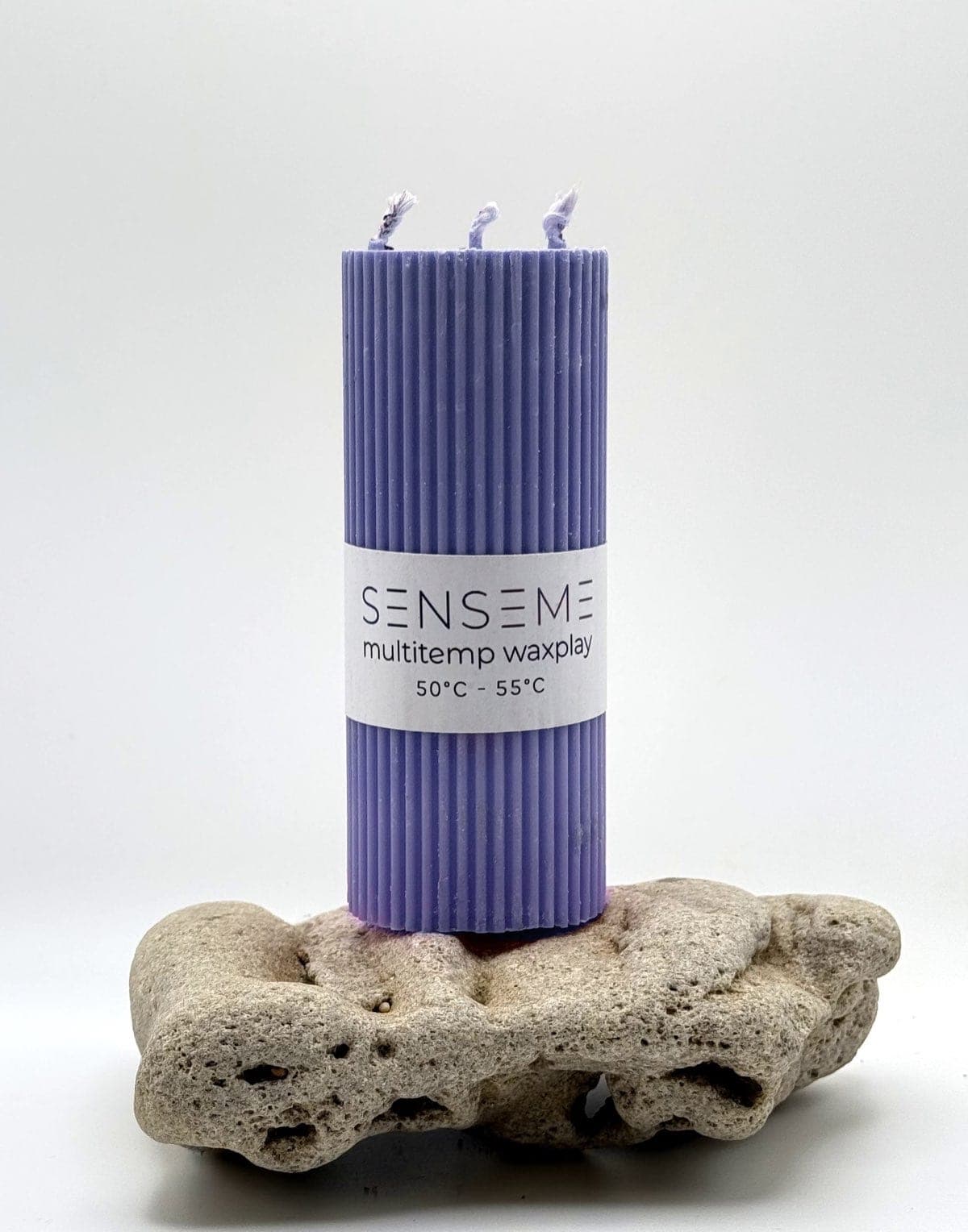
This guide covers the science behind that mechanism, the three channels through which it operates (touch, temperature, intention), and how to build a sensory intimacy practice — whether you are exploring alone, deepening a partnership, or integrating specific tools like body-safe candles, warm oil, or structured sensation exercises. I am Olga Bevz, a sexologist. I study how the body processes sensation in intimate contexts, and I design products — specifically temperature-controlled candles — for people who want to use that science intentionally.
What Is Sensory Intimacy?
Beyond "Physical Intimacy"
"Physical intimacy" is a broad term that covers everything from a handshake to a sexual encounter. Sensory intimacy is more specific: it is the deliberate, attentive engagement of the body's sensory systems — touch, temperature, pressure, proprioception — as a practice rather than a background feature of interaction.
The distinction matters because most physical contact between partners is habitual rather than intentional. A hand on a shoulder, a quick hug, a familiar touch before sleep — these are meaningful, but they are automatic. The nervous system habituates to them. Sensory intimacy is what happens when touch becomes deliberate again: slower, more varied, more attentive to what the body is actually doing in response.
This is not about making simple things complicated. It is about noticing that the body has a sophisticated response system that most of the time runs on autopilot, and that choosing to engage it consciously — even briefly — produces measurably different results than letting it run unattended.
The Three Channels: Touch, Temperature, Intention
Sensory intimacy operates through three primary channels, each processed by a different neural pathway:
- Touch — the mechanical stimulation of skin, from light stroking to firm pressure. Processed by mechanoreceptors (Meissner's corpuscles, Merkel cells, Pacinian corpuscles) and, for slow gentle touch, by C-tactile afferent fibers.
- Temperature — the thermal stimulation of skin, from cool to warm to hot. Processed by thermoreceptors (TRPV and TRPM channels) that send signals about environmental temperature directly to the thalamus and insular cortex.
- Intention — the context in which touch and temperature are delivered. The brain processes identical physical stimuli differently depending on whether they are accidental or deliberate, rushed or unhurried, safe or uncertain. Intention is not a separate sensory modality, but it modulates all the others.
Each channel can be engaged independently. Together, they compound. A warm hand placed deliberately on the chest — engaging all three channels simultaneously — produces a neurological event that is qualitatively different from any one channel alone.
The Neuroscience of Touch
How Skin Talks to the Brain
Human skin is the body's largest sensory organ, containing roughly 5 million nerve endings distributed unevenly across its surface. Different areas have different densities: fingertips are extraordinarily rich in mechanoreceptors; the back and thighs are sparser. This uneven distribution explains why touch feels different on different body parts — it is not just skin thickness, it is neural density.
When skin is stimulated, signals travel through two parallel systems. The first — fast, myelinated A-beta fibers — transmits discriminative information: where, how hard, what texture. This system tells you that something is touching your left forearm with light pressure. It is precise, immediate, and factual.
The second system is slower, unmyelinated, and far more interesting for sensory intimacy. C-tactile afferent fibers, identified and mapped primarily by the Swedish neuroscientist Hakan Olausson and colleagues, respond specifically to gentle, slow, skin-temperature touch — the kind of touch you would use when stroking a partner's arm, not when gripping a tool. These fibers project not to the somatosensory cortex (where discriminative touch goes) but to the posterior insular cortex — a brain region involved in emotional processing, interoception, and social bonding.
This means the body has a dedicated neural pathway for affective touch — touch that carries emotional information rather than spatial information. When someone strokes your skin slowly and gently, the signal does not primarily say "something is touching you." It says "you are being cared for." The body has hardware for this distinction.
The Hormone Cascade
Sustained touch triggers a hormonal cascade that is consistent across studies, populations, and contexts:
- Oxytocin rises with sustained skin-to-skin contact, particularly when the contact is slow, warm, and safe. Oxytocin reduces anxiety, increases trust, and facilitates social bonding. It is released by both the person being touched and the person doing the touching.
- Cortisol drops. Touch — particularly sustained, pressure-based touch — activates the parasympathetic nervous system and suppresses the HPA axis (hypothalamic-pituitary-adrenal), which is the body's stress-response system. The result is measurably lower cortisol, measurably lower heart rate, and a subjective sense of safety.
- Endorphins release with more intense or sustained touch. These endogenous opioids produce analgesia (reduced pain sensitivity) and a general sense of well-being. They are the same compounds that produce runner's high, the calm after crying, and the euphoric states documented in sub space.
- Dopamine rises in reward circuits when touch is experienced as pleasurable, desired, or meaningful. This is the system that makes you want to be touched again — not as addiction, but as healthy reward-seeking that reinforces bonding behavior.
This cascade is not metaphorical. Each compound has been measured in blood, saliva, or neuroimaging studies during and after sustained human touch. The evidence base spans developmental psychology (skin-to-skin contact in newborns), clinical medicine (massage therapy for pain), and sexology (touch in intimate contexts). The biology does not care what you call the practice. It responds to the stimulus.
Why Slow Touch Activates a Different System Than Fast Touch
Speed matters. C-tactile afferents have a specific optimal firing range: approximately 1–10 centimeters per second. Below that, the signal is too weak. Above that, the signal shifts to the discriminative (A-beta) system rather than the affective (C-tactile) system. The difference is not subtle — it is the difference between touch that registers as "contact" and touch that registers as "care."
This has direct practical implications. A quick rub of a partner's back activates the fast pathway. A slow, deliberate stroke of the same area at 3 cm/s activates the affective pathway and triggers oxytocin release. Same hand, same skin, same pressure — different speed, different neurological event, different emotional outcome.
For anyone building a sensory intimacy practice, this is the single most actionable piece of neuroscience in this guide: slow down. Not as a vague aspiration, but as a specific technical instruction. Three centimeters per second. The body will do the rest.
Temperature as Sensation
Thermoreceptors and the Nervous System
Temperature is processed by a distinct set of receptors from touch. TRPV channels (transient receptor potential vanilloid) detect warmth and heat. TRPM channels (transient receptor potential melastatin) detect cool and cold. Both send signals through the spinothalamic tract to the thalamus and insular cortex — the same brain region that receives C-tactile affective touch signals.
This convergence means that temperature and touch are processed in overlapping neural territory. The brain does not treat them as entirely separate — it integrates them. A warm hand on skin activates both mechanoreceptors (touch) and thermoreceptors (warmth), and the integrated signal is richer than either alone. This is why warm touch consistently outperforms neutral-temperature touch in studies of comfort, bonding, and stress reduction.
Why Warmth Produces Safety Signals
Warmth has a specific physiological effect that goes beyond comfort: it activates the parasympathetic branch of the autonomic nervous system. The parasympathetic system is the body's "rest and digest" mode — it lowers heart rate, relaxes smooth muscle, promotes digestion, and creates the subjective experience of safety. Warmth triggers this shift because, evolutionarily, warmth was associated with proximity (body heat of another person), shelter, and the absence of threat.
This is not a learned association — it is hardwired. Newborns placed skin-to-skin on a caregiver's chest regulate temperature, heart rate, and cortisol faster than newborns placed in an incubator at the same temperature. The warmth itself carries information: "you are with someone. You are safe."
For a detailed exploration of how temperature affects the nervous system and how to use it intentionally, including the specific science of warmth, cold, and contrast sequences, see our dedicated temperature guide.
The Role of Temperature in Intentional Practice
Temperature adds a dimension to touch that pressure alone cannot. A warm oil massage feels qualitatively different from a room-temperature one — not just "nicer," but physiologically different in its effect on the nervous system. Warm wax from a body-safe candle landing on skin is not just heat — it is a focused thermal event that activates thermoreceptors, triggers a parasympathetic shift, and creates a moment of heightened sensory attention that room-temperature touch cannot produce.
This is why temperature-controlled candles exist as a category. They are not decorative. They are tools for delivering precise thermal stimulation to the skin, in a context where precision matters — because at the intersection of touch and temperature, small differences produce meaningfully different experiences. Our temperature guide explains how each degree changes the sensory outcome.
Intention Changes the Experience
The Same Touch, Two Different Outcomes
Neuroimaging studies consistently show that identical physical stimuli produce different brain responses depending on context. A touch that the subject believes is from a romantic partner activates reward circuitry. The same touch, from a stranger, activates threat-assessment circuitry. The stimulus is the same. The brain's response is not.
This extends to intention within a partnership. A hurried touch — getting ready for work, passing in the hallway — registers in the discriminative system. The brain processes it as logistical contact. The same touch, delivered slowly and with attention — eye contact, a pause, a held breath — registers in the affective system. The brain processes it as care.
Intention is not mystical. It is the brain's way of integrating contextual information with sensory information. When the context says "this matters," the brain allocates more processing resources, releases more oxytocin, and creates a stronger memory trace. When the context says "this is routine," the brain habituates and the experience passes without registering.
Attention as Amplifier
Attention amplifies sensation. This is a basic principle of neuroscience: the nervous system upregulates processing in areas that receive focused attention and downregulates processing in areas that do not. If you pay attention to the feeling of a hand on your chest, the sensation intensifies. If your mind wanders, the sensation fades — even though the physical stimulus has not changed.
In sensory intimacy practice, attention is the amplifier. It is what turns a routine interaction into a rich sensory event without changing a single physical variable. This is why practices that structure attention — blindfolds, guided focus, deliberate pacing, verbal cues — produce such disproportionate effects. They are not adding sensation. They are adding attention, which amplifies the sensation that was already there.
Why Ritual and Structure Intensify Sensation
Ritual is structured attention. A repeated, predictable sequence of actions — lighting a candle, laying out a blanket, beginning with a specific touch — creates a neurological context that primes the body for heightened sensation. The brain learns: "when these things happen, something meaningful follows," and it begins allocating resources before the first touch even arrives.
This is why couples who develop rituals around intimacy — even simple ones — report deeper connection than couples who interact spontaneously but without structure. Spontaneity has its place, but structure tells the nervous system "pay attention now," and that instruction changes the biology of whatever follows.
Sensory Intimacy in Practice
Solo Practice
Sensory intimacy does not require a partner. The nervous system responds to deliberate sensation regardless of source. Solo practice — self-massage with warm oil, mindful touch exercises, temperature exploration, body scanning — builds the same interoceptive awareness and nervous-system flexibility that partnered practice does. It also helps you learn what you actually respond to before communicating it to someone else.
The foundation of solo practice is simple: slow, warm, attentive touch applied to your own skin, with your full attention on the sensation rather than on outcome. Five minutes of this produces measurable cortisol reduction and oxytocin release. It is not indulgent. It is nervous-system maintenance.
Partnered Practice
Partnered sensory intimacy is richer because it adds co-regulation — the nervous system's ability to use another person's calm, attention, and presence as a regulating signal. When two people engage in structured sensation practice together, their nervous systems begin to synchronize: heart rate variability aligns, breathing patterns match, and the oxytocin release is higher than either person would produce alone.
The simplest partnered practice: one person lies still with eyes closed. The other places a warm hand on their chest and holds it there for three minutes in silence. No movement. No agenda. Just warmth and attention. After three minutes, switch. This exercise, repeated twice a week, is often enough to shift the baseline of physical connection in a relationship. For more structured exercises, see our couples intimacy exercises guide.
Where Wax Play Fits
Wax play — the practice of pouring warm, body-safe wax onto skin — sits at the intersection of all three sensory channels. It is touch (the physical landing of wax on skin), temperature (the controlled warmth of the wax), and intention (the deliberate, paced ritual of pouring). It engages mechanoreceptors, thermoreceptors, and the attentional system simultaneously.
This is why wax play, when done with body-safe candles at controlled temperatures, produces effects that simple massage or simple warmth do not match. It is a compound sensory event — multiple channels activated at once, within a structured, intentional context. The body responds to that compound signal with a heightened version of the same cascade described above: more oxytocin, more endorphins, more parasympathetic activation, more sensory attention.
Wax play is not the only sensory intimacy practice. It is one practice within a broader discipline. But it is a particularly effective one, because it inherently delivers what other practices have to build: sustained temperature stimulation combined with structured attention. If you are new to it, our beginner's guide covers everything you need for a first session.
The Recovery Side of Sensory Intensity
Any practice that elevates endorphins, oxytocin, and adrenaline also requires recovery when those levels fall. This is not unique to BDSM or wax play — it applies to marathon running, intense therapy sessions, and even deep meditation retreats. The biology of intensity includes the biology of coming down.
For sensory intimacy practices, recovery means aftercare — the practice of supporting the body and the nervous system as they return to baseline. Good aftercare includes hydration, warmth, gentle food, and — most importantly — sustained, unhurried presence from whoever shared the experience. The quality of recovery determines whether an intense experience becomes a deepening of connection or a source of unprocessed stress.
If you are building a sensory intimacy practice that includes intensity — temperature play, blindfold work, any practice that elevates nervous-system activation significantly — plan the recovery as carefully as you plan the experience. Our aftercare cluster covers this in depth:
- The complete aftercare guide
- Understanding sub drop (the post-intensity neurochemical crash)
- Physical vs emotional aftercare
- Building an aftercare kit
- Nervous system co-regulation through touch
Further Reading
- Touch Hunger: What Happens When the Body Does Not Get Enough Physical Contact
- Oxytocin and Touch: The Biology of Bonding, Trust, and Connection
- Temperature and the Nervous System: Why Warmth Changes How You Feel
- Pain and Pleasure: Why Your Brain Processes Them on the Same Circuit
- Mindful Touch: How Intentional Sensation Practices Rewire the Nervous System
- Intimacy Exercises for Couples: Sensation-Based Practices That Actually Work
- Nervous System Co-Regulation: How Partners Calm Each Other Through Touch
- BDSM Aftercare: The Complete Guide to Recovery After a Scene
- Wax Play for Beginners
Sources & References
- McGlone, F., Wessberg, J., & Olausson, H. (2014). Discriminative and Affective Touch: Sensing and Feeling. Neuron, 82(4), 737–755. — The foundational paper on C-tactile afferents and their role in affective (emotional) touch processing.
- Field, T. (2014). Touch (2nd ed.). MIT Press. — Comprehensive review of touch research across the lifespan, including hormonal and immune effects.
- Porges, S. W. (2011). The Polyvagal Theory: Neurophysiological Foundations of Emotions, Attachment, Communication, and Self-Regulation. Norton. — Framework for understanding how touch and co-regulation support parasympathetic recovery.
- Carter, C. S. (2014). Oxytocin Pathways and the Evolution of Human Behavior. Annual Review of Psychology, 65, 17–39. — Review of oxytocin's role in bonding, trust, and social behavior.
- Morrison, I., Loken, L. S., & Olausson, H. (2010). The Skin as a Social Organ. Experimental Brain Research, 204, 305–314. — Evidence that skin has a dedicated social-signaling function beyond sensory detection.
- Gallace, A., & Spence, C. (2010). The Science of Interpersonal Touch: An Overview. Neuroscience & Biobehavioral Reviews, 34(2), 246–259.
This article is for educational purposes and does not constitute medical, psychological, or therapeutic advice. If you are experiencing persistent difficulty with physical intimacy, touch aversion, or trauma-related responses, consult a qualified professional — a somatic therapist, a sexologist, or a kink-aware mental-health clinician.
Frequently Asked Questions
Can I practice sensory intimacy alone?
Does temperature affect intimacy?
How does touch affect the brain?
How is sensory intimacy different from sensory play or BDSM?
What is sensory intimacy?
What is the best way to start a sensory intimacy practice?
Why does slow touch feel different from fast touch?
Olga Bevz
Olga studies how the body processes sensation in intimate contexts. She founded SenseMe to build tools — specifically temperature-controlled body-safe candles — for people who want to use that science intentionally. She writes about touch, temperature, nervous-system regulation, and the quiet skills that make intense experiences land well.
Read full story